
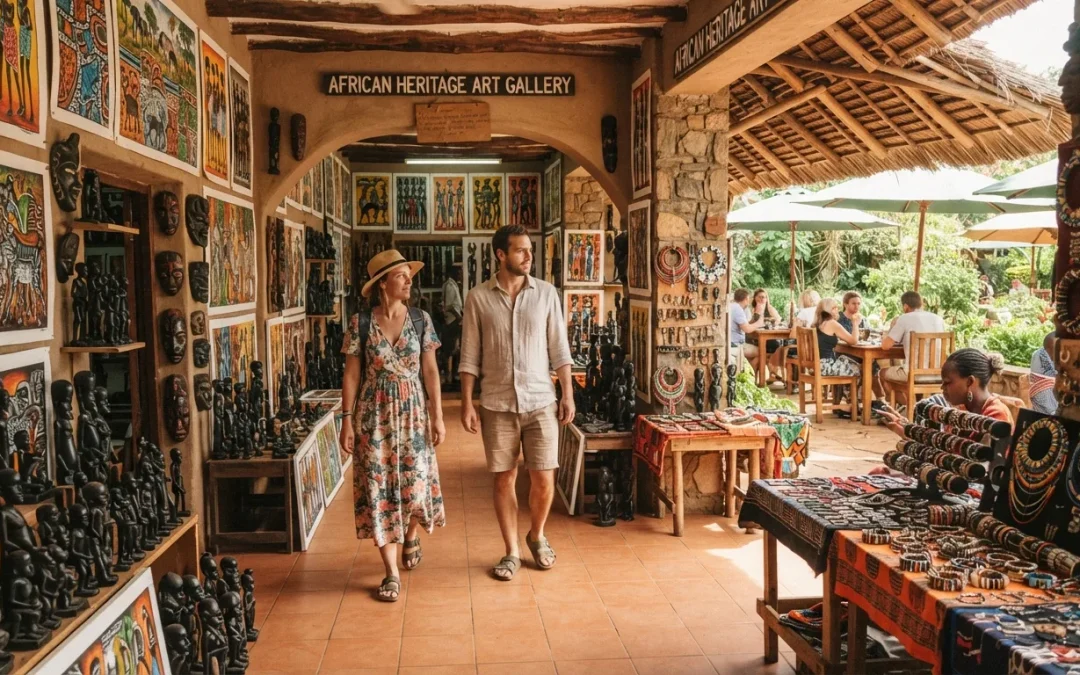
For an African experience in Tanzania beyond the game drive, add five cultural stops near Karatu: African Galleria, Makonde carvers, Ol Mesera Restaurant, the Tanzanite Tour and a local school visit. All five are at Safariland, so most guests fit two or three into one afternoon.
Key takeaways
- All five stops are on one site, so there is no driving between them.
- If time is short, choose the gallery with the carvers, then lunch.
- Families often choose the school visit or tree planting. Couples and gem lovers often choose the Tanzanite Tour.
- Book the Ebony Carvings Tour, Tanzanite Tour, cooking demonstration and school visit in advance.
A game drive gives you lions. It doesn't really give you Tanzania. For that you need to meet people, eat what they eat and see what they make. When guests ask me how to get a fuller African experience Tanzania can offer on a safari schedule, I point them to five stops, all within easy reach of the main safari road near Karatu.
None of them need a spare day. Most people fit two or three into a single afternoon.
1. An afternoon with African art
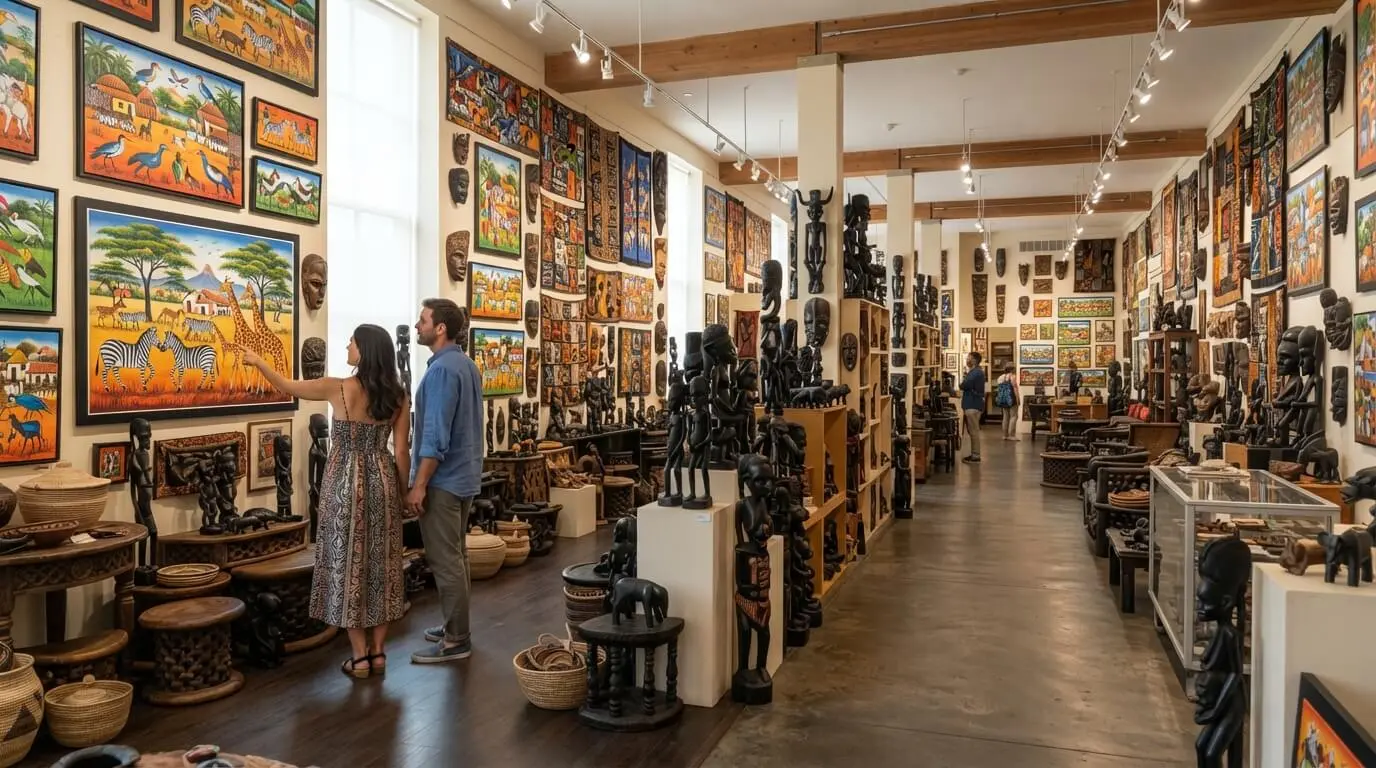
Start with African Galleria, one of the largest private collections of African art in Tanzania. It's the place Safariland grew from. You'll find Tingatinga paintings, Maasai-inspired pieces, antiques, textiles and a huge carving collection.
The trick is not to rush it. Pick a few pieces you keep returning to and ask the team about the artists behind them. You'll learn more about the country from those stories than from any guidebook. Our guide to the African art gallery at Safariland gives a fuller picture.
2. Watching Makonde master carvers
Makonde carvers work on-site, and the Ebony Carvings Tour lets you watch them turn blocks of African blackwood into sculptures using techniques passed down through generations. It's quiet, absorbing and very human. Plenty of guests who planned to watch for five minutes end up staying for an hour.
3. Tanzanian food, properly cooked
Lunch at Ol Mesera Restaurant is where traditional Tanzanian cooking meets a modern touch. The menu has choma choma from the grill, mchicha bowls and bitings, the local word for snacks. Everything is made with fresh organic ingredients. Order the Dawa cocktail if it's been a long morning.
If you'd like to go deeper, book a cooking demonstration first and watch how the dishes are made before you eat them.
4. The story of tanzanite
Tanzanite is found in only one place on earth, near Mount Kilimanjaro. The Tanzanite Tour at African Gems & Jewelers follows the stone from its mining origins to finished custom jewellery. Even if you never plan to buy, it's a fascinating piece of Tanzanian history. Our comparison of tanzanite gem tours and buying in a shop explains what you'll see.
5. Time with the local community
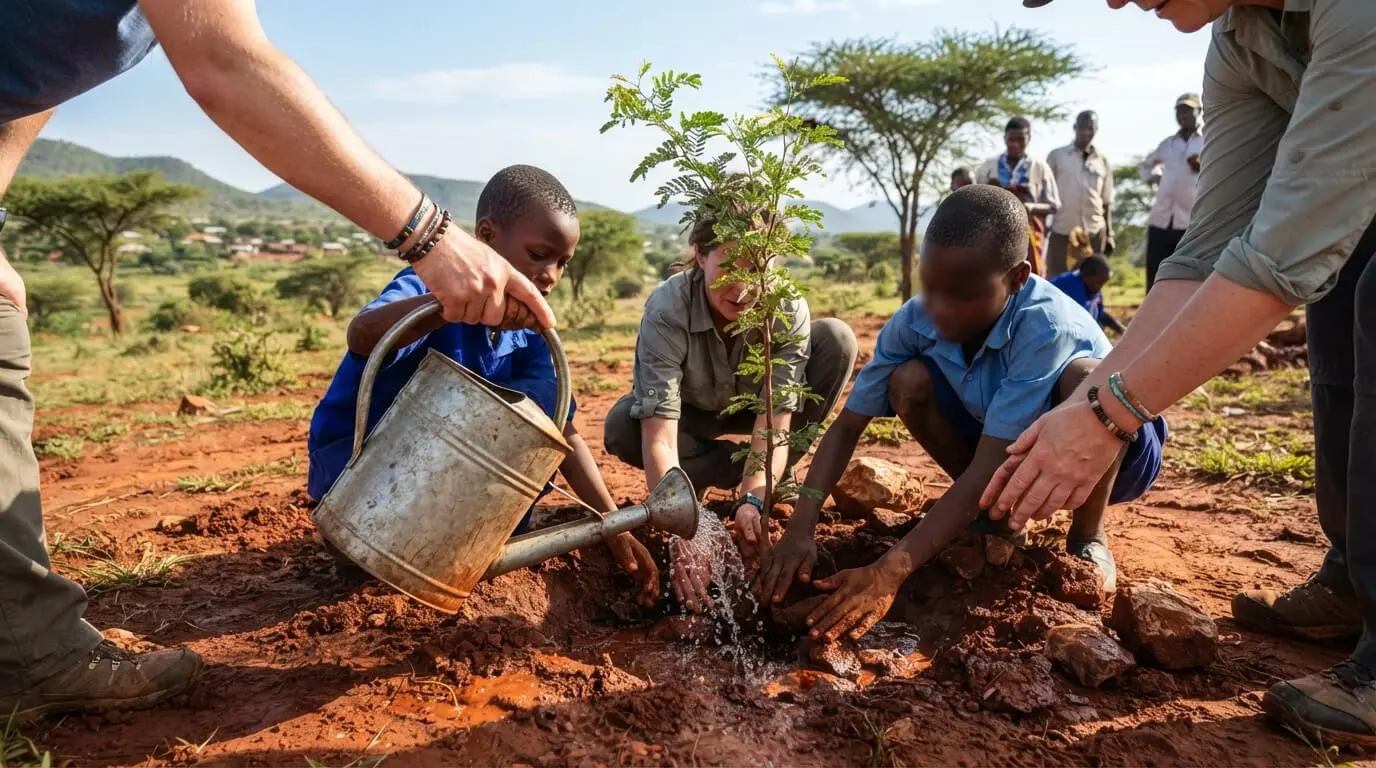
Safariland founded a local school, and the Local School Visit lets you spend time with students in their learning environment. It's one of the most personal experiences we offer. Through the Moyo Mmoja Foundation you can also join the Panda Project, a tree-planting initiative that lets you leave something growing behind after your safari.
Five stops at a glance
| Stop | What you'll do | Best for | Pairs well with |
|---|---|---|---|
| African Galleria | Explore paintings, carvings and antiques | Art lovers, first-time visitors | Carving tour |
| Ebony Carvings Tour | Watch Makonde masters at work | Curious travellers, buyers | Gallery browsing |
| Ol Mesera Restaurant | Traditional Tanzanian food with a modern touch | Everyone | Cooking demonstration |
| Tanzanite Tour | Follow the stone from mine to jewellery | Gem lovers, couples | Lunch |
| School visit and Panda Project | Meet students, plant a tree | Families, community-minded travellers | Any of the above |
Shopping that supports local makers
Beyond the five stops, Safariland has clothing, handwoven textiles, gifts and crafts made by local artisans. If you're going to buy souvenirs on your trip, this is a good place to do it, because you can ask who made something and how. Our guide on how to know African handmade crafts are genuine explains what to look for wherever you shop.
What to bring for a cultural afternoon
Comfortable shoes are useful, as you'll be walking between the gallery, workshop and restaurant. A light layer helps too, since the Karatu highlands can be cooler than people expect, especially later in the day. Bring questions for the carvers and artists. And if you're doing the school visit, leave the sweets at the lodge, because gifts are best given through the teachers or the foundation.
Making the most of the time
The families and couples who enjoy this kind of stop most tend to slow down. They don't treat it as a list of things to tick off. They sit with a coffee after lunch, go back to look at a painting a second time, or spend longer with a carver than they meant to. If you have the luxury of an unhurried afternoon, use it here.
Which stops to prioritise if time is short
If you can only manage two, I'd suggest the gallery with the carvers, followed by lunch. That combination gives you art, craft, food and conversation in one sweep. Families with school-age children should consider swapping one of those for the school visit or tree planting, which children tend to remember longest.
Couples and anyone with an interest in gemstones often put the Tanzanite Tour near the top of their list. It's the one stop on the list you genuinely can't repeat anywhere else in the world, since the stone comes only from Tanzania. Our guide to discovering tanzanite gem tours explains why.
How to fit them in
Safariland sits between Lake Manyara and Ngorongoro Crater near Karatu, around two hours from Arusha. Because all five stops are on one site, you don't waste time driving between them.
A typical plan looks like this:
- Arrive late morning.
- Visit the gallery and the carvers.
- Have lunch.
- Add either the Tanzanite Tour or the school visit.
- Head on to your lodge.
If you're working around an existing safari route, talk to your guide early. It's usually easy to slot in on the day you drive towards the crater or back from the Serengeti. We cover that in more detail in a Tanzania experience you can fit into one stop.
Why it's worth doing
The animals are the reason most people come. But when guests write to us months later, they rarely mention a particular lion. They mention a carver explaining the tools he learned on, a classroom full of questions, a lunch that went on longer than planned. That's the part of an African experience that stays with you.
For more ideas, read what makes Safariland a unique Tanzanian experience beyond the safari and our overview of Tanzania's cultural traditions at Safariland.
Frequently asked questions
What is an African experience in Tanzania beyond safari?
It's time spent with Tanzanian culture: art, craft, food, community and history. At Safariland near Karatu, that includes African Galleria, Makonde carving, Ol Mesera Restaurant, the Tanzanite Tour and a local school visit.
Can I do these cultural stops in one day?
Yes. All five are at Safariland, so most visitors fit two or three into an afternoon, and some do all of them on a relaxed day.
Where is Safariland located?
Safariland is near Karatu, between Lake Manyara and Ngorongoro Crater, around two hours' drive from Arusha.
Do I need to book the activities in advance?
It's best to book the Ebony Carvings Tour, Tanzanite Tour, cooking demonstration and school visit in advance through the Safariland website so the team can plan around your route.
Plan Your African Experience in Tanzania at Safariland
Add art, carving, food, tanzanite and community to your safari with one stop at Safariland near Karatu. Tell us your dates and route, and we will help you build the African experience Tanzania is really about.
Plan Your VisitCall +255 743 722 666 or email info@mysafariland.com