
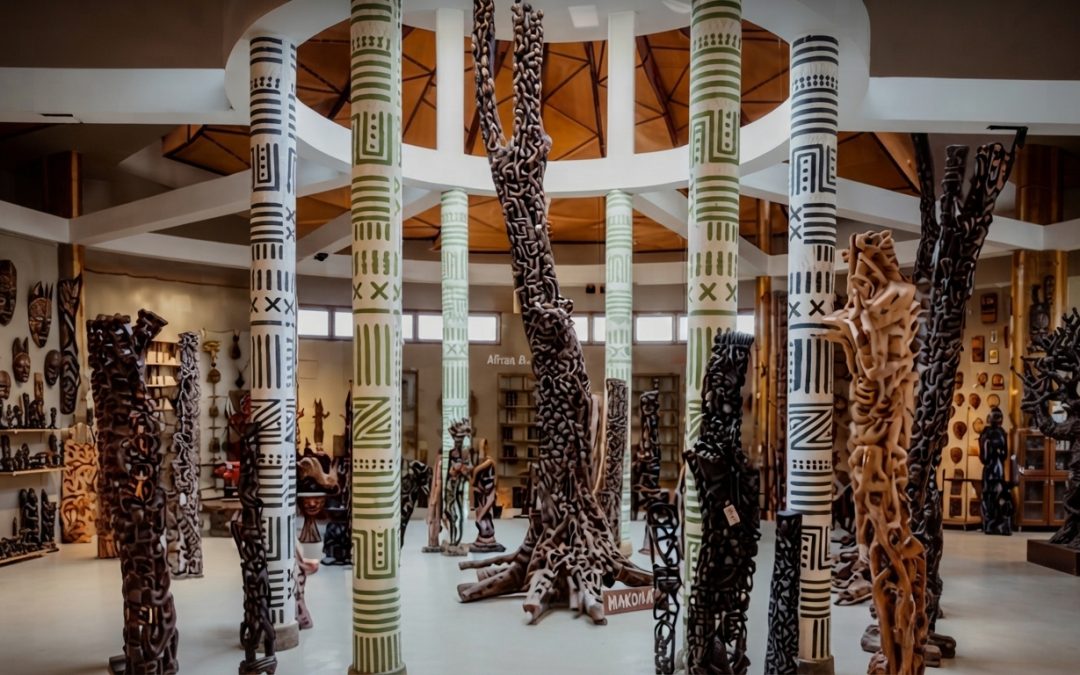
Search for an African Art Gallery in Tanzania and most results point you back into Arusha, to the Cultural Heritage Centre and a scattering of smaller shops. Worth a look if you're staying the night. Less convenient if you're already on the road toward Ngorongoro Crater. African Galleria, part of the Safariland complex near Karatu, holds one of the country's largest private collections of African art in a single gallery space, and it sits right on the route most travelers are already taking.
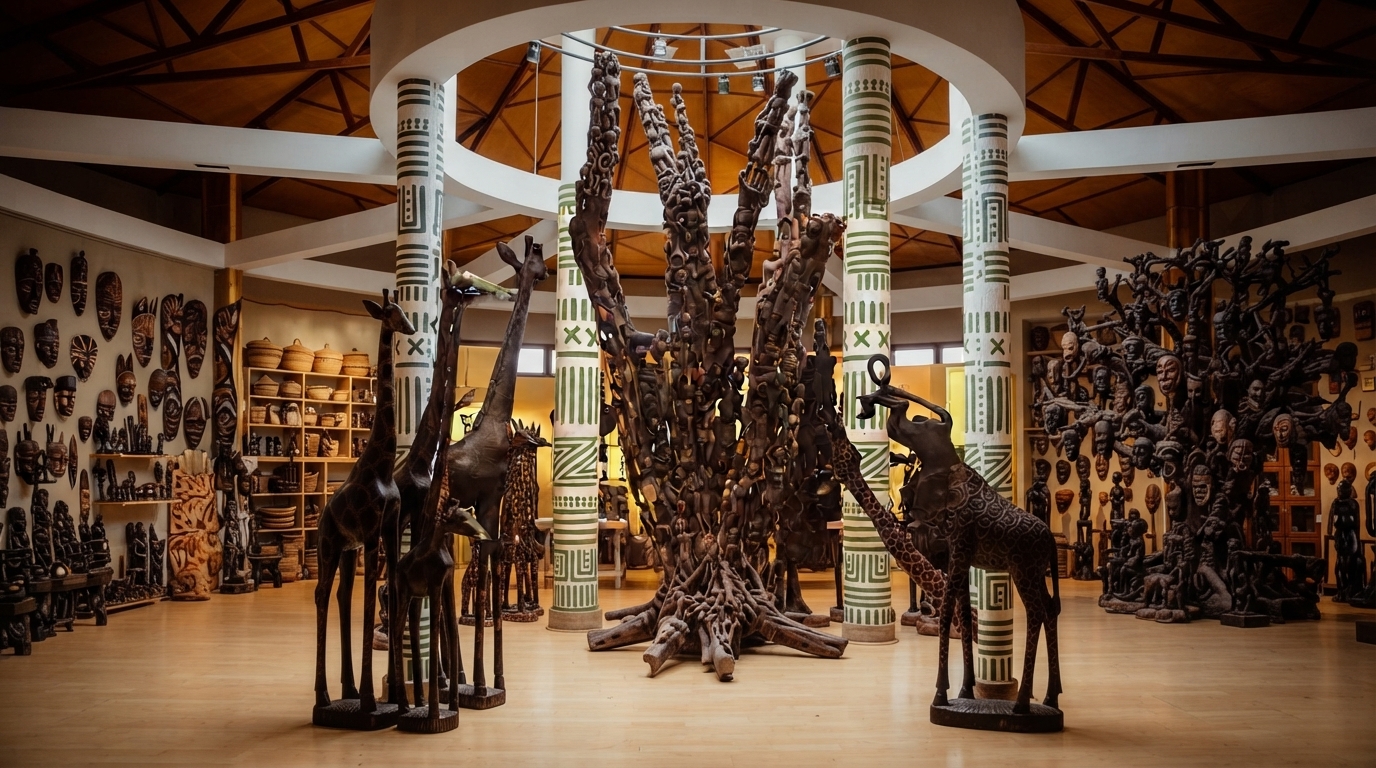
What's actually in the collection
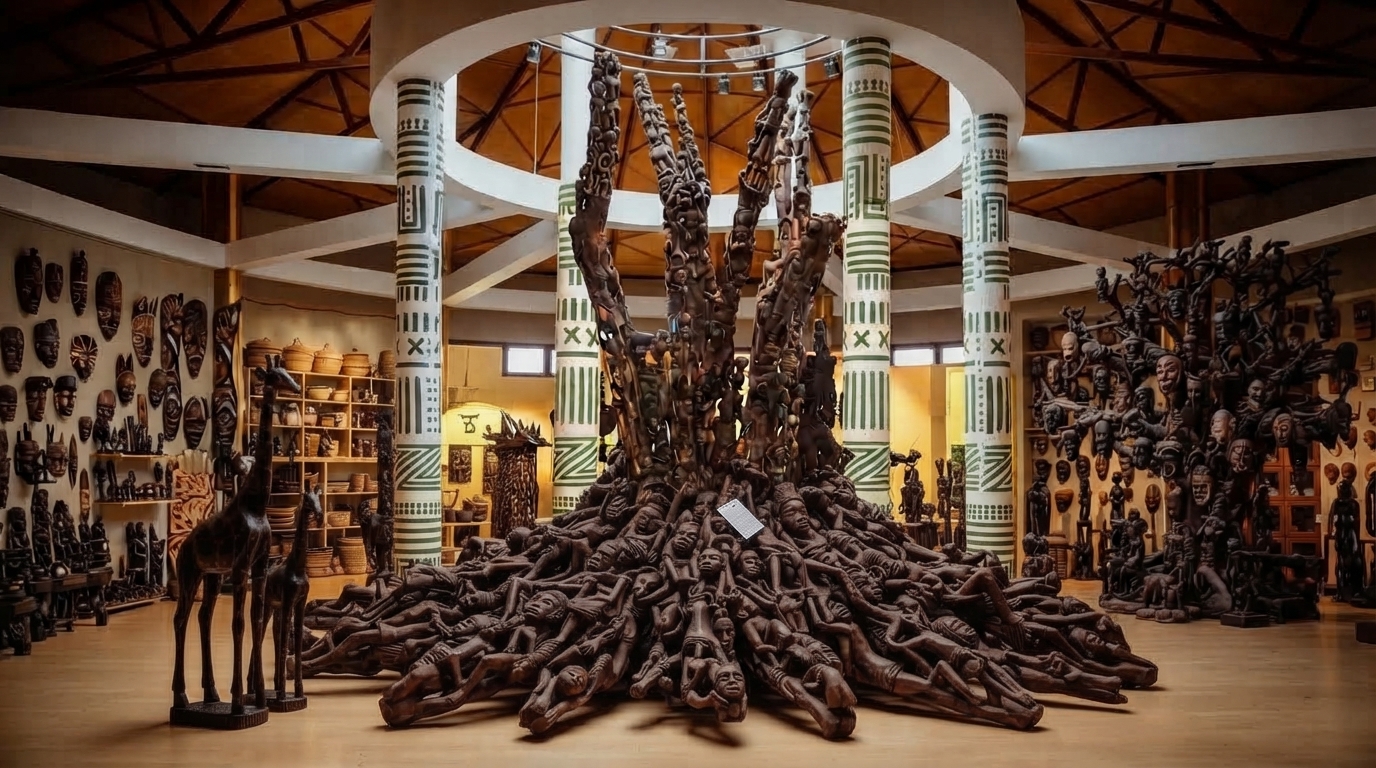
African Galleria isn't a curated handful of pieces meant for photos. It's a genuinely large private collection, tribal pieces, ebony carvings, bronze wildlife sculptures, African paintings, fabric and handmade crafts, all under one gallery roof. The range is the point: you're as likely to find a serious collector's piece as something small enough to pack in a carry-on.
Meeting the carvers, not just the finished pieces
What separates this African Art Gallery in Tanzania from a typical roadside stop is that the Makonde carvers still work on-site. The carving tour lets you watch a piece take shape by hand rather than only seeing it finished on a shelf. The painting workshop runs the same way, a local artist guides you through your own piece instead of just talking you through theirs.
Buying carvings without getting fooled
A fair amount of what's sold as ebony along the tourist route isn't. Buying carvings from a gallery with carvers working on-site is one of the more reliable ways around that problem, since you can see the material and the process rather than just a finished object with a price tag. If you want the specifics before spending real money, we wrote a longer guide on spotting genuine ebony.
Where the gallery sits
African Galleria is part of the wider Safariland site near the town of Karatu, between Ngorongoro Crater and Lake Manyara, roughly a two-hour drive from Arusha, on the same stretch most Northern Circuit itineraries already cover on the way to the crater rim.
One roof 2014;s2013 the gallery and everything around it
| Part of the site | What it covers |
|---|---|
| African Galleria | The African art gallery itself, carvings, paintings, sculpture and handmade crafts, with carving and painting tours on-site |
| Africa Gems & Jewelers | Certified gemstones and custom jewelry, next door to the gallery, with a tanzanite gem tour |
| Ol Mesera Restaurant | Tanzanian cooking with a modern edge, choma choma, mchicha, the Dawa cocktail |
None of that is required to enjoy the gallery on its own. But since it's all on the same site, a stop that starts as an art gallery visit can stretch into lunch or a jewelry browse without any extra driving.
Who it actually suits
If you care about African art, want to watch carvers or painters actually work rather than just browse finished pieces, and you're already driving toward Ngorongoro, Manyara or the Serengeti, this earns a stop. Give it thirty minutes for a quick look or an hour-plus if you want a carving tour or painting workshop worked in.
It suits you less if you're set on Arusha's downtown museums specifically, or your schedule has enough slack that a separate gallery visit isn't a real cost either way.
The part most itineraries skip over
Safariland runs the Moyo Mmoja Foundation, which funds a few community projects around Karatu. The Mtoto Initiative backs talent, sports, art and reading programs for local kids. The Water Project has brought clean drinking water to families in Kibaoni-Manyara and T-Loma village. The Panda Project lets visitors plant a tree as part of an ongoing tree-planting push. None of it changes what a gallery stop looks like, but it's worth knowing some of what you spend there doesn't just leave with you.
Frequently asked questions
What makes African Galleria an African Art Gallery worth visiting in Tanzania?
It holds one of the largest private collections of African art in the country in a single space, tribal pieces, ebony carvings, bronze wildlife sculptures, paintings and handmade crafts, with Makonde carvers working on-site.
Where is African Galleria located?
It's part of Safariland, near the town of Karatu, between Ngorongoro Crater and Lake Manyara, about a two-hour drive from Arusha.
Can you watch the carvers or artists at work?
Yes. The carving tour lets you watch Makonde carvers shape a piece by hand, and the painting workshop puts you alongside a local artist working on your own piece.
Is it easy to tell real ebony carvings from fake ones?
Not always, a fair amount of what's sold as ebony along the tourist route isn't. Buying from an established gallery with carvers on-site is one of the more reliable ways to know what you're actually getting.
Is there more to see beyond the art gallery?
Yes, Safariland's site also includes a gemstone and jewelry workshop and a Tanzanian restaurant, so a gallery visit can easily extend into a longer stop.
Does visiting fit into a Northern Circuit itinerary?
Yes, it sits on the same road most itineraries already use between Arusha, Ngorongoro Crater, Lake Manyara and the Serengeti.
Plan your visit to the gallery
An African Art Gallery in Tanzania is worth a real stop when the collection is this large and the carvers are working right in front of you, and African Galleria at Safariland is built for exactly that, right on the road between Arusha and Ngorongoro Crater.
Get in Touch with the Safariland Team