
Here's the question we get asked most at the jewellery counter: why bother with tanzanite gem tours at all, when you could just buy the finished ring and skip the half-day out to Merelani? It's a fair question. The honest answer is that a tour and a shop purchase solve two different problems, and which one is worth your time depends entirely on what you actually want out of buying tanzanite.
What a tanzanite gem tour actually covers
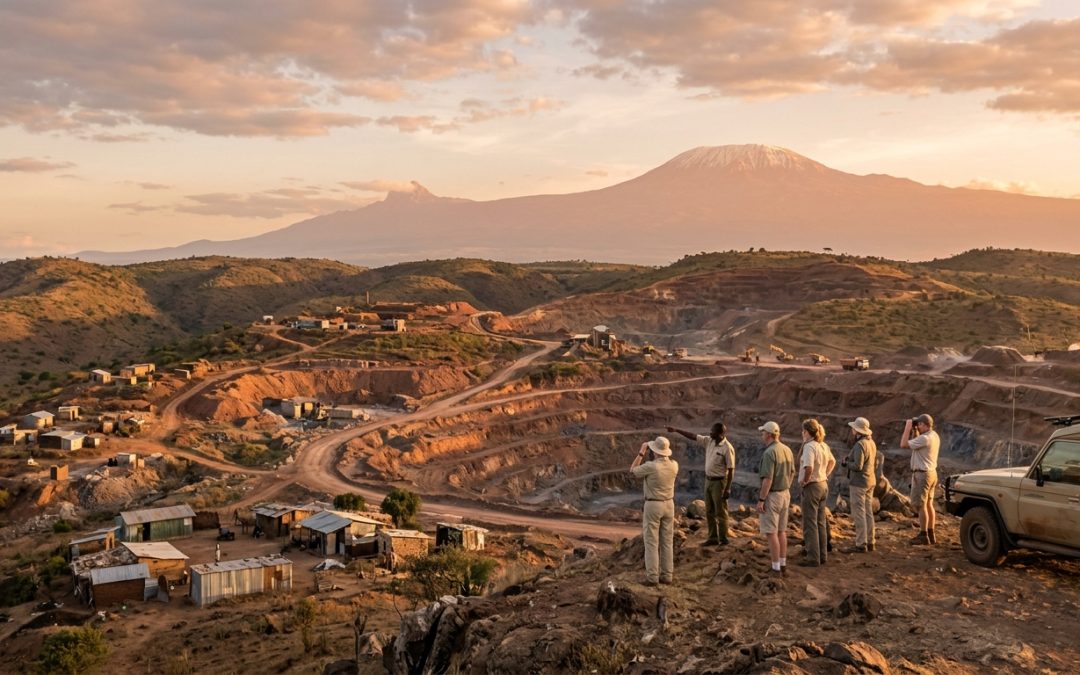
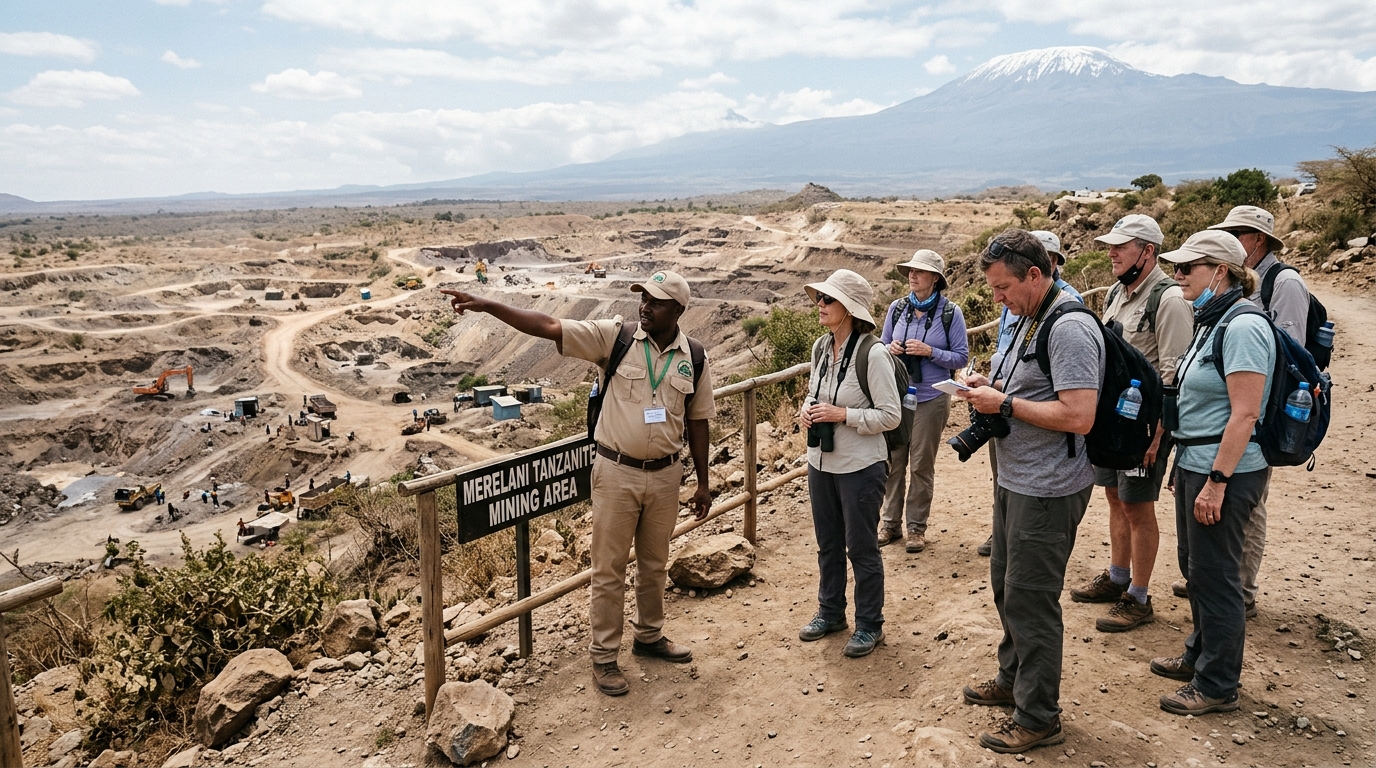
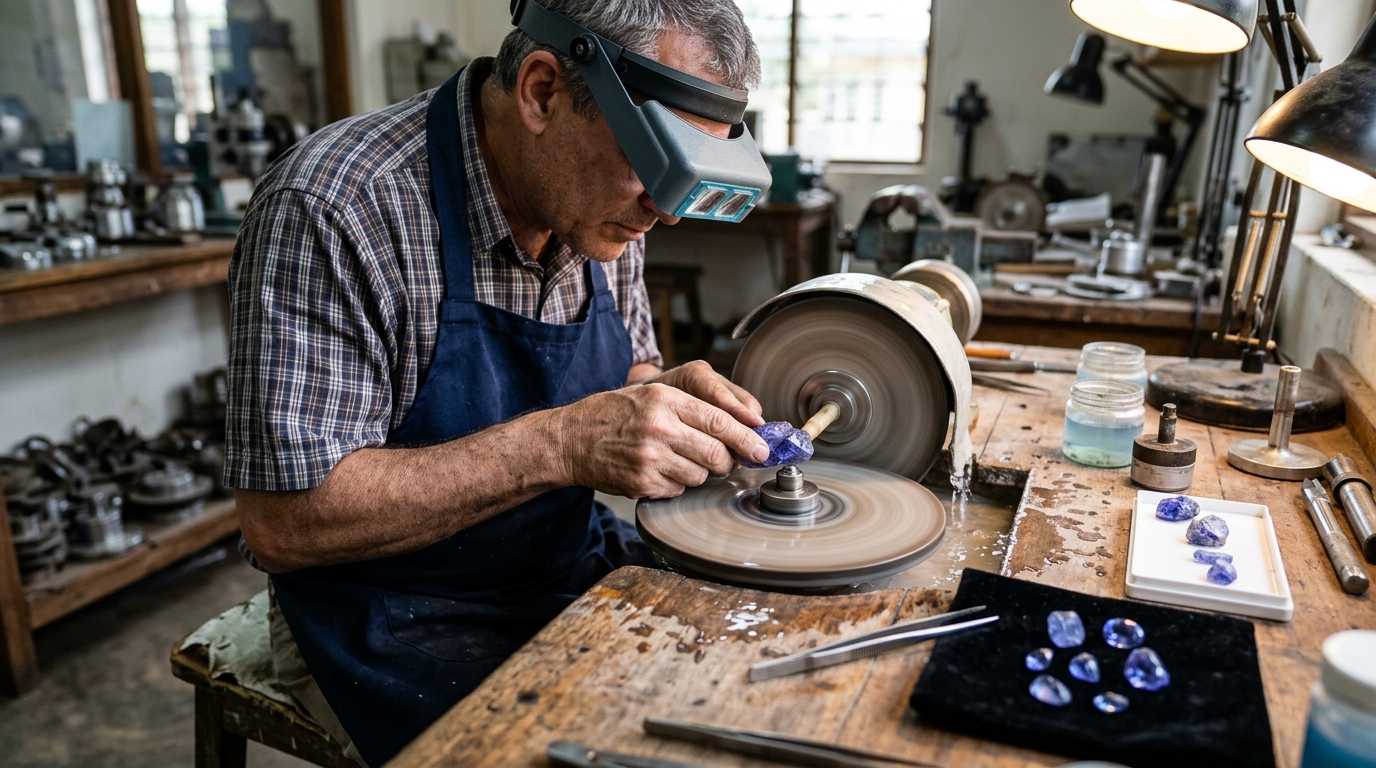
A gem tour typically runs as a half-day trip out from Arusha toward the Merelani mining block near Mount Kilimanjaro. You won't be climbing down a working shaft, active mines are genuinely dangerous and stay off-limits to visitors, but you will see the surface operations, meet miners and sorters during a break, and watch rough stone graded by colour and clarity in front of you. From there the tour moves to a workshop where cutters shape the rough material, and finally to a selling floor, where a purchase comes with a full view of the hands it passed through. Full-day options add more time in the workshop for anyone who wants to watch the cutting process in more depth.
Buying in a shop: what you get, and what you don't
A jewellery counter can show you a beautifully finished ring, a certificate, and a price. What it can't show you is the miner who pulled the rough stone from the ground, the sorter who decided which pile it belonged in, or the cutter who worked out the angle that would catch the best colour. That's not a criticism of buying from a shop, most people do exactly that, and it's a perfectly reasonable way to buy a gemstone, provided you know what to check first, as covered in our tanzanite jewellery buying guide. It's simply a different transaction: you're trusting a certificate and a seller's word rather than watching the process yourself.
Gem tour or shop purchase: a side-by-side look
| What matters to you | Buying from a shop counter | A tanzanite gem tour |
|---|---|---|
| Time required | As little as twenty minutes | Half a day, or a full day for more workshop time |
| Seeing the stone's origin | Not usually possible | You visit the Merelani mining area itself |
| Understanding sourcing | Relies on a certificate and the seller's word | You watch sorting and cutting happen directly |
| Best suited to | A quick, straightforward purchase | Anyone who wants context before spending on a gemstone |
| Group size | Individual, whenever you walk in | Small groups, usually under twelve, booked ahead |
A find that started with a Maasai herder, not a mining survey
The origin story is one guides on the tour tell properly, standing more or less where it happened. In 1967, a Maasai herder called Ali Juuyawatu noticed unusual blue-violet crystals scattered near Mererani and mentioned it to a local prospector. Within a couple of years, Tiffany & Co. had named the stone "tanzanite" after the only country it comes from, and the rush began. It's a detail that lands very differently standing on the ground than reading it off a display card in a shop.
Why sourcing matters more with tanzanite than most gemstones
Tanzanite is only found in one place on earth, the Merelani Hills, a claim backed by independent gemological sources including the GIA's material on tanzanite's origins. That single-source status is part of what makes provenance worth caring about. Anywhere else, you're trusting a chain of hands you never see. On a gem tour, you've watched the stone move from ground to counter yourself, which removes most of the uncertainty that usually comes with buying gemstones through several unseen middlemen.
So which one should you actually book?
If you already know you want a specific piece and simply need it purchased efficiently, a shop counter does the job, and there's a wide selection to browse at Africa Gems & Jewelers regardless of whether you take a tour first, right next door to the wider African art gallery collection. If tanzanite is a bigger part of your trip, if you're weighing up a significant purchase, want to understand grading before you commit, or simply find the mining story genuinely interesting, the tour earns its half-day. A lot of guests split the difference: take the tour first, then buy with the confidence that comes from having seen the whole process.
Fitting a gem tour into your Tanzania trip
Most guests pair the gem tour with a few days on safari or a stop in Zanzibar either side of it, since a half-day tour doesn't eat significantly into a wider itinerary. It's one of several local Tanzanian tours worth weighing up before you fix your route. Tours run most days during the June–October travel season and take small groups, usually under twelve, so it's worth booking a week or two ahead if your dates are fixed.
What buyers actually worry about with tanzanite
The most common concern we hear isn't about price, it's about authenticity. Because tanzanite only comes from one narrow strip of land, there's a real market for heat-treated zoisite and synthetic colour enhancement being passed off as the genuine stone, particularly through online marketplaces far from where it's mined. That risk doesn't disappear entirely on a gem tour, but it drops sharply, since you're buying from people who handled the rough material themselves rather than a seller several steps removed from the source. It's the same logic that applies to buying carvings from a workshop where you can watch the carver work, rather than a stall where you're taking someone's word for the material.
A middle option worth knowing about
You don't have to choose one or the other in isolation. Plenty of guests take the tour specifically to build confidence in a purchase they make afterwards, rather than treating the two as separate decisions. Seeing the sorting floor and the cutting process doesn't obligate you to buy on the spot, but it does mean that whenever you do decide, whether that's the same day or after comparing pieces back at the gallery, you're making the decision with a clearer picture of what you're actually paying for, and turning a simple purchase into a genuinely unique Tanzanian experience along the way.
Frequently asked questions
Is it worth taking a tanzanite gem tour if I just want to buy a piece of jewellery?
It depends on your priorities. A shop purchase is faster and perfectly reasonable, but a gem tour adds context, seeing the mining, sorting and cutting process, that a counter alone can't provide.
Can visitors go down into the actual tanzanite mine?
No. Active mines aren't open to visitors for safety reasons. You'll see surface operations, sorting and cutting instead, which still gives a full picture of the process.
Is tanzanite really only found near Mount Kilimanjaro?
Yes. The Merelani Hills remain the only confirmed source of natural tanzanite anywhere in the world, a claim backed by independent gemological sources including the GIA.
How long does a tanzanite gem tour take?
Typically a half-day, with a full-day option available that adds more time in the cutting workshop.
Can a gem tour be combined with the rest of a Tanzania trip?
Easily. Most visitors add it alongside a safari or a stop in Zanzibar, since a half-day tour doesn't take up much of an itinerary.
How far ahead should I book?
A week or two ahead is a good idea during the June–October travel season, since tours run in small groups and popular dates can fill up.
Does taking a gem tour reduce the risk of buying fake tanzanite?
It significantly lowers that risk. You're buying from people who handled the rough stone directly, rather than through a chain of unseen sellers, which is where most misrepresented tanzanite tends to enter the market.
Buying tanzanite in a shop isn't a mistake, most purchases happen exactly that way, and there's nothing wrong with it if that's what suits your trip. But if you want to know precisely what you're paying for and where it actually came from, tanzanite gem tours are the version of buying that leaves nothing to trust blindly, because by the time you reach the counter, you've already seen the whole story for yourself, from the ground it came out of to the wheel that cut it.
See Where Your Tanzanite Comes From First
If you're going to buy tanzanite at all, tanzanite gem tours with Safariland let you see the mining, sorting and cutting process before you decide what to buy.
Book a Tanzanite Gem Tour