
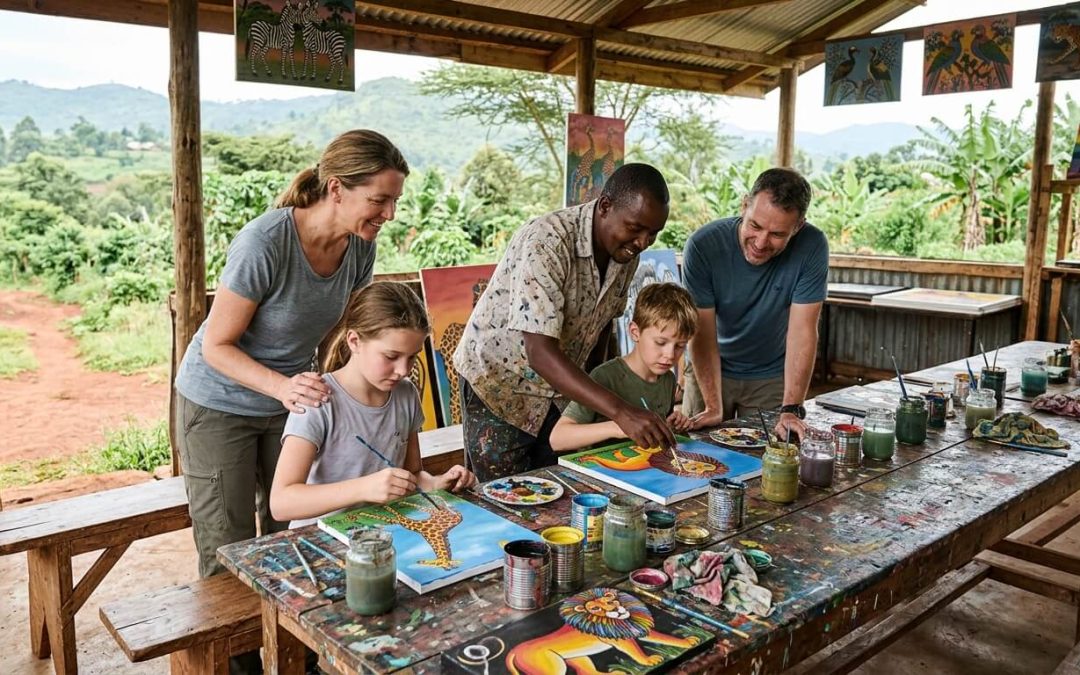
Children are brilliant on safari for about the first two days. After that, even a leopard in a tree can struggle to compete with the sheer number of hours spent sitting in a vehicle. What families need is a break that's still part of the trip: something hands-on, a bit messy and completely different from home. That's where a unique Tanzanian experience for families away from the game drives comes in.
Here are the activities at Safariland that I've seen children enjoy most, and how to plan them around the age of your kids.
Painting their own safari souvenir
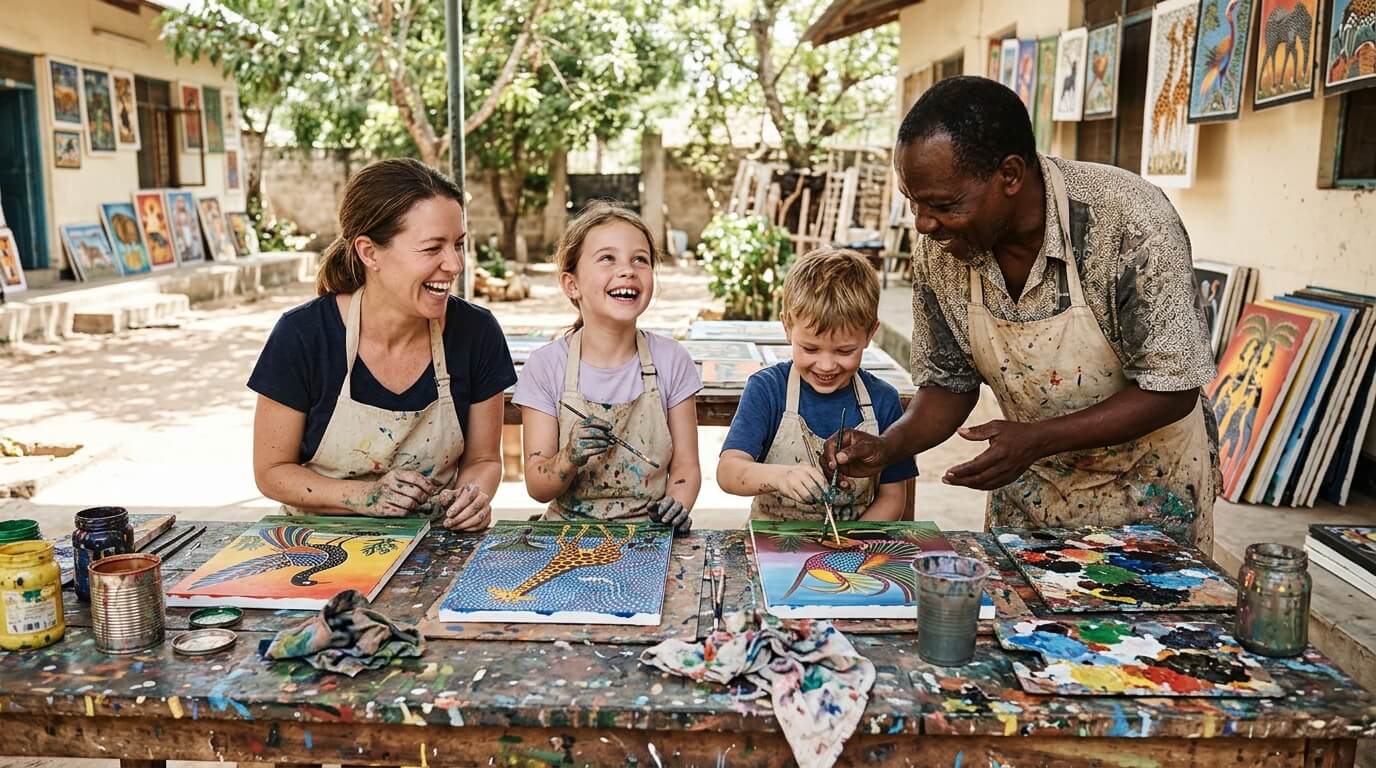
If I had to pick one activity for families, it's the Painting Workshop. A local artist guides everyone through a painting, usually in the bright Tingatinga style with bold colours and animals. Children get it immediately. There's no pressure to be realistic, and a purple elephant is perfectly acceptable.
The best part is what they take home. A painting they made themselves, of an animal they actually saw, tends to end up framed on a bedroom wall rather than in a drawer.
Watching real carvers at work
Older children, roughly eight and up, are often fascinated by the Makonde carvers. There's something about watching a block of dark wood slowly become a face or an animal that holds their attention. Give them a mission: ask the carver how long the piece will take, or how old he was when he started learning. The answers usually stick.
Younger children can find it a bit too still, so keep that visit short if you've got toddlers.
Cooking and eating something new
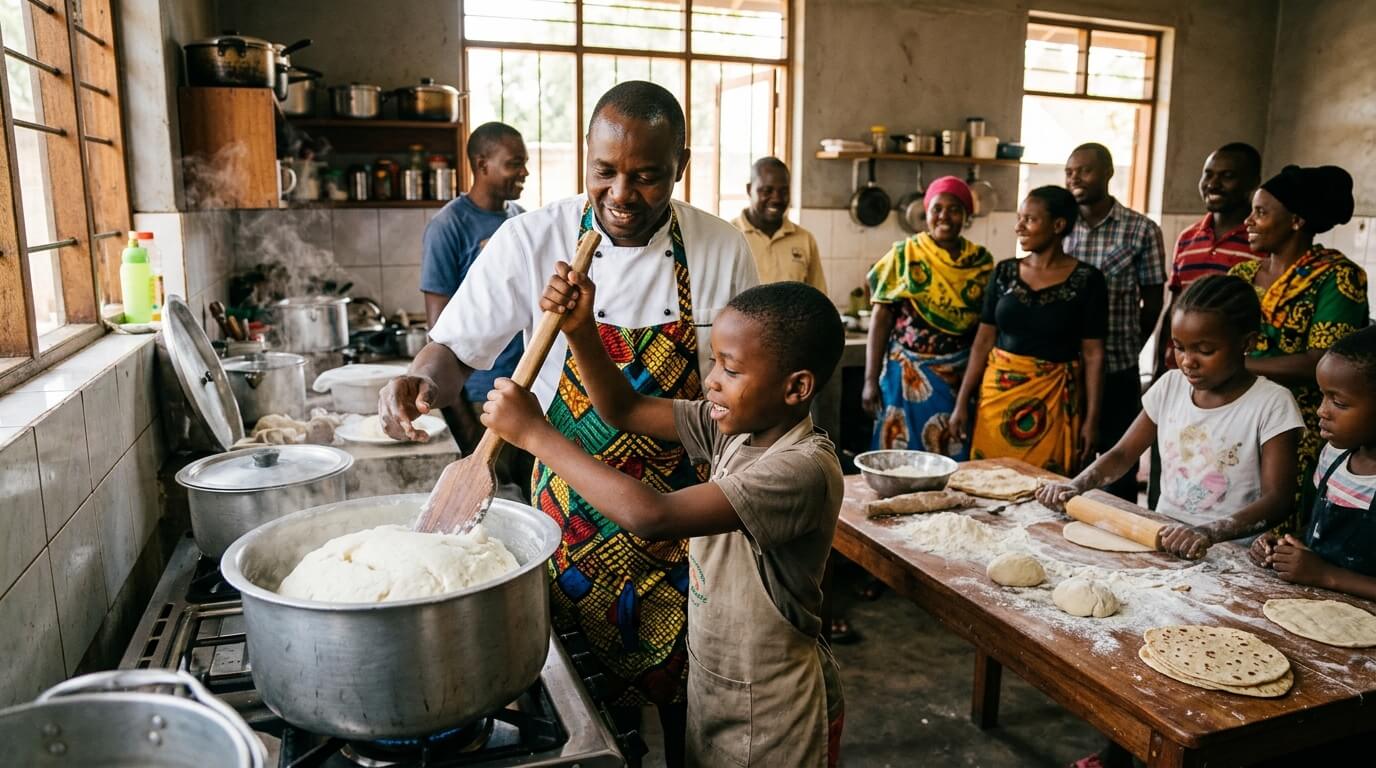
A cooking demonstration turns lunch into an activity. Kids can help stir the ugali, which is hard work and very satisfying, or try rolling a chapati. Then everyone eats what they've seen made at Ol Mesera Restaurant. Fussy eaters are often much more willing to try food they've had a hand in.
A school visit
Safariland founded a local school, and the Local School Visit gives families the chance to spend time with students in their classroom. For school-age children this is often the part of the trip they talk about for years, because it's the first time they've seen how other children their age learn and play. There's more on the school and Safariland's community work in our look at Tanzania's cultural traditions at Safariland.
Planting a tree
Through the Moyo Mmoja Foundation's Panda Project, families can plant a tree during their visit. It takes little time, children love getting their hands in the soil, and there's something nice about knowing a part of your holiday is still growing in Tanzania long after you've flown home.
Keeping teenagers interested
Teenagers can be the hardest travellers to impress, and a day of 'culture' can sound suspiciously like school. The trick is to give them something real to do rather than something to look at.
Painting works well if they're creative, especially if you let them choose their own subject. The carving tour often lands better than expected, because watching a skilled person do something difficult with sharp tools is hard for anyone to ignore. The Tanzanite Tour at Africa Gems & Jewelers can also win them over, since there's a proper story behind a stone that's only found in one place on earth. Our guide to tanzanite gem tours explains what they'll see.
Let them take the photos, too. A teenager with a camera and a brief, such as capturing the carver's tools or the colours in the gallery, is usually a lot more engaged than one who's just following along.
Lunch without the battle
Family lunches on safari can be tricky when children are tired and the menu is unfamiliar. At Ol Mesera, grilled choma choma and simple sides like chips, rice and chapati usually go down well with younger eaters, while adults can try something more adventurous. Snacks, or bitings as they're called locally, are good for sharing and let children taste a little of everything without committing to a whole plate. If the family enjoys it, our piece on Tanzanian food tours has more ideas for eating well on the trip.
Why these moments stick
Children remember what they did far more than what they saw. A week after a safari, most kids can name the animals, but years later it's the moments they took part in that come back: the painting they made, the ugali they stirred, the tree with their name attached to the memory. A few hours of hands-on activity breaks up the long drives and gives them a part of the trip that belongs to them.
Which activities suit which ages
Not sure which to pick for your kids? This quick guide matches each activity to an age group.
| Activity | Best age | Why kids enjoy it | Parent tip |
|---|---|---|---|
| Painting Workshop | 4 and up | Bright colours, their own souvenir | Bring a spare top |
| Ebony Carvings Tour | 8 and up | Watching a sculpture appear | Give them a question to ask |
| Cooking demonstration | 5 and up | Stirring ugali, rolling chapati | Pair it with lunch |
| Local School Visit | School age | Meeting children their own age | Talk about it beforehand |
| Panda Project tree planting | All ages | Hands in the soil, a lasting memory | Take a photo to track it |
Making the visit work with children
Time it for the afternoon after a morning game drive, when kids are ready to get out of the vehicle.
Turn the gallery into a game: ask them to find five different animals in the paintings before lunch.
Bring a change of top for younger children on painting day. Paint gets everywhere.
Let each child choose one activity. Ownership makes a big difference to how engaged they are.
Book activities in advance and mention your children's ages so the team can plan accordingly.
Where it fits on your route
Safariland is near Karatu, between Lake Manyara and Ngorongoro Crater, so it's on the road most northern safaris already take. Everything is on one site, so there's no extra driving between activities. After a week of long transfers, parents tend to notice that. For timing ideas, see how to fit a Tanzania experience into one stop.
If you're still weighing up options, our comparison of African art workshops near Karatu explains the painting and carving sessions in more detail, and what makes Safariland a unique experience beyond the safari covers everything else on site.
FAQ
What is a unique Tanzanian experience for families?
It's an activity beyond game drives that lets children take part in local culture, such as painting with a local artist, watching Makonde carvers, a cooking demonstration, a school visit or planting a tree.
What age is best for the painting workshop?
Children from around four years old usually enjoy it, especially in the bright Tingatinga style. Let the team know ages when booking.
Is Safariland suitable for young children?
Yes. Activities like painting, cooking and tree planting suit younger children, while the carving tour and school visit tend to suit older ones.
Where is Safariland in relation to safari parks?
It's near Karatu, between Lake Manyara and Ngorongoro Crater, around two hours' drive from Arusha, so it fits naturally into most northern safari routes.
Give Your Family a Unique Tanzanian Experience
Book painting, carving, cooking or a school visit at Safariland near Karatu and give your children a unique Tanzanian experience they'll remember long after the game drives. Tell us your dates and your kids' ages and we'll help plan the day.
Plan a Family Visit