
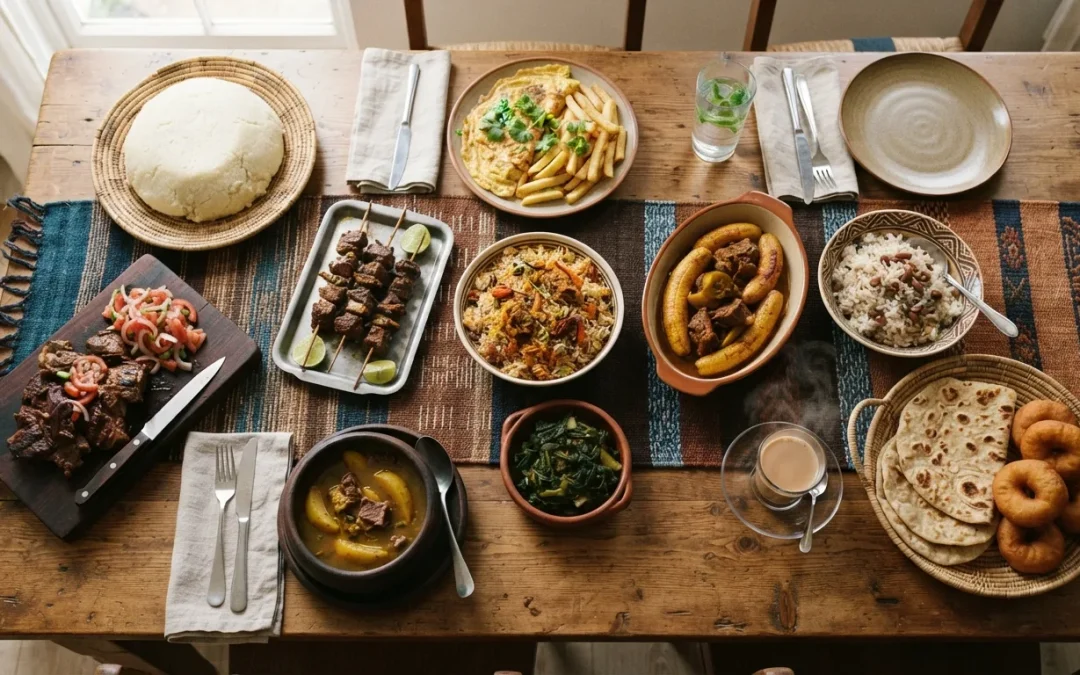
The ten East African dishes to try in northern Tanzania are ugali, nyama choma, mishkaki, chipsi mayai, pilau, mchicha, mtori, ndizi nyama, wali na maharage, and chapati with mandazi and chai. Ask for them by their Swahili names, because a lodge buffet will not offer them.
Key takeaways
- Start with ugali and nyama choma, the two dishes behind most meals.
- Mtori and ndizi nyama are the northern dishes most visitors miss.
- Chilli comes on the side, so taste first.
- Busy stalls that cook in front of you are the safest street food.
Most safari itineraries are planned to the hour for wildlife and barely at all for meals. That's a shame, because East African food is one of the easiest ways into the culture here, and northern Tanzania has some of the best of it. I've put together the ten dishes I send guests off to find, roughly in the order I'd want someone to try them.
None of these are hard to track down once you know the names. The trick is asking for them, because the lodge buffet won't volunteer them.
The ten dishes
1. Ugali
Start here. Ugali is stiff maize porridge, plain and filling, and it's the base of most meals across East Africa. Tear off a piece with your right hand, make a small dent with your thumb and use it to scoop up whatever's next to it. On its own it's bland. That's the point.
2. Nyama choma
Nyama choma means grilled meat, usually goat or beef, cooked slowly over charcoal. You order by weight, wait while it cooks, and it arrives chopped on a board with salt and chilli. In the north, where cattle culture runs deep, it's the default way to celebrate anything.
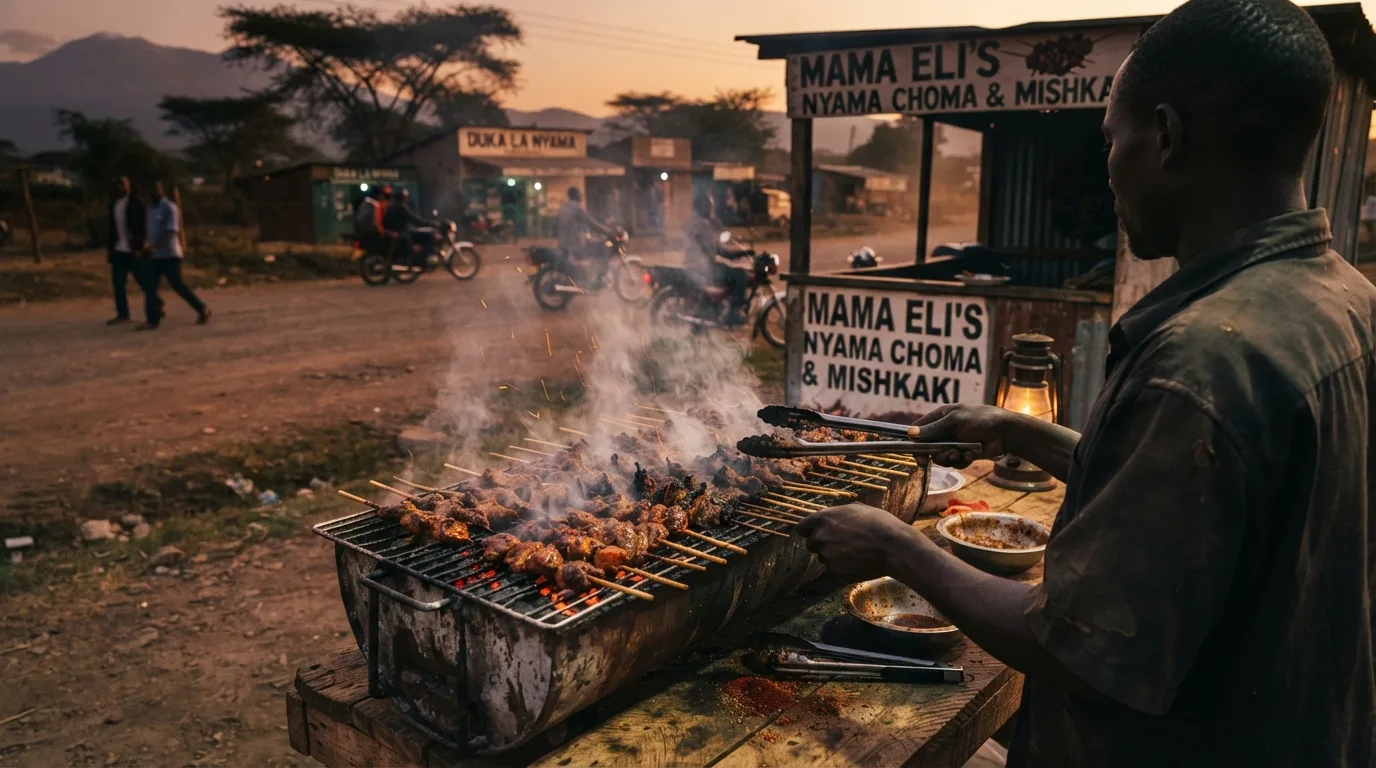
3. Mishkaki
Mishkaki are small skewers of marinated beef or chicken, grilled fast over hot coals. You'll smell them before you see them on any busy street around dusk. Two or three skewers with a squeeze of lime make a very good snack between drives.
4. Chipsi mayai
Chips cooked into an omelette. It sounds like something you'd invent at 2am, and in a way it is, but it's also one of Tanzania's most loved comfort foods. Eat it with kachumbari and a splash of chilli sauce.
5. Pilau
Rice cooked slowly with meat stock, cumin, cardamom, cinnamon and cloves. Pilau came inland from the Swahili coast and now shows up at weddings, holidays and Friday lunches everywhere. A good one fills the room with its smell before the lid is off.
6. Mchicha
Amaranth leaves cooked down with tomato, onion and sometimes a little coconut or peanut. Mchicha is what keeps ugali from being dry, and it's a real option if you're vegetarian. People sometimes call it wild spinach, which is close enough.
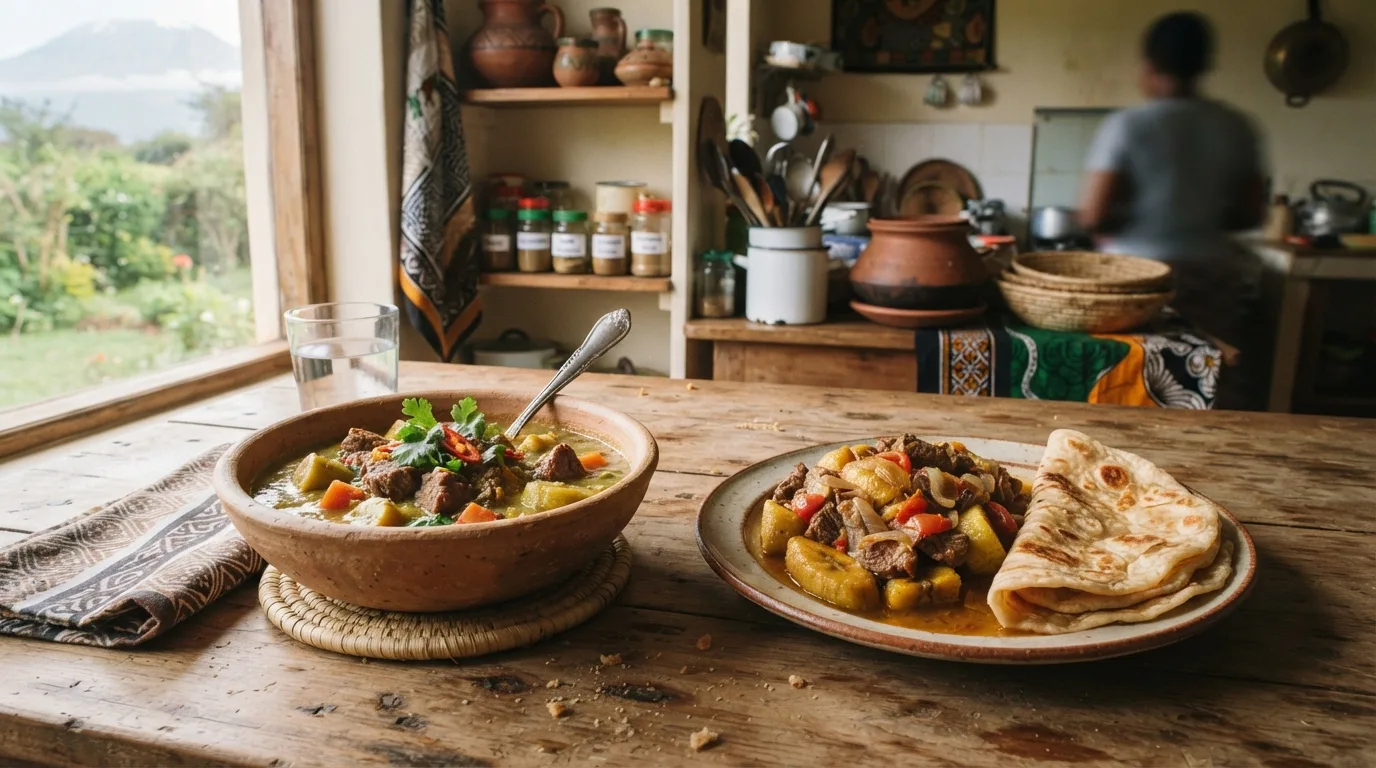
7. Mtori
This is the one most visitors miss. Mtori is a thick soup of cooking bananas and beef from the Chagga communities on Kilimanjaro's slopes. It's gentle, filling and slightly sweet, and locals swear by it as recovery food. If you see it on a menu around Arusha or Moshi, order it.
8. Ndizi nyama
Green plantains stewed with beef or goat, tomato and onion until the bananas soak up the sauce. It's everyday home cooking in the north and much heartier than it looks.
9. Wali na maharage
Rice and beans, with the beans often simmered in coconut milk. It's cheap, it's everywhere, and when it's done well it's one of the most satisfying things you'll eat on the trip.
10. Chapati and mandazi with chai
Two breads that came from the coast's trading history. Chapati is a soft, layered flatbread for tearing into stews. Mandazi is lightly sweet fried dough, sometimes spiced with cardamom, eaten with milky, sugary chai. This is breakfast for millions of people, and it's also a perfect mid-afternoon stop.
Quick guide: when and where to eat each one
| Dish | What it is | Best time to eat it | Where you'll usually find it |
|---|---|---|---|
| Ugali | Firm maize porridge | Lunch or dinner | Almost every local restaurant |
| Nyama choma | Charcoal-grilled goat or beef | Late lunch, evenings, weekends | Grill houses and bars |
| Mishkaki | Marinated meat skewers | Early evening | Street grills and night markets |
| Chipsi mayai | Chips cooked into an omelette | Any time, especially late | Street stalls and cafes |
| Pilau | Spiced rice with meat stock | Lunch, celebrations | Local restaurants, family events |
| Mchicha | Amaranth greens with tomato | With lunch or dinner | Home-style kitchens |
| Mtori | Banana and beef soup | Breakfast or lunch | Around Arusha and Kilimanjaro |
| Ndizi nyama | Plantain and meat stew | Lunch | Northern home-style kitchens |
| Wali na maharage | Rice and coconut beans | Lunch | Cheap local eateries |
| Chapati, mandazi and chai | Flatbread, sweet dough, spiced tea | Breakfast or afternoon | Tea shops and cafes |
A few tips before you order
- Chilli comes on the side. Tanzanian cooks season with spice rather than heat, and pilipili sauce sits on the table. Taste first.
- Hand washing comes before the food. At local places a basin and jug of warm water usually come round the table, because you will eat with your hands.
- Street food is worth it if it is busy and cooked in front of you. Mishkaki and chipsi mayai off a hot grill are a safer bet than anything that has been sitting out. For a guided version, see our article on Tanzanian food tours.
- Ask for Swahili names. “Local food” can mean anything on a tourist menu. “Do you have mtori?” gets you a more honest answer.
- Do not skip breakfast. Some of the best East African food is eaten before 9am: chai with mandazi, a bowl of mtori, or chapati with beans. If your lodge only offers toast and eggs, ask whether the kitchen can make something local.
Where to try several in one sitting
If your route runs between Lake Manyara and Ngorongoro Crater, you pass Karatu, and that's where Safariland sits. Ol Mesera Restaurant cooks traditional Tanzanian dishes with fresh organic ingredients and a modern touch. The menu includes grilled choma choma, mchicha bowls and bitings, the local word for snacks. It's a sensible way to tick off several dishes on this list without hunting for them town by town.
Lunch there also leaves time to walk through the African art gallery next door. For more on how the different stops at Safariland fit together in one visit, have a look at what makes Safariland a unique Tanzanian experience.
Frequently asked questions
What is the most popular East African food?
Ugali is the most widely eaten, served with stews, greens or grilled meat. Nyama choma is probably the most loved, especially in northern Tanzania and Kenya, where it's the centre of most social meals.
Is East African food safe for tourists to eat?
Generally, yes. Eat at busy places, choose food that's cooked hot in front of you, and drink bottled or filtered water. Most visitors eat local food throughout their trip without any trouble.
What should I eat in Arusha or Karatu?
Look for mtori and ndizi nyama, which are regional to the north, along with nyama choma, pilau and mchicha. Ol Mesera Restaurant at Safariland near Karatu serves several of these in one place.
Do Tanzanians eat with their hands?
Often, yes, especially ugali, which is eaten with the right hand. Restaurants will always give you cutlery if you prefer, and nobody will think less of you for asking.
Try East African Food Between Game Drives
Work through this list at Ol Mesera Restaurant at Safariland near Karatu, on the road between Lake Manyara and Ngorongoro Crater. A proper Tanzanian lunch will not cost you any time on your safari. Tell us your dates and group size and we will have a table ready.
Plan Your Stop at SafarilandCall +255 743 722 666 or email info@mysafariland.com