
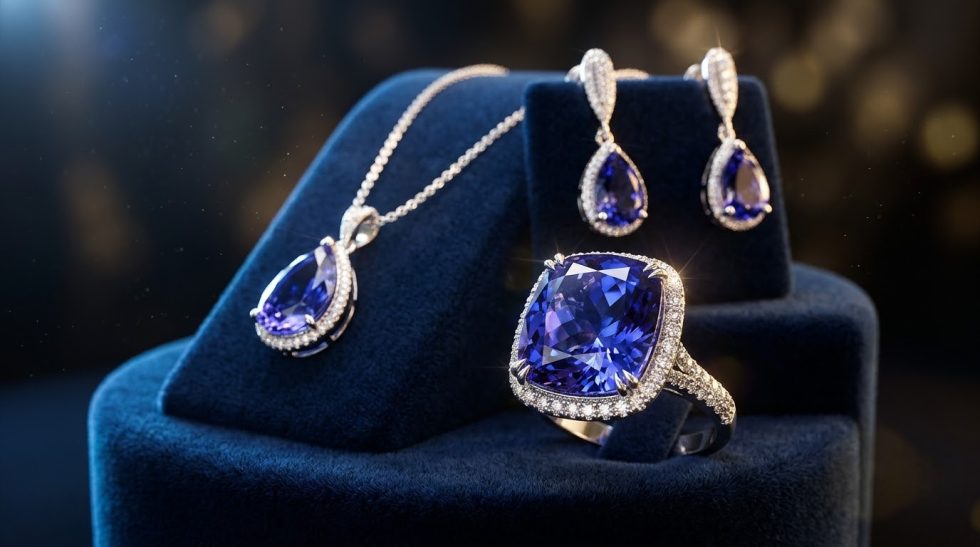
Picking tanzanite is usually the quick decision. People walk in already sold on the stone. Then they stand at the counter for twenty minutes, sometimes longer, going back and forth between a ring and a pendant, phone out, texting a sister to ask what size finger Mum has. If you're shopping for a tanzanite gift, that's the bit that trips most people up: not which stone, but which piece.
I see this most weeks. So, for what it's worth, this is what I'd tell you if you were standing in front of me.
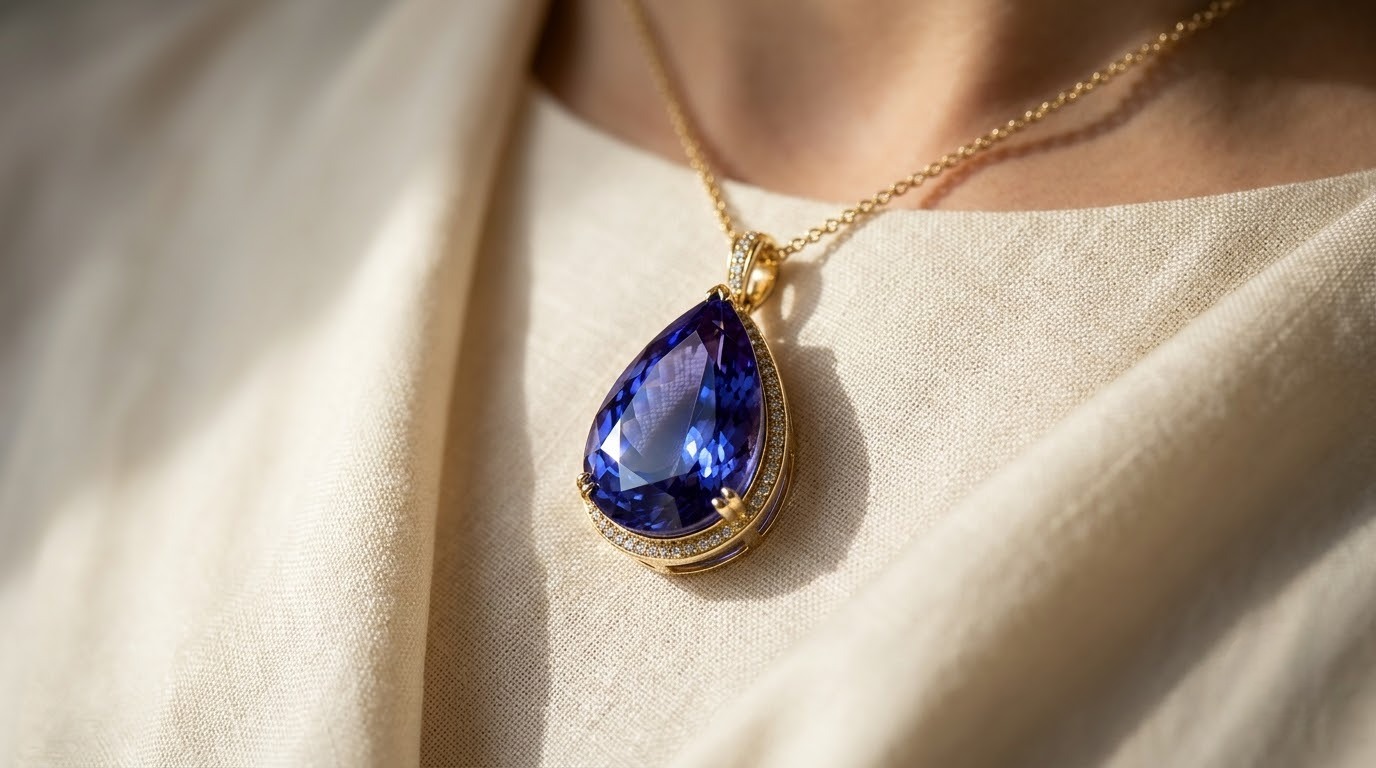
If you're not sure, get a pendant
Honestly, nine times out of ten that's my advice. You can't get the size wrong. It hangs away from the knocks that hands take all day. And because it moves when the person moves, it catches light from different angles, so you see the stone flick between blue and violet in a way you just don't with a ring sitting flat on a finger.
There's a practical reason too. Tanzanite is softer than people expect, about 6 to 6.5 on the Mohs scale, well below sapphire and diamond. On a chain round someone's neck it's out of harm's way. A single stone on a plain chain also goes with pretty much anything, jeans or a work suit.
Earrings work for almost anyone
Next safest. Studs are quiet and you can wear them every day without thinking. Drops are more fun, because they swing, and that movement shows off the colour change better than anything.
One thing I'd check, and hardly anyone does: turn the earring over and look at the back. Settings that are open behind the stone let light come through it, and the colour looks livelier. Closed backs can make even a good stone look a bit flat.
Rings are lovely, but think it through
I'm not going to talk anyone out of a tanzanite ring. For an anniversary, or an engagement, it's hard to beat. But a ring takes a beating. Door frames, car doors, the edge of a desk, a kitchen worktop. Hit tanzanite hard at the wrong angle and it can chip.
So if it's a ring, go for a setting that protects the stone, a bezel where metal runs round the edge, or claws that sit a little proud. And ask about resizing before you pay. Guessing ring sizes is a mug's game, and most of us have guessed wrong at least once. Thinking about an engagement ring specifically? Have a look at our piece on why tanzanite makes such an unusual engagement ring first.
And bracelets?
They exist, and some are gorgeous. But wrists bang into things nearly as much as hands do. I'd treat a tanzanite bracelet as something for evenings out, and look for one where the stones sit low and well tucked in.
How they compare
| Piece | Everyday wear | Sizing risk | Best for |
|---|---|---|---|
| Pendant | Excellent | None | A first tanzanite gift, birthdays |
| Stud earrings | Excellent | None | Daily wear, quieter tastes |
| Drop earrings | Good | None | Evenings, showing off the colour change |
| Ring | Good with a protective setting | Medium, so ask about resizing | Anniversaries, engagements |
| Bracelet | Now and then | Low | Special occasions |
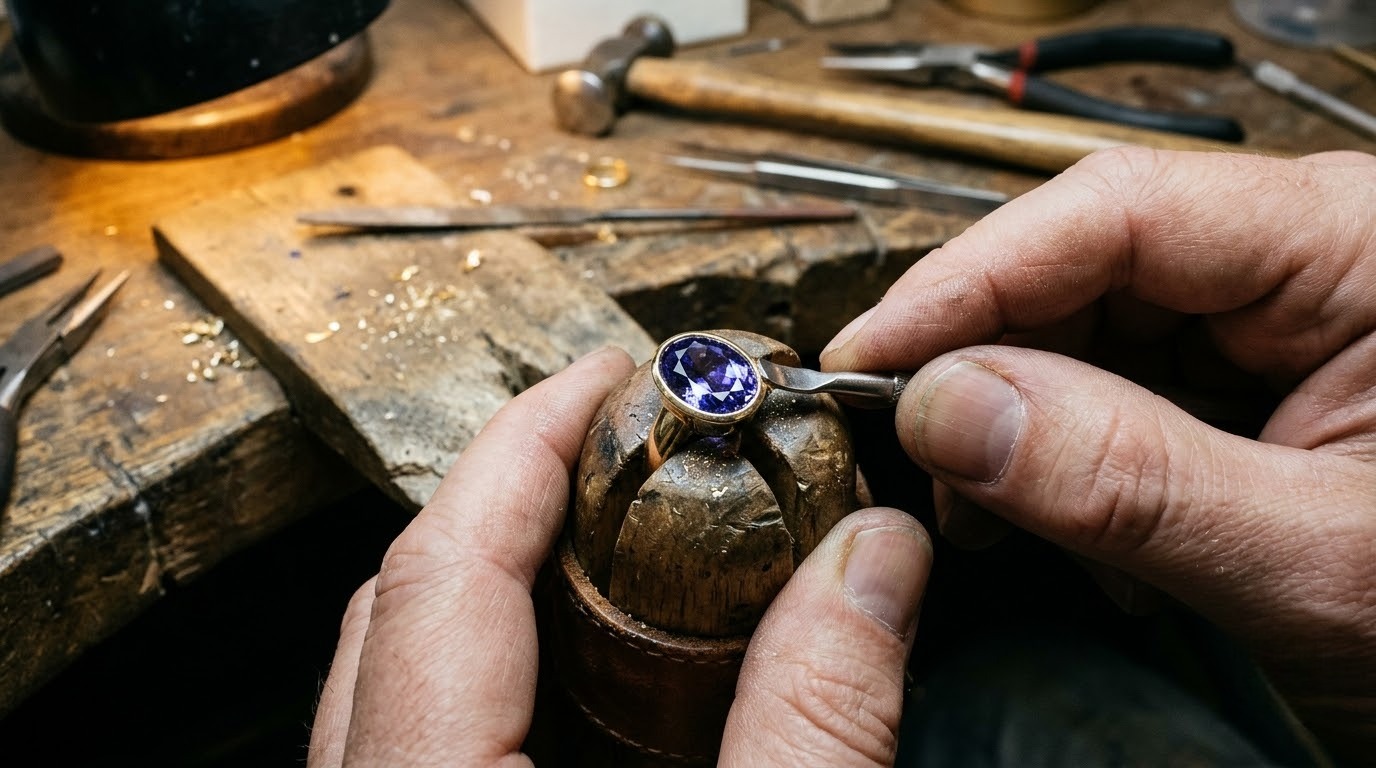
Think about the person, not the piece
This sounds obvious, but people skip it. How do they live, day to day? If someone's worn the same tiny studs every day for ten years, a tanzanite pair will probably go straight in and never come out. If they hardly wear jewellery at all, a pendant they can put on for dinner might suit them better. And a keen gardener, a climber, a nurse washing her hands forty times a shift, any of them is going to be hard on a ring, however much they love it.
The occasion matters too. Birthdays and Christmas, I'd lean towards pendants and earrings. Anniversaries and engagements are ring territory. December birthdays are the easy one, since tanzanite is one of the December birthstones.
Look at the stone itself
Colour first. Size second. Find a blue-violet you like in daylight and under indoor light, because tanzanite looks different in each. Deeper colours tend to cost more, but plenty of people prefer the softer lilac stones, and they can look especially pretty as earrings.
Then the cut. A well-cut stone gives back light evenly across its face. A badly cut one has a dull or watery patch, often right in the middle. You don't need training to see it. Ask to look at the piece under one light, tilt it slowly, and compare two or three. You'll spot it.
Buying earrings or a set? Put the stones next to each other. Tanzanite varies from stone to stone, and a decent jeweller will have matched a pair so they actually look like a pair.
Still stuck?
Get the pendant. I'm half joking, but only half. Of everything I've seen people buy as a first tanzanite gift, it's the piece that gets worn most. And you can add earrings next birthday. Some families have built up a little set that way over a few years, which is quite a nice tradition when you think about it.
What to ask before you hand over your card
First, has the stone been heat-treated? It almost certainly has, nearly all tanzanite is, and that's fine. You just want to be told. Second, what paperwork comes with it? Something in writing that describes the stone and the metal. Third, can it be resized or adjusted later, and could they change the setting or metal if you wanted something different made? And last, how should it be cleaned and stored?
A good jeweller answers all of that without blinking. If they hesitate or go vague, I'd look elsewhere. For more on checking a stone, see how to tell if tanzanite is the real thing.
Looking after it
Put a little card in the box. Most people have no idea tanzanite needs slightly gentler care than their other jewellery. Warm water, mild soap, a soft brush. Never an ultrasonic or steam cleaner. Keep it in its own pouch so a diamond doesn't scratch it, and take rings off for the gym, the garden and the washing up. That's all it needs.
Get the setting checked every year or two as well, rings especially. Claws wear down slowly, and you won't notice until a stone goes missing. Tightening a claw is cheap. Replacing a lost stone isn't.
Buying tanzanite in Tanzania
If you're on safari up north, Africa Gems & Jewelers at Safariland near Karatu is right on the way to Ngorongoro. Their Tanzanite Tour takes you from the mining side of things through to the finished jewellery, so by the time you're choosing you know what you're looking at. You can watch pieces being made, too, and if nothing in the cases is quite right, ask about having something designed.
Worth reading before you come: our guide to buying tanzanite jewellery the right way and our comparison of gem tours and buying in a shop. And if the gift needs to be sent rather than carried home, talk to the team about shipping early. December gets busy.
Frequently asked questions
What's the best tanzanite gift for a first purchase?
Usually a pendant. You can't get the size wrong, it's tucked away from knocks, and it shows the colour well.
Can you wear a tanzanite ring every day?
You can, but it's softer than sapphire or diamond. Choose a protective setting and take it off for anything rough.
Can I get tanzanite jewellery made to order in Tanzania?
Yes. Africa Gems & Jewelers at Safariland near Karatu can make custom pieces. Ask the team about designs, timing and shipping.
Is heat-treated tanzanite real tanzanite?
Yes. Nearly all tanzanite is gently heated to bring out the blue-violet. It's normal practice, and a good jeweller will tell you up front.
Choose Your Tanzanite Gift at Safariland
See rings, pendants and earrings side by side and choose the right tanzanite gift at Africa Gems & Jewelers at Safariland near Karatu. Join the Tanzanite Tour, or ask our team about custom pieces and shipping.
Explore Tanzanite at Safariland