
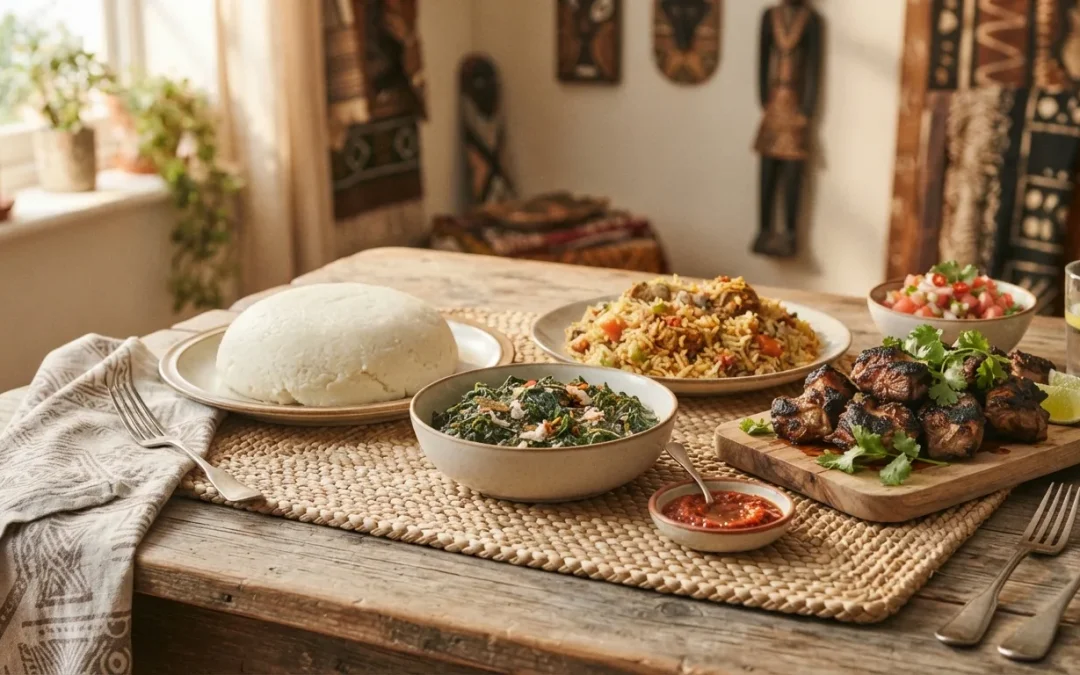
African cuisine in Tanzania is built on ugali, spiced sides from the Swahili coast and grilled meat from the northern cattle country. It is milder than West African or Ethiopian food, because the chilli comes on the side. Here is what that means on your plate.
Key takeaways
- Ugali (firm maize porridge) is the anchor of most meals. The flavour lives in what goes beside it.
- The Swahili coast brought cardamom, cloves and cinnamon, so spice is aromatic rather than fiery.
- In the north, bananas (mtori, ndizi nyama) and grilled meat (nyama choma) define the food.
- Chilli is served separately as pilipili, so you choose the heat.
People often ask me what African cuisine in Tanzania actually tastes like, usually over lunch after a long morning in the crater. They've eaten jollof in London, maybe injera in an Ethiopian place back home, and they expect Tanzanian food to be a version of one of those. It isn't. The food here sits between the spice routes of the Indian Ocean and the cattle country of the northern plains. After a few proper meals, the difference is hard to miss.
Here's what makes the plate in front of you in Tanzania its own thing, and how it compares with what people cook elsewhere on the continent.
Ugali is the anchor, but it's only the start
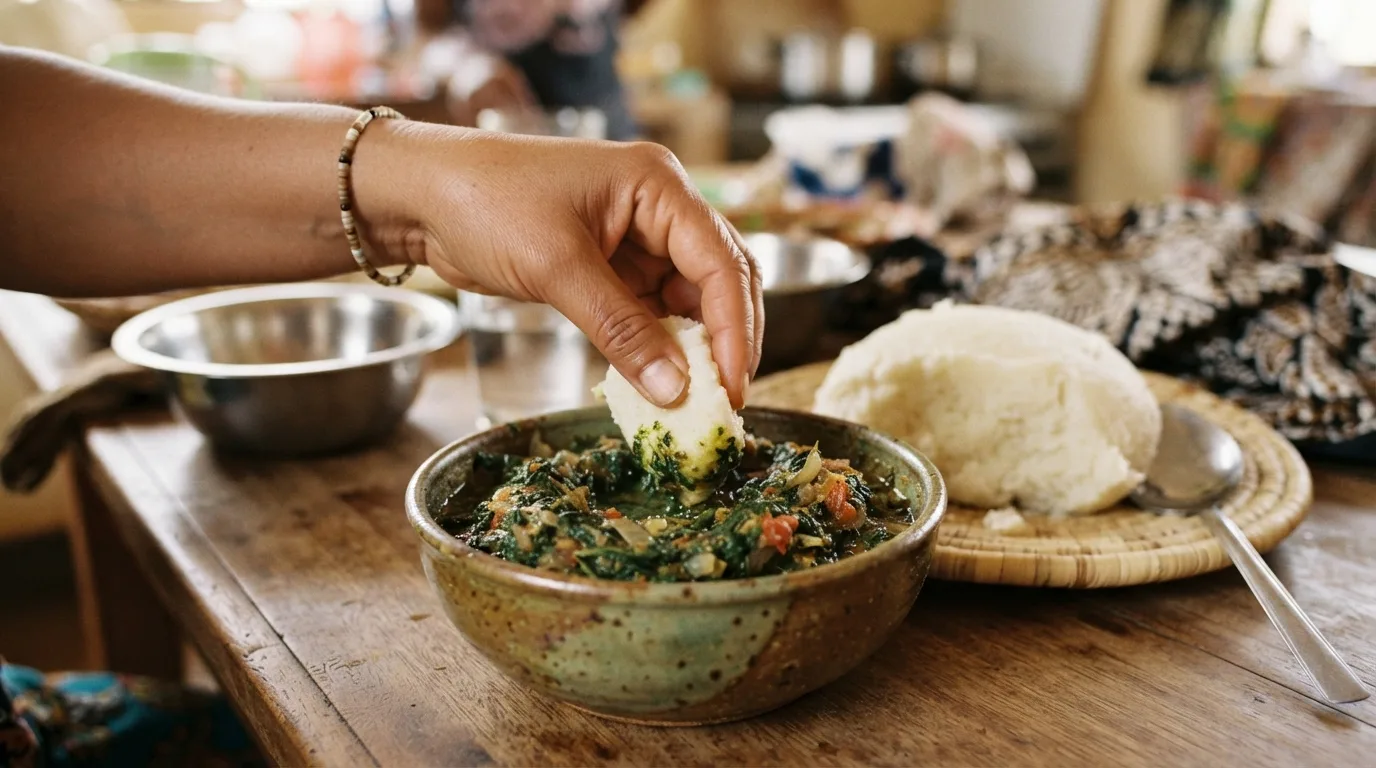
Almost every Tanzanian meal is built around a starch, and most days that starch is ugali: maize flour cooked with water and stirred hard with a wooden paddle until it firms up into something you can shape with your fingers. You pinch off a piece, press a thumb into it, and use it to scoop up stew or greens.
Plenty of countries eat something similar. South Africans call it pap, Malawians call it nsima, Zambians call it nshima. What changes in Tanzania is what goes next to it. Ugali here comes with mchicha (amaranth greens cooked with tomato and onion), beans in coconut, fried fish from Lake Victoria or a pile of grilled goat. The ugali is plain on purpose. The flavour lives in everything around it.
The Swahili coast brought the spice
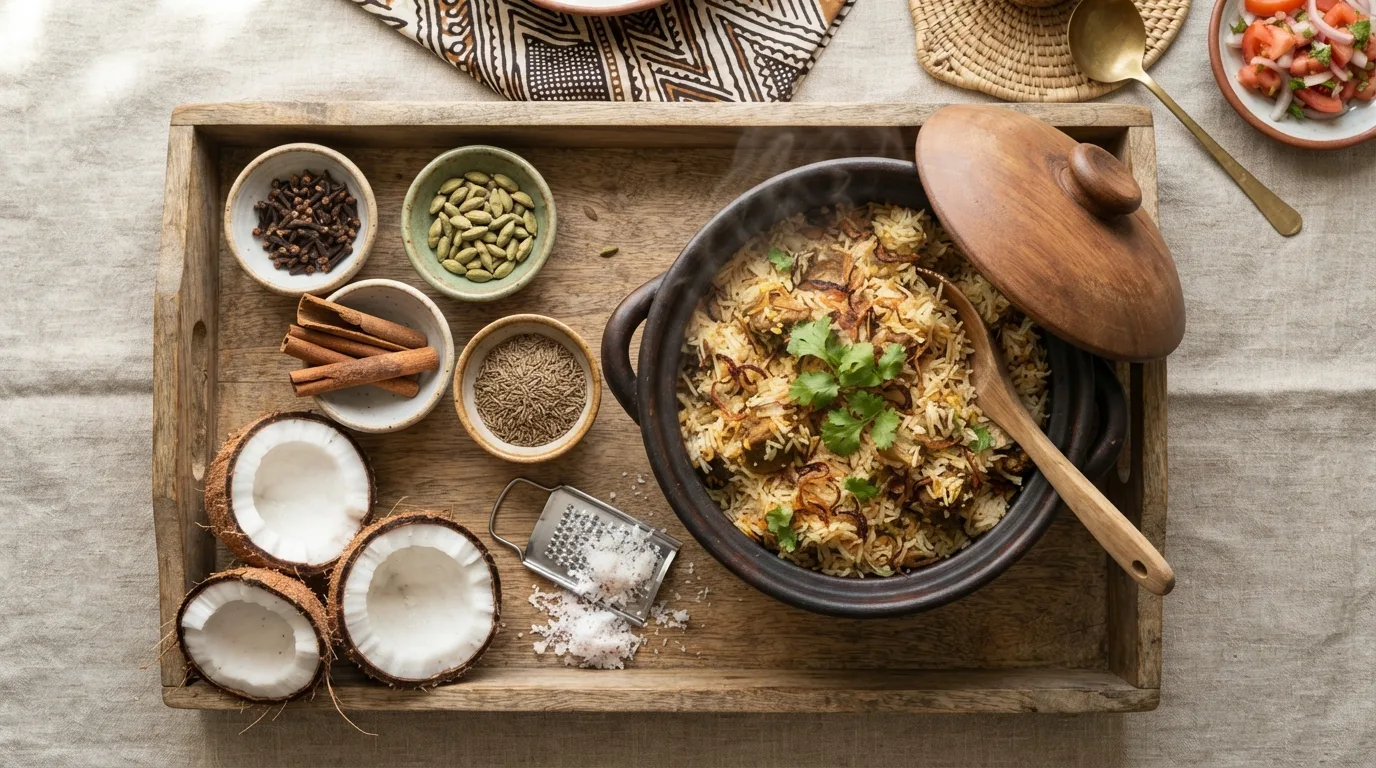
This is the part that sets Tanzania apart from most of the continent. For centuries the coast traded with Arabia, Persia and India, and Zanzibar became one of the world's big clove producers. You can taste that history in pilau, rice cooked slowly with cumin, cardamom, cinnamon and cloves, which turns up at weddings and Friday lunches right across the country, not only on the coast.
Chapati, samosas (sambusa here), biryani and coconut curries all came in along the same routes and never left. A Tanzanian lunch can easily include:
- A flatbread with Indian roots (chapati)
- A spiced rice with Arab roots (pilau)
- A bowl of greens that is purely local (mchicha)
Nobody here thinks of that as fusion. It's just food.
Street food follows the same pattern. Mishkaki, small skewers of marinated beef, are grilled on roadside braziers every evening, and chipsi mayai, chips folded into an omelette, is what half the country eats after a late night. Neither would look out of place in Mumbai or Muscat, and both are completely Tanzanian.
Up north, bananas and cattle
Travel inland toward Kilimanjaro and Arusha and the food shifts again. The Chagga people on the mountain's slopes grow cooking bananas. Dishes like mtori, a thick banana and beef soup, are what you would be fed if you turned up at someone's home feeling unwell. Ndizi nyama, plantains stewed with meat, is everyday cooking in the region.
Then there are the Maasai, whose traditional diet leans on milk, meat and blood from their cattle. You won't find that on restaurant menus, but the pastoral culture explains why grilled meat matters so much in the north. Nyama choma, meat roasted slowly over charcoal, is a social event more than a dish. Friends order it by the kilo, stand around while it cooks, and eat it off a board with salt, chilli and kachumbari (a fresh tomato and onion salad).
How Tanzanian food compares with the rest of Africa
It helps to see it side by side. Africa is huge, so this is a broad sketch, not a rulebook, but it covers the questions guests ask most.
| Region | Everyday staple | Signature flavours | What it feels like on the plate |
|---|---|---|---|
| Tanzania | Ugali, rice, plantains | Cardamom, cloves, coconut, charcoal grill | Mild base, spice on the side, lots of greens and grilled meat |
| West Africa | Fufu, jollof rice, yam | Scotch bonnet, palm oil, tomato | Rich, oily sauces with the heat cooked in |
| Ethiopia | Injera | Berbere, niter kibbeh (spiced butter) | Deep, slow stews served on sourdough flatbread |
| North Africa | Couscous, bread | Cumin, preserved lemon, ras el hanout | Slow-cooked tagines, sweet and savoury together |
| Southern Africa | Pap, mealie meal | Braai smoke, chakalaka relish | Grill culture much like nyama choma, with fewer spices |
The biggest surprise for most visitors is the heat, or the lack of it. Tanzanian cooks tend to leave the chilli on the side as pilipili sauce, so each person decides how hot their plate gets. Food from West Africa or Ethiopia usually cooks the heat straight into the pot.
Eating together is part of the recipe
One thing that doesn't show up in any recipe is how people eat. Meals are shared, often from the same platter, and a small basin of warm water usually comes round first so everyone can wash their hands. Ugali is eaten with the right hand. Nobody will mind if you ask for a fork, but try it the local way at least once. It genuinely tastes different when you're not rushing it.
Tea is taken with milk, sugar and often ginger or cardamom, and mandazi (lightly sweet fried dough) is the usual partner. If you want a proper sense of how locals eat through a day, our piece on Tanzanian food tours walks through what a good one should include.
Where to try it properly on safari
The problem on a safari circuit is that most lodge buffets serve an international spread with one token 'African' stew. If you want the real thing between game drives, you have to plan for it a little.
At Safariland, between Lake Manyara and Ngorongoro near Karatu, Ol Mesera Restaurant cooks traditional Tanzanian dishes with fresh organic ingredients and a modern touch: grilled choma choma, mchicha bowls and local snacks the menu calls bitings. Because it shares a site with the African art gallery and the jewellers, lunch fits neatly into a stop you were probably making anyway. There's more on how that works in our guide to a Tanzania experience you can fit into one stop.
Frequently asked questions
What is the national dish of Tanzania?
Ugali is the closest thing to a national dish. It's a firm maize porridge eaten with stews, greens or grilled meat, and it appears at most everyday meals across the country.
Is Tanzanian food spicy?
Not usually. Tanzanian food is aromatic rather than fiery. Cooks use cardamom, cloves and cumin generously, but chilli is normally served separately as pilipili so you can add as much or as little as you like.
How is Tanzanian food different from Kenyan food?
They share a lot, including ugali, nyama choma and chapati. Tanzania leans more heavily on Swahili coast cooking, with more pilau, coconut and spice, while regional dishes like Chagga banana soup give northern Tanzania its own character.
Can vegetarians eat well in Tanzania?
Yes. Beans, lentils, mchicha, pilau, chapati and coconut vegetable curries are everyday food, so a vegetarian can eat traditional dishes without relying on salads.
Taste African Cuisine in Tanzania at Safariland
Stop for lunch at Ol Mesera Restaurant at Safariland near Karatu, between Lake Manyara and Ngorongoro Crater. Tell us your dates and group size, and we can add a cooking demonstration so you see the dishes made before you eat them.
Plan Your Lunch at SafarilandCall +255 743 722 666 or email info@mysafariland.com