
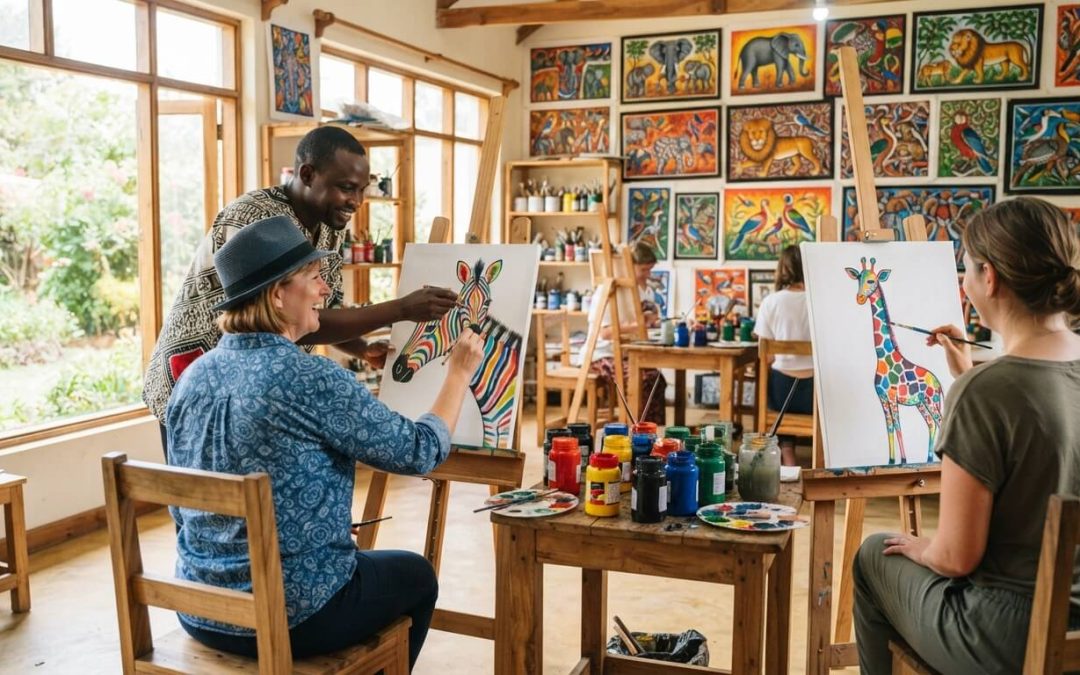
The nicest thing anyone's said to me about our painting sessions came from a retired accountant who hadn't held a brush since school. She held up her finished canvas, a slightly lopsided giraffe against an orange sky, and said it was the only souvenir she'd ever made herself. That's really what painting workshop tours in Tanzania are for. You don't leave with a masterpiece. You leave with something that's yours.
Here's how our Painting Workshops at Safariland work, what people tend to paint, and how to get it home in one piece.
Who runs the workshop
Sessions are guided by local artists, many of whom have work hanging in African Galleria. That matters. You're learning from someone who paints for a living, knows the local styles inside out and has taught plenty of complete beginners.
The artist will usually start by showing you a few finished works and talking through the style you'll be using, then help you sketch out your idea before any paint goes on.
Styles you might work in
Most guests choose one of the styles they've just seen on the gallery walls:
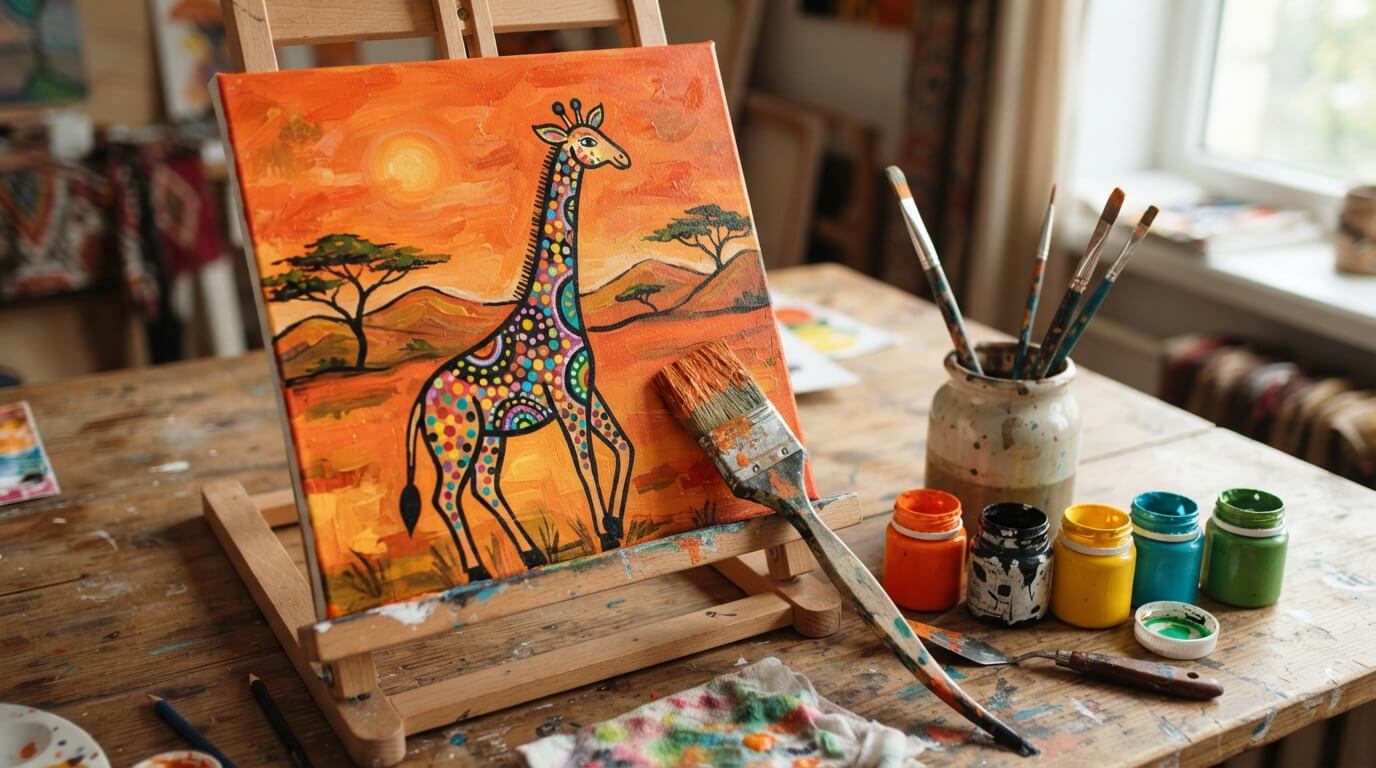
Tingatinga is the obvious favourite. It started in Tanzania in the 1960s and uses bold, flat colour, strong outlines and animals or village scenes, often with a playful, crowded feel. It's forgiving for beginners because it isn't about realistic shading.
Landscapes are popular too, particularly Serengeti horizons and acacia silhouettes at sunset. They're a good choice if you've just come off a game drive with a particular view in your head.
Some people prefer something simpler: a single animal, a pattern inspired by Maasai beadwork or a scene from their own trip. The artist will help you adapt the idea to your comfort level.
What you might create
| What you might paint | Style | Why guests choose it | Difficulty for beginners |
|---|---|---|---|
| Giraffe, elephant or lion | Tingatinga | Bold, bright and fun to fill in | Easy |
| Village or market scene | Tingatinga | Lots of small details and colour | Moderate |
| Serengeti sunset with acacias | Landscape | Captures a view from your safari | Easy to moderate |
| Maasai-inspired pattern | Decorative | Graphic and striking on a wall | Easy |
| A moment from your own trip | Your choice | The most personal souvenir possible | Depends on the idea |
How a session flows
Workshops are relaxed. After the introduction, you'll plan a simple composition, often with the artist sketching guidelines alongside you. Then comes blocking in the big areas of colour, which is the part people enjoy most because the picture appears quickly. Details and outlines come last, with the artist stepping in to show a technique rather than taking over.
Nobody is marking your work. The best sessions are full of questions, laughter and the occasional rescued mistake. If you want a sense of how painting compares with our other creative sessions, see African art workshops in Tanzania.
Tips for first-time painters
Keep your idea simple. One animal or one horizon on a small canvas almost always turns out better than an ambitious scene with six elephants and a village. You can add detail later if you have time.
Work from big to small. Block in the background colours first, then the main shapes, then outlines and details last. It's how the Tingatinga painters work, and it stops you smudging finished areas.
Don't fight the wobbly lines. Tingatinga is meant to be bold and slightly naive, so imperfections tend to look intentional. Several of the best workshop paintings I've seen came from people who were convinced they couldn't draw.
Ask the artist to show you their brush technique. Seeing how a professional loads a brush and paints a clean outline in one stroke will improve your painting more than anything else.
Why local artists run these sessions
For the artists, workshops are more than a teaching job. They're a way to share a style they care about, earn income alongside their own work and meet people who'll go home and talk about Tanzanian art. Many guests who start with a workshop end up buying a painting from the same artist later in the day, which is a nice way for the visit to come full circle.
How long to allow
Workshops are unhurried by design, and the pace depends a lot on your group and what you choose to paint. A simple animal on a small canvas takes less time than a busy village scene. Tell the team how much time you have when you book and the artist will suggest a subject that fits, so you're never rushing the final details.
Getting your painting home
This is the practical bit people forget to ask about until the end.
- Let it dry. Thicker paint needs time, so ask the artist how long before it can be handled or rolled.
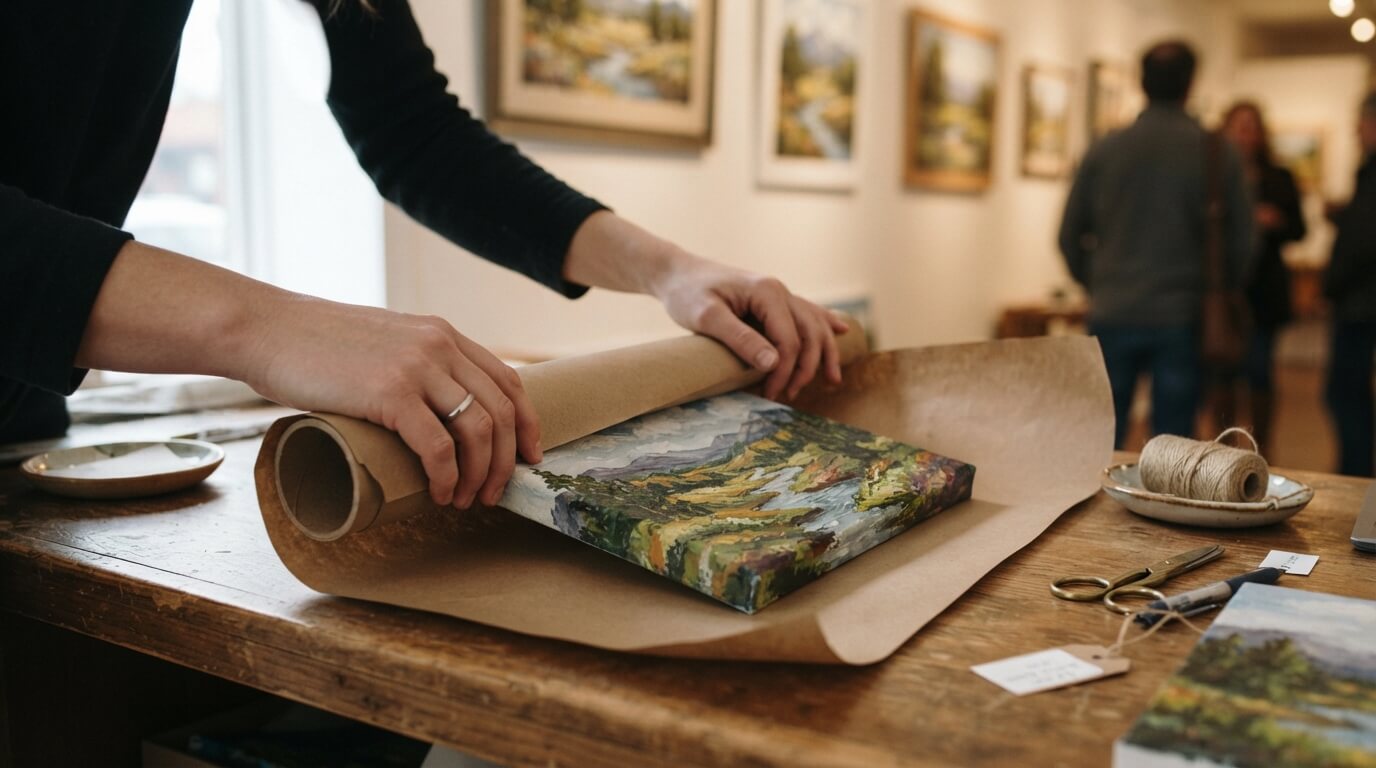
- Roll, don't fold. Canvas travels best rolled loosely with the painted side facing outwards, wrapped in paper.
- Keep it in your hand luggage if you can. Checked bags get crushed, and a tube is easy to carry on.
- Frame it at home. It's cheaper and far easier than flying with a frame.
The team at Safariland is used to packing artwork for travel, so ask them for help rather than improvising in your lodge room.
Making it versus buying it
Some guests do both, and I think that's the right instinct. Painting your own piece gives you a real appreciation of how much skill goes into the originals on the wall. Afterwards, the work of a professional Tingatinga painter looks very different. If you're tempted to buy one too, our guide on where to buy authentic African paintings in Tanzania is worth reading first, along with our piece on African paintings and handmade crafts.
Fitting it into your safari
Safariland sits near Karatu, between Lake Manyara and Ngorongoro Crater, so a workshop works well on a travel day when you'd otherwise just be driving. Pair it with lunch at Ol Mesera Restaurant and a walk through the gallery, and it becomes one of the more memorable afternoons of the trip. For more on booking, see African art workshops near Karatu.
Frequently asked questions
Do I need painting experience to join?
No. Painting workshop tours in Tanzania like ours are designed for all levels, and the local artist guides you from the first sketch to the final details.
Can I take my painting home the same day?
Yes, you leave with your painting. Ask the artist about drying time before rolling it, and keep it in hand luggage if possible.
What is Tingatinga painting?
Tingatinga is a Tanzanian painting style that began in the 1960s, known for bold, flat colours, strong outlines and animal or village scenes.
Is the painting workshop suitable for children?
Yes. Children tend to love the bright Tingatinga style. Let the team know ages when booking so the artist can plan the session.
Book Painting Workshop Tours in Tanzania at Safariland
Join one of our painting workshop tours in Tanzania at Safariland near Karatu. A local artist will guide you from blank canvas to finished piece, and you'll take home a painting that you made yourself.
Book a Painting Workshop