
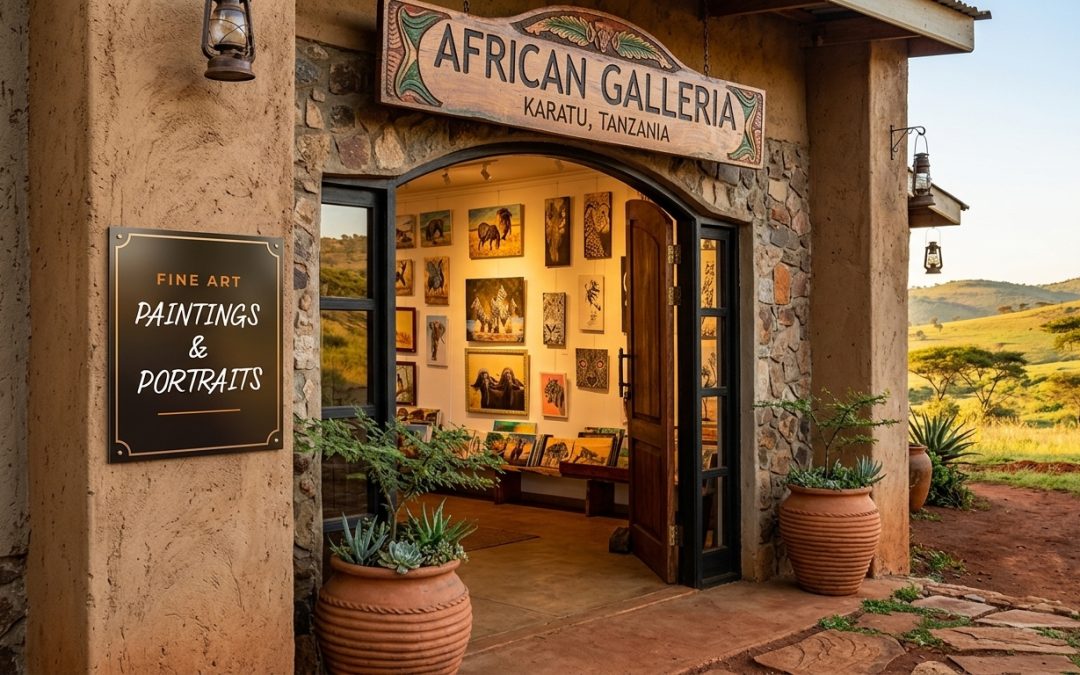
Buy African paintings from the wrong stop on a safari route and you'll come home with something mass-produced, painted from a template rather than an idea, and priced as if it were original. Buy from the right one and you leave with a piece that actually has a story attached to the brushstrokes. African Galleria, part of the Safariland complex near Karatu, sits closer to the second category, largely because you can watch the paintings being made rather than just browse the finished wall.
What's actually in the paintings collection
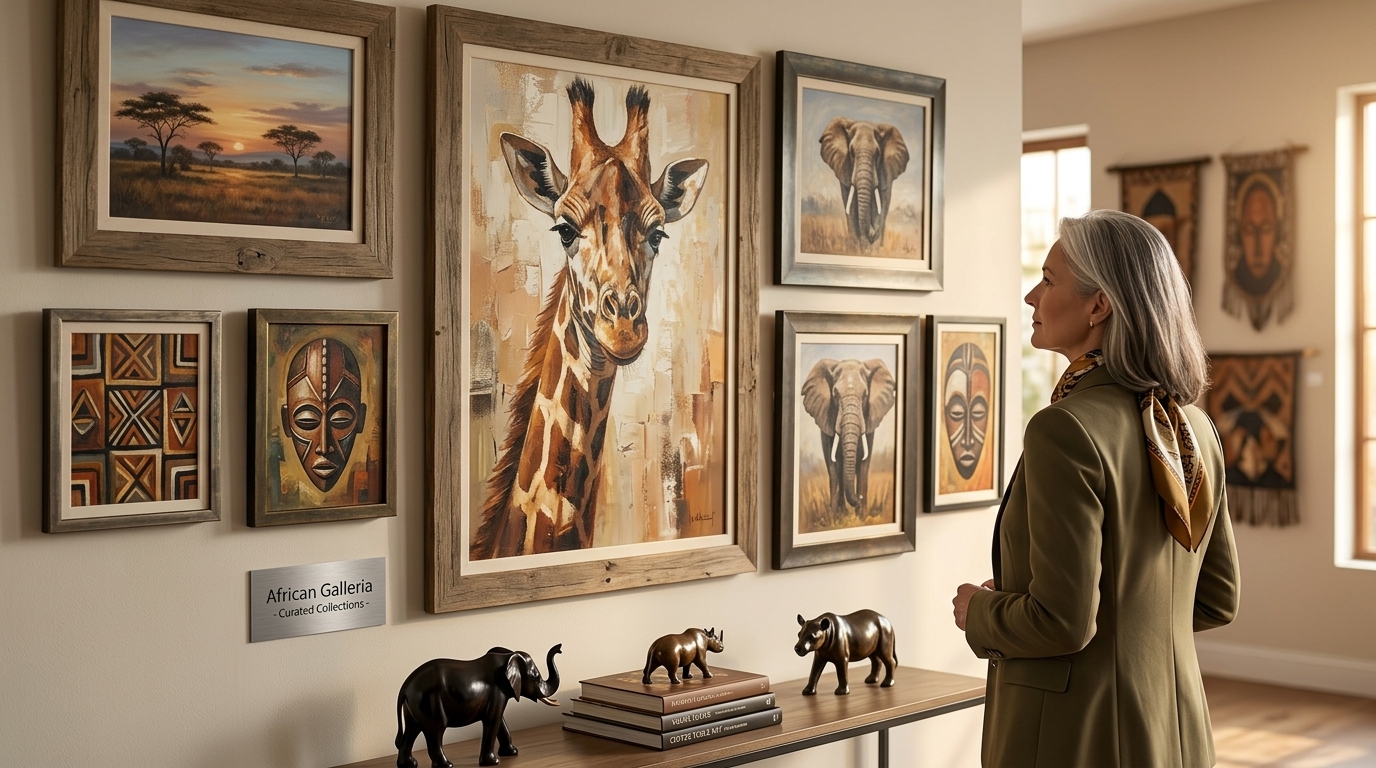
The collection covers a genuinely wide range, vivid landscapes, wildlife pieces, and abstract expressions of cultural identity, featuring both established international work and pieces by local talent. It's not curated down to a narrow, tourist-friendly theme. You're as likely to find a serious wildlife study as a smaller abstract piece that fits easily into hand luggage. That range is deliberate, the gallery is built around Africa's artistic diversity rather than a single style repeated across every canvas on the wall.
Watching the process instead of just the result
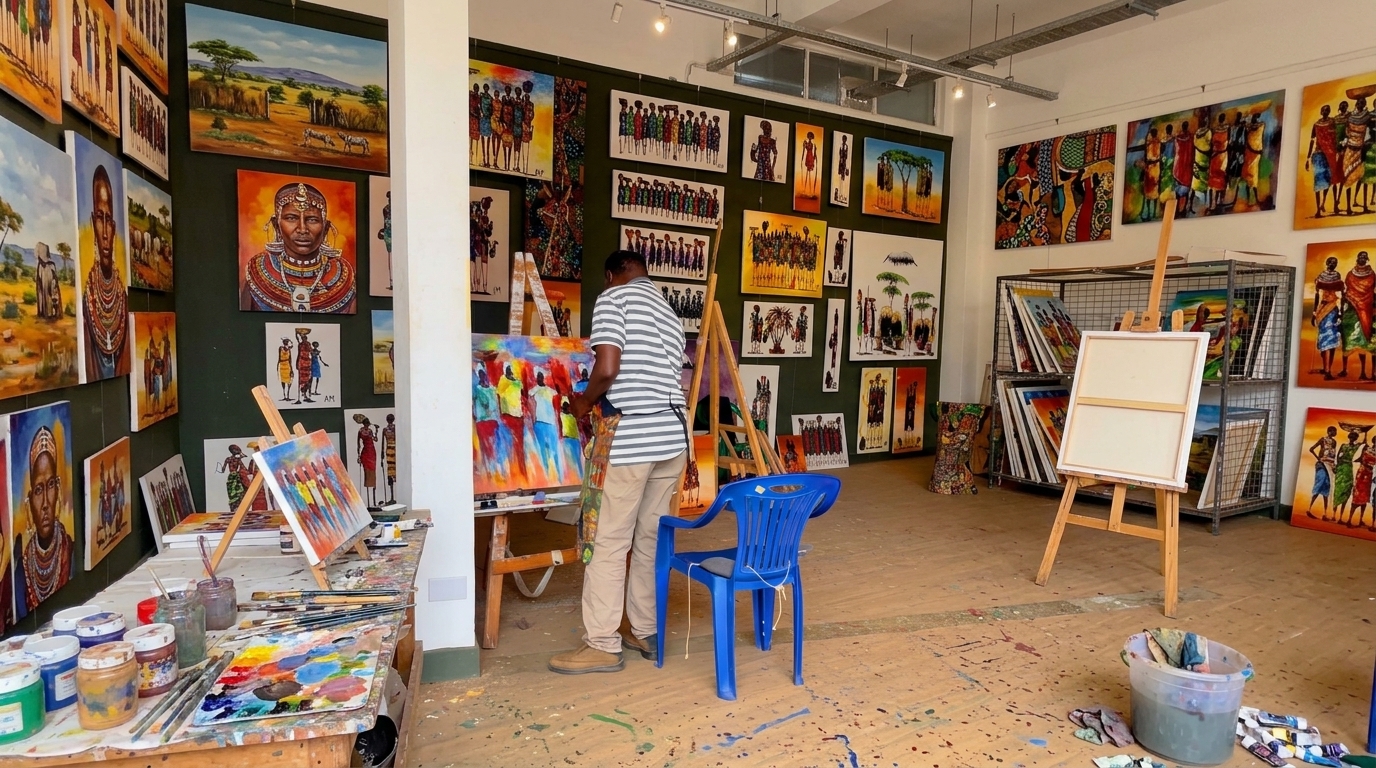
What separates buying African paintings here from a typical roadside stall is that the painting workshop happens inside the gallery itself, live, rather than off-site somewhere you never see. A local artist works alongside visitors, guiding you through creating your own piece in one of the gallery's African art workshops rather than simply talking you through theirs. That interaction does two things: it shows you the actual craftsmanship behind the finished work on the walls, and it deepens the connection between the artist and anyone looking to buy, because you're no longer purchasing from a stranger's finished product, you've watched the process that produced it.
Gallery purchase vs roadside stall: what actually differs
| What you're weighing up | A roadside curio stall | African Galleria |
|---|---|---|
| Range on offer | A narrow, repeated set of themes | Landscapes, wildlife and abstract work from varied artists |
| Seeing the artist work | Rarely possible | Live painting workshops happen inside the gallery |
| Provenance | Often unclear | Founders have personally curated the collection |
| Buying your own piece | Not an option | Guided workshop lets you create and take home your own |
| Where it sits on your route | Varies, often a random stop | Directly between Arusha and Ngorongoro Crater |
A founders' collection, not a stock inventory
African Galleria was curated with a genuine appreciation for art behind it rather than assembled purely as retail stock. That founders' involvement matters for buyers because it shapes what actually ends up on the walls, work chosen to represent Africa's artistic range, not simply whatever sells fastest to a passing tour bus. It's part of what makes the gallery serve as what the team describes as a dynamic space for exploring African creativity, rather than a shop with paintings as inventory.
Colour, subject and what actually varies between pieces
Because the collection spans several artists rather than one dominant style, colour palettes and subject choice vary noticeably from piece to piece. Some paintings lean heavily into the golden, dusty tones associated with savannah landscapes, others use much bolder, saturated colour to depict wildlife or daily life scenes. Abstract pieces exploring cultural identity often use colour more symbolically than literally, worth asking about if a particular painting catches your eye and you want to understand the choices behind it rather than simply liking the look of it. That variety is part of what makes browsing here worthwhile rather than repetitive, walking the gallery floor rarely feels like seeing the same painting twice with a different animal swapped in.
Who gets the most out of a paintings visit
This suits genuine art buyers who want more than a generic souvenir, travellers who'd rather take home something with a real story attached than a print bought purely because it was convenient. It also suits families or individuals who want to try the painting workshop as an activity in its own right, regardless of whether a purchase follows, and it fits neatly into a wider unique Tanzanian experience built around Safariland's other attractions. It's less suited to anyone after a specific, mass-produced item at the lowest possible price, that's simply a different kind of shopping trip.
The wider collection paintings sit alongside
Paintings are only one part of what African Galleria holds, and it's worth knowing what else shares the same roof, because it changes what a visit actually feels like, as covered in more depth in our wider look at the African art gallery itself. The gallery is also home to tribal art, antique bronzes, ebony carvings and wildlife sculptures, including work by the Kenyan sculptor Denis Mathews, who founded Kenya's first bronze foundry in 1987 and whose wildlife pieces have been recognised at international art auctions. Seeing paintings displayed alongside sculpture and carving from the same broader African art tradition gives a fuller sense of the continent's artistic range than a paintings-only stop would, and it's part of why the gallery bills itself as one of Tanzania's largest private collections rather than a specialist shop.
Caring for a painting once you get it home
A few practical points are worth knowing before you buy, particularly if the piece is travelling a long way afterwards. Canvas paintings generally handle rolling for transport better than framed board pieces, so ask before you buy if you're planning to check it as luggage. Direct sunlight fades pigment over time, so once home, hang African paintings away from a window that gets strong afternoon light. And if a piece was made using local, less refined pigments, as some smaller studio pieces are, a light varnish coat can help protect the surface, worth asking the gallery about at the point of sale rather than guessing afterwards.
Practical notes for buying African paintings while travelling
- Ask about the artist behind a piece rather than only the price, a gallery with artists working on-site should be able to tell you.
- Larger canvases can usually be rolled for transport, worth asking about before you commit to a size.
- If you're set on something unique, the painting workshop lets you create a piece rather than choose from what's already framed.
- Build the visit into a stop you're already making between Arusha and Ngorongoro Crater rather than a special separate trip.
Questions worth asking before you buy any African painting
Whether you're buying here or elsewhere on your trip, a few questions separate a considered purchase from an impulse one. Who painted it, and are they represented at the gallery or studio directly? Is the price fixed, or does it vary depending on how it's negotiated? Can you see other work by the same artist to judge whether the piece in front of you is representative of their range? And can the seller tell you anything about the materials used, since that affects how the painting should be cared for once it travels home. The same questions are worth asking of any African handmade craft you're considering alongside a painting. At African Galleria, the live workshops mean most of these questions answer themselves simply by being on-site, you can watch the artist, ask directly, and see a body of work rather than a single framed piece pulled off a wall.
Frequently asked questions
What kind of African paintings does African Galleria sell?
A wide range, vivid landscapes, wildlife pieces and abstract expressions of cultural identity, from both established international work and local talent.
Can I watch the paintings being made?
Yes. Live painting workshops run inside the gallery itself, so you can see the process rather than only the finished pieces on the wall.
Can I create my own painting rather than just buy one?
Yes, the painting workshop guides visitors through creating their own piece alongside a local artist, which you can then take home.
How is this different from buying from a roadside art stall?
The collection is curated with a genuine focus on artistic range rather than a narrow, repeated set of tourist themes, and you can watch artists working on-site.
Where is African Galleria located?
Near the town of Karatu, part of the wider Safariland complex, on the road between Arusha and Ngorongoro Crater.
Is the paintings collection only wildlife-themed?
No, it also includes landscapes and abstract work exploring cultural identity, alongside the wildlife pieces most visitors expect.
A painting bought purely because it was the nearest one for sale rarely means much once you're home. African paintings bought after watching the artist work, understanding the range on offer, or even having a go yourself in the workshop, tend to mean quite a lot more, and that difference is exactly what African Galleria at Safariland is set up to offer.
Take Home More Than a Souvenir
If you're after African paintings with a real story behind them, visit African Galleria at Safariland near Karatu and see the artists at work before you choose a piece.
Visit African Galleria at Safariland