
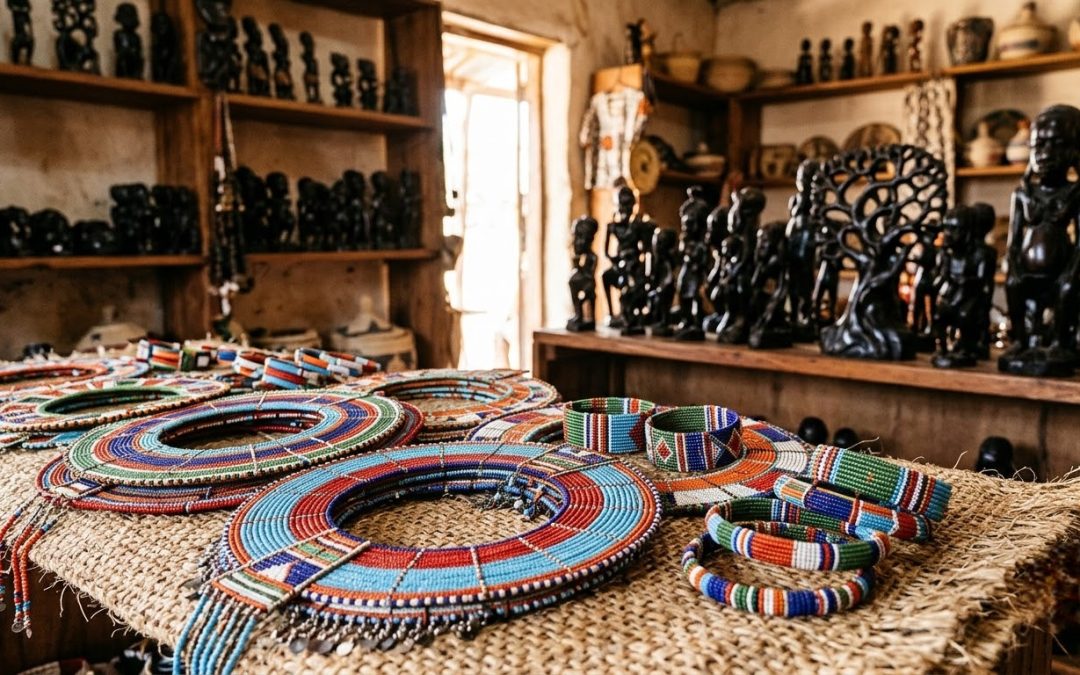
Most people who come to us for one of the carving tours in Tanzania have the Makonde carvers in mind, and fair enough, they're the main event. But almost every group does the same thing afterwards. They wander out of the workshop, into the gallery, and stop dead in front of the beadwork. Collars, bracelets, earrings, belts, piled up in colours that look almost too bright to be real. And then the questions start. What do the colours mean? Who made this? Is it alright for me to wear it?
I'm not Maasai, so I'll be upfront: what follows is what makers and colleagues have told me over the years, not the last word. But it's what I tell people standing in front of that wall.
First, a bit of history
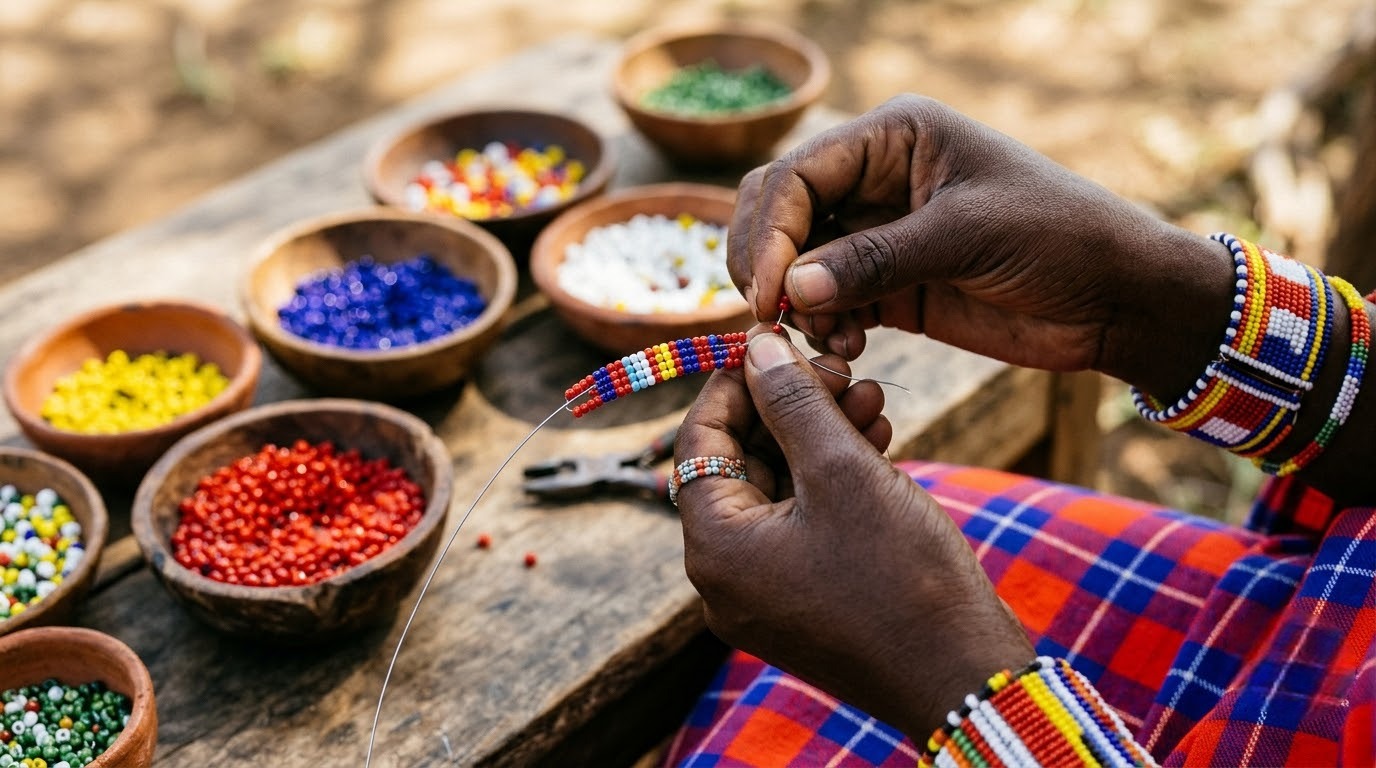
The Maasai were decorating themselves long before glass beads turned up, with seeds, shells, bone, clay and bits of metal. Glass beads arrived through trade, mostly in the late 1800s and through the last century, and Maasai women took to them fast. Bright, even colours meant far more detailed patterns than seeds ever allowed.
It's women's work, mostly. Girls pick it up from their mothers, aunts and older sisters, and a really good maker is known for her eye. Some of the big collars take days. A few take weeks.
What the colours are said to mean
Ask ten people and you'll get ten slightly different answers. Meanings shift between communities and even between families. Still, these are the ones I hear most:
| Colour | Commonly said to mean | Where you'll often see it |
|---|---|---|
| Red | Bravery, strength and unity | Shukas, collars, warriors' beadwork |
| Blue | The sky, and the water cattle need | Collars and bracelets |
| Green | Land, grass and health | Collars and headpieces |
| White | Purity, peace and milk | Base rows and borders |
| Orange | Hospitality and friendship | Collars and earrings |
| Yellow | Fertility, growth and the sun | Mixed patterns |
| Black | The people and the hardships they share | Accents and dividing rows |
In real life, makers pick colours as much for how they look together as for what they mean. So don't expect a single bracelet to spell out a sentence. It's more like a shared vocabulary everyone dips into.
What a piece can say about the wearer
Beadwork has always told people something about who you are. Particular collars, headpieces and earrings mark a woman's marriage, or where a young man is in his years as a warrior. The big wedding collars are made for one day and one person, and they mean a lot to the family.
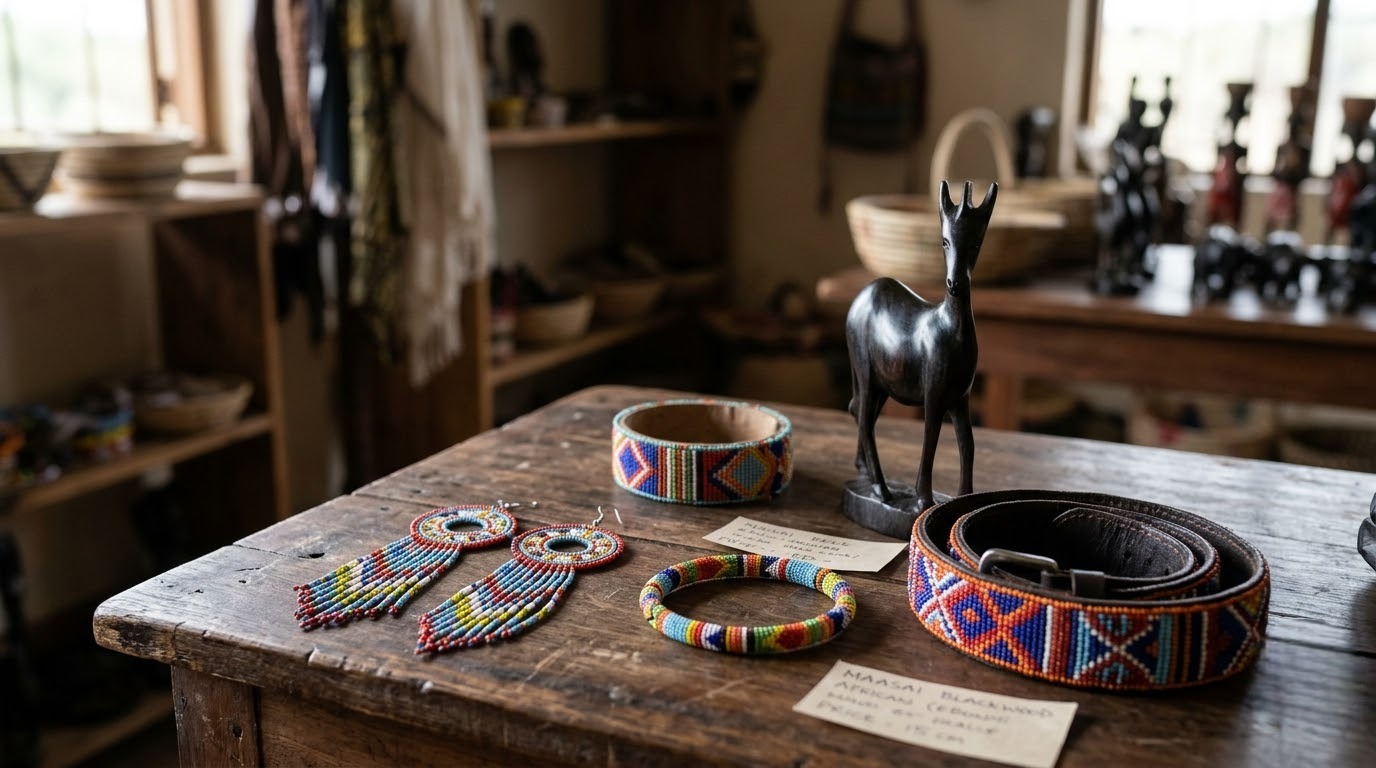
Which is worth keeping in mind when you shop. Bracelets, belts, keyrings and smaller necklaces are made to be sold, and buying them is a good thing. A ceremonial piece is something else. If it looks old, or worn, or very personal, ask about it before you even think about buying.
Buying it fairly
Nearly everything you'll see along the safari road is handmade. The real question is how much of what you pay ends up with the woman who made it. Beadwork is one of the few ways many Maasai women earn money of their own, and it tends to go on school fees, medicine and the house. When a middleman takes most of it, that shrinks fast.
So buy from the makers if you can, or from a shop that can tell you who made the piece. Go easy on the haggling. I know it's part of the fun for some visitors, but a few dollars off means very little to you and quite a lot to someone who spent three days on a collar. If you love it and the price is fair, just pay it.
And if you want to photograph someone wearing their beadwork, ask first. Some people will want a small fee. That's reasonable. Our guide on how to know African handmade crafts are genuine goes further into real versus imported.
Telling good work from rushed work
Turn it over. Honestly, that's the main trick. Good beadwork is as tidy on the back as on the front, with tight stitching and no sharp wire ends poking out. The rows sit evenly. The colours look planned. Heavier collars should feel solid and close properly.
Factory-made copies give themselves away too, usually with plastic beads that are all exactly the same and nobody who can tell you where they came from.
Something you'll actually wear
The big collars are spectacular, I'll give them that. They're also very hard to wear in Manchester or Melbourne. If you want something you'll use, go smaller. Earrings. A thin bracelet. A belt. They slip into normal clothes without it looking like fancy dress.
For the house, beaded mats and coasters work, and a collar mounted on a plain board looks brilliant on a wall. It gives the pattern room.
Bracelets make easy presents, too. They weigh nothing and suit nearly anyone. Bring back a few and tell people what the colours are supposed to mean. In my experience they get worn far more than people expect.
Looking after it
Most Maasai beadwork is strung on wire, thread or leather. Keep it dry. Store it flat or hanging so it doesn't bend out of shape. Keep it out of strong sun, which fades some dyes and weakens thread over time. A wipe with a soft dry cloth now and then is all it needs.
Seeing it on a carving tour at Safariland
Our Ebony Carvings Tour at Safariland near Karatu is mostly about the Makonde carvers working on site, and if you haven't read it, our piece on what to expect from carving tours in Tanzania walks through the whole visit. But the beadwork sits in the same building, in the crafts collection at African Galleria, next to the carvings, paintings and textiles. Seeing it all together gives you a much better feel for how it fits with the rest of Tanzanian art.
Look out for Maasai themes in the paintings in the art gallery as well. And for more on what's worth taking home, read our guide to African paintings and handmade crafts.
Frequently asked questions
Do carving tours in Tanzania include beadwork?
The Ebony Carvings Tour at Safariland focuses on the Makonde carvers, but Maasai beadwork is in the same building, in the crafts collection at African Galleria, so you can see both in one visit.
What do the colours in Maasai beadwork mean?
It varies by community, but red is often linked to bravery and unity, blue to the sky and water, green to land and health, white to purity and milk, and black to the people.
Who makes Maasai beadwork?
Mostly Maasai women, who learn from older relatives. Good makers are well respected for their eye for colour and pattern.
Is it alright for tourists to wear Maasai beadwork?
Yes. Bracelets, earrings and belts are made to be sold and worn. Ceremonial pieces mean a lot to their owners, so ask before buying anything that looks old or used.
Join One of Our Carving Tours in Tanzania
Book the Ebony Carvings Tour at Safariland near Karatu, one of the easiest carving tours Tanzania has on the road to Ngorongoro, then browse Maasai beadwork, paintings and textiles at African Galleria in the same visit.
Book the Ebony Carvings Tour