
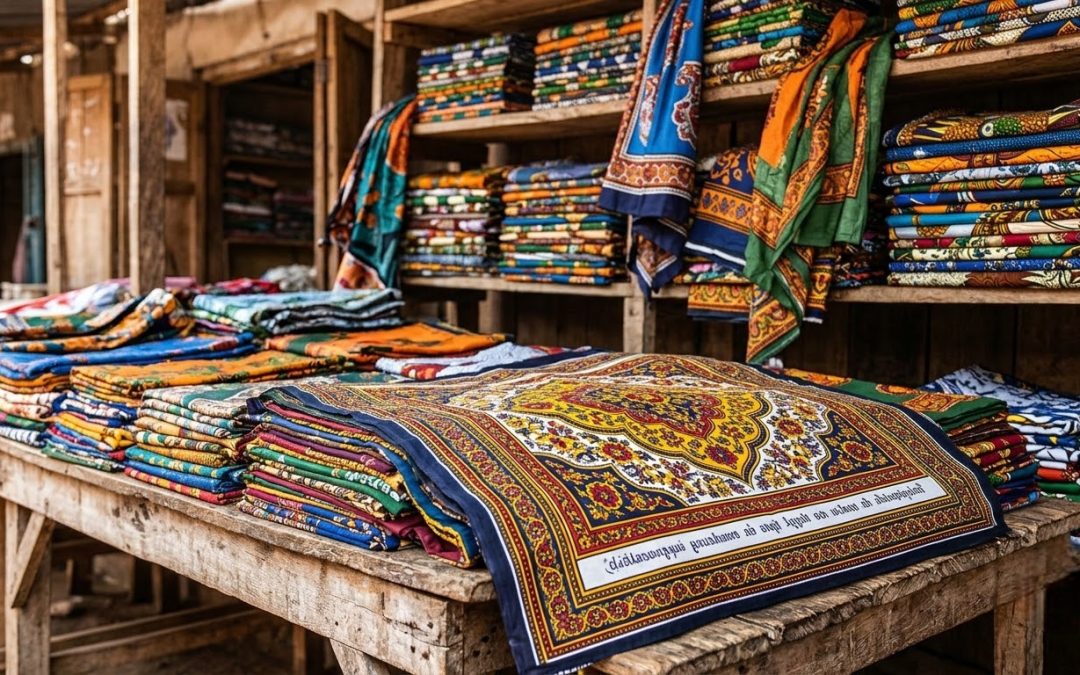
You'll have seen dozens of them before you've even left Kilimanjaro airport. Bright cloth knotted at someone's waist. A baby asleep on a woman's back, wrapped up in print. A man at the luggage belt in a sharp, loud shirt that somehow works. Visitors tend to lump all of it together as African print, which is fair enough, but if you asked a Tanzanian they'd tell you you're looking at two different things. Kanga and kitenge look alike from across a car park. Up close they're nothing like each other, and one of them has something to say.
I see both all day, wear both, and get asked about them pretty much daily, so this is the short guide I wish someone had given me.
The kanga
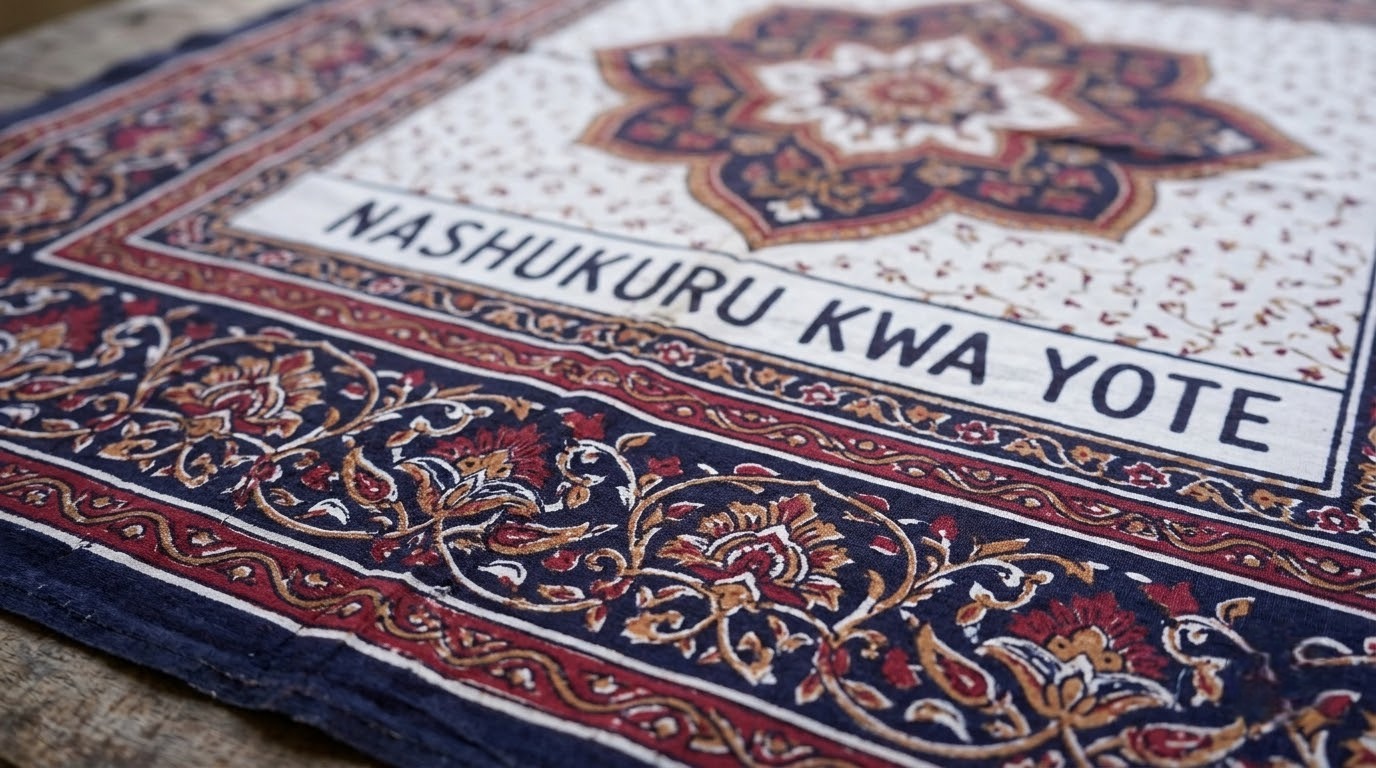
A kanga is a rectangle of thin cotton, about a metre and a half long and a bit over a metre wide. Three bits to it. A wide border running all the way round. A big design in the middle. And a strip of Swahili words printed along one long edge.
They came out of the Swahili coast in the 1800s and they're still usually sold in pairs. Wear one as a skirt, the other over your shoulders or your head. Or give one away. The cotton's so light they dry in no time and fold down to almost nothing, which is why plenty of women keep a couple in their bag at all times. They get used for everything: carrying babies, sitting on, wiping hands, keeping off the sun.
The bit that talks
That line of writing is called the jina, which means name. It's usually a proverb or a blessing, sometimes a joke, and now and then something a bit sharper. People choose a kanga for what it says as much as for how it looks.
And they've long been used to say things out loud without anyone actually saying them. Wear a certain kanga to a family gathering and a certain aunt will get the message. Give one at a wedding with a line about patience, or about love lasting. Wish someone peace. Warn the neighbours off gossiping. All of it can be done with a bit of cloth.
So if you're buying one, please ask what it says. Whoever's selling it will usually translate for you, and sometimes they'll start laughing first, which tells you something. You don't want to wear a dig at your mother-in-law to Sunday lunch by accident.
The kitenge
Kitenge (vitenge if there's more than one) is the heavier one. Thicker cotton, often wax-printed, with bold patterns that repeat all over and no writing at all. You buy it by the length, and it's mostly made into clothes: dresses, shirts, skirts, jackets, bags.
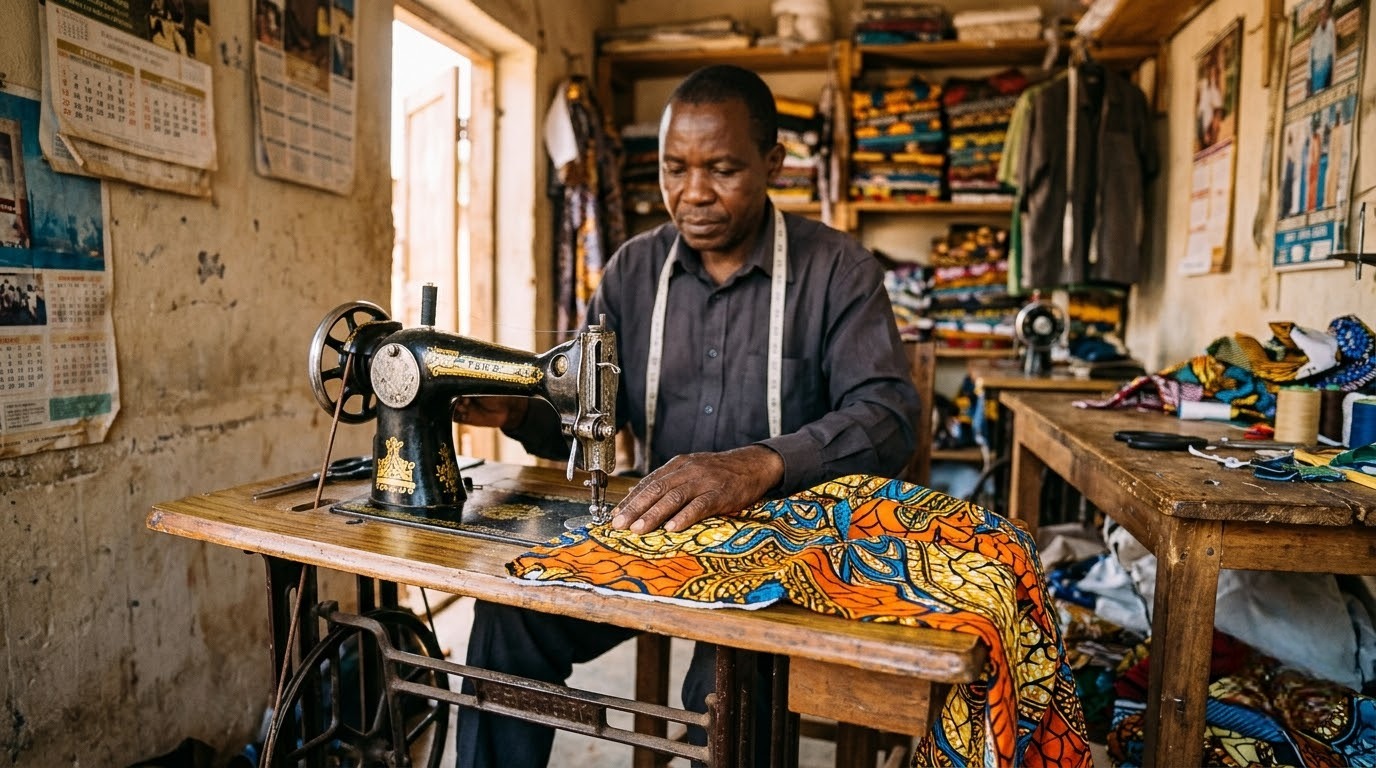
Walk past any tailor in Arusha or Karatu and you'll see piles of it being chalked, cut and run through old foot-pedal machines. For a lot of people here, a good kitenge outfit is what you wear to church, a wedding or a party. Sunday mornings in Karatu are a sea of it.
Kanga and kitenge side by side
| What to compare | Kanga | Kitenge |
|---|---|---|
| Fabric | Light, thin cotton | Heavier cotton, often wax-printed |
| Design | Border, middle design, Swahili saying | Repeating pattern, no writing |
| How it's sold | Usually in pairs | By the length |
| Mostly used for | Wraps, scarves, baby carriers, gifts | Tailored dresses, shirts and bags |
| Says something? | Yes, through the printed saying | Only through colour and pattern |
| At home | Throws, tablecloths, wall hangings | Clothes, chair seats, bags |
Can visitors wear them?
Yes, and nobody's going to think it's odd. Tanzanians of all backgrounds wear both every day, and seeing a visitor in a kanga tends to get a smile rather than a raised eyebrow. A few easy ways in. Tie one over your trousers on a hot day. Use it as a scarf against the dust on game drives, which, believe me, you'll want in the dry season. Throw it over the back of a chair once you're home. Or have a kitenge shirt or dress made while you're here. It's usually quick and doesn't cost much.
The one thing I'd say again: check the saying. A line about rivals or nosy neighbours might go down oddly at a family do.
How to tie a kanga
There's no secret to it. For a skirt, hold it long ways behind you at your waist, bring both ends round to the front, cross them over, then tuck or knot the top corners at your hip. For a wrap, fold it in half along its length and drape it over your shoulders. For a headscarf, fold it into a long strip and tie it at the back of your neck.
If you try this in front of a Tanzanian woman, I can almost guarantee she'll laugh and then show you a better way. Let her. That's half the fun of it.
Getting something made in kitenge
If you're staying put for a couple of days, have something tailored. It's one of my favourite souvenirs. Choose the fabric, explain what you want (a drawing helps, even a bad one), get measured, and go back for a fitting. A simple shirt or skirt can be quick. A fitted dress takes longer. Sort out the price and the pickup day before they start. And if you want a fit you can trust, bring a piece of your own clothing for them to copy. Tailors here are very good at that.
Using them at home
Loads of people buy kangas and never wear them once. That's fine, really. They make good tablecloths, cushion covers, picnic blankets, things to pin on a wall. Kitenge is tougher, so it's better for chair seats and bags. If you sew, a few lengths of kitenge is about the cheapest way I know to bring proper Tanzanian design back with you.
What to look for when you buy
Quality varies a lot. On a good kanga the print is crisp, the words are easy to read and the border lines up. Kitenge should feel solid in your hand, and the colour shouldn't come off on your fingers when you rub it. Whatever you buy, wash it on its own the first few times. Some dyes run, and you don't want a pink shirt.
Safariland's shop near Karatu has clothing, handwoven textiles and gifts made by local artisans, so if you're driving between Lake Manyara and Ngorongoro Crater it's an easy place to have a look. Ask the team what's in that week and who made it. For tips on spotting the real thing anywhere, see our guide on telling genuine handmade crafts from imports. And our piece on African paintings and handmade crafts covers the wider collection at African Galleria.
If fabric's your thing, make an afternoon of it. Lunch at Ol Mesera Restaurant, a wander round the art gallery, and you'll leave with something you'll use.
Frequently asked questions
What's the difference between kanga and kitenge?
A kanga is a light cotton rectangle with a border, a middle design and a Swahili saying, usually sold in pairs. Kitenge is heavier printed cotton sold by length and made into clothes, with no saying.
What do the words on a kanga mean?
The text is called the jina, or name. It's normally a proverb, blessing or message, and people often pick a kanga for what it says.
Is it okay for tourists to wear a kanga?
Yes. Kangas are worn all over Tanzania and visitors wearing them are usually welcomed. Just find out what the saying means first.
Where can I buy Tanzanian textiles on safari?
Safariland near Karatu has clothing, handwoven textiles and gifts made by local artisans. Ask the team what's in stock when you visit.
Find Kanga and Kitenge Style Textiles at Safariland
Browse clothing, handwoven textiles and gifts made by local artisans at Safariland near Karatu. It's an easy stop for kanga and kitenge lovers between Lake Manyara and Ngorongoro Crater, with the gallery and Ol Mesera Restaurant on the same site.
Plan Your Visit to Safariland