
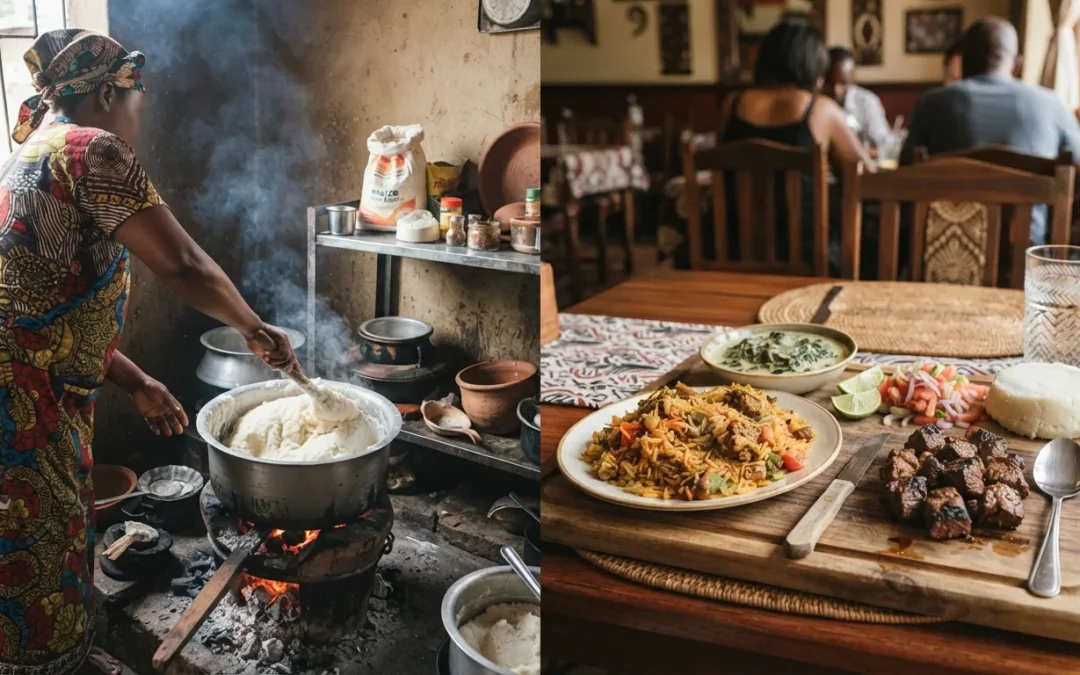
You can tell authentic African cuisine from a tourist menu in four checks: the dish names are in Swahili, the menu is short, the food is cooked to order, and local people are eating there too. Here is how I use those checks, and the red flags that make me walk away.
Key takeaways
- Short menu, Swahili dish names, and dishes that sell out for the day are good signs.
- Nyama choma that arrives in two minutes was cooked earlier.
- Local families, drivers and guides eating there is the best sign of all.
- Modern presentation can still be authentic if the recipes and ingredients are local.
I've watched a lot of guests sit down to a plate labelled 'traditional African stew' and eat it politely while looking slightly let down. They came looking for authentic African cuisine and got a watered-down beef casserole built for nobody in particular. It happens all the time on the safari circuit, and it's easy to avoid once you know what to look for.
Here is how I tell a real local kitchen from a menu written for tourists. It is based on years of eating around northern Tanzania and hearing what guests have run into elsewhere.
Start with the menu itself
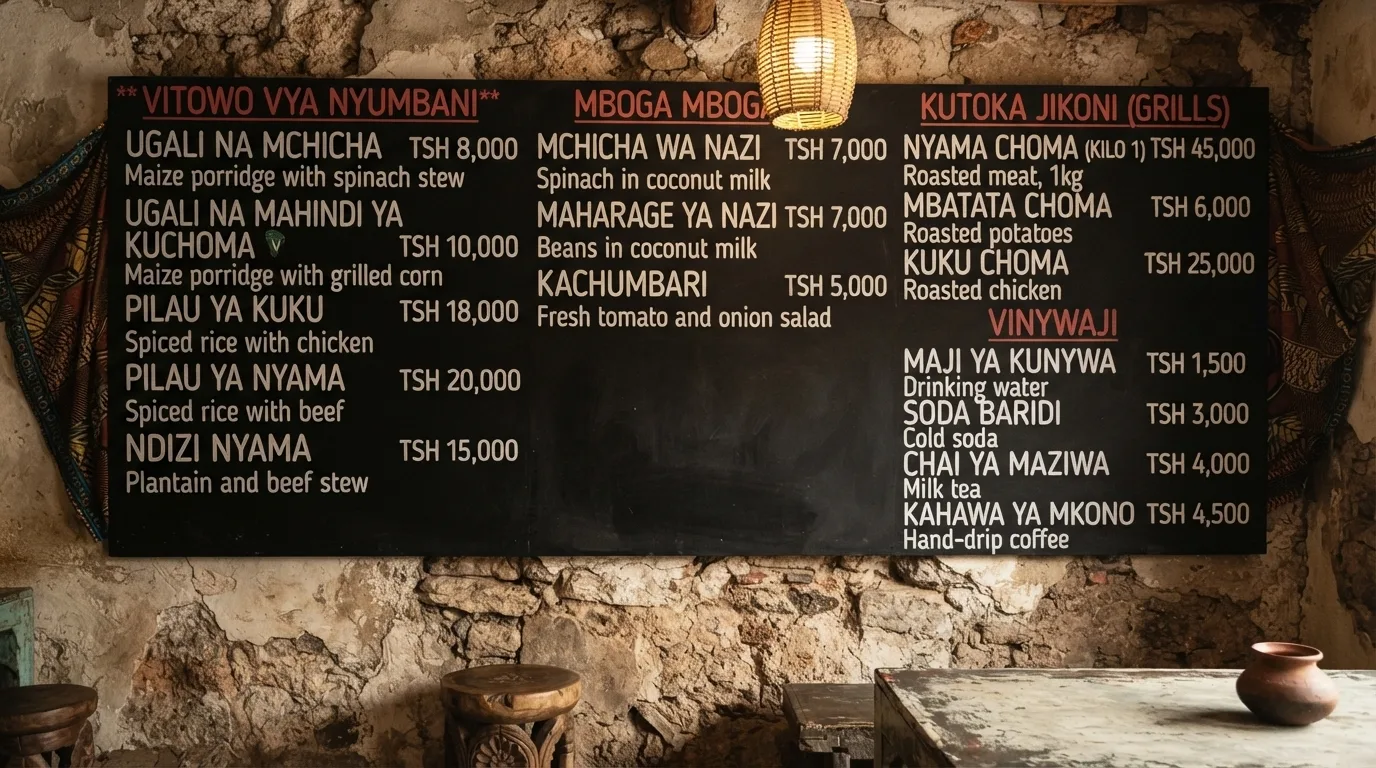
A real Tanzanian kitchen usually has a short menu, and it uses Swahili names without apologising for them. Ugali, wali, maharage, mchicha, nyama choma, pilau, mtori. There might be an English line underneath, but the dish comes first.
Tourist menus tend to run the other way. You'll see long lists of pasta, burgers and curry, with one or two items tagged 'African' or 'local' as if the whole continent cooked the same dish. 'African beef stew' tells you nothing. Which part of Africa? Whose recipe? A kitchen that knows its food will name it.
Seasonality is another clue. If the greens change depending on what came in that week, or a dish is 'finished for today', that's a kitchen cooking from fresh ingredients rather than a freezer.
Look at how the food arrives
Ugali should come as a firm, smooth mound, warm enough that it steams when you break it. If it arrives as a small, decorative scoop beside a garnish, someone's plating it for a photograph rather than a meal.
Nyama choma is ordered by weight and cooked to order, so it takes a while. If grilled meat lands on your table two minutes after ordering, it was cooked earlier and kept warm. Kachumbari should be freshly chopped and sharp with lime. Chilli should come on the side as pilipili, because that's how Tanzanians eat it.
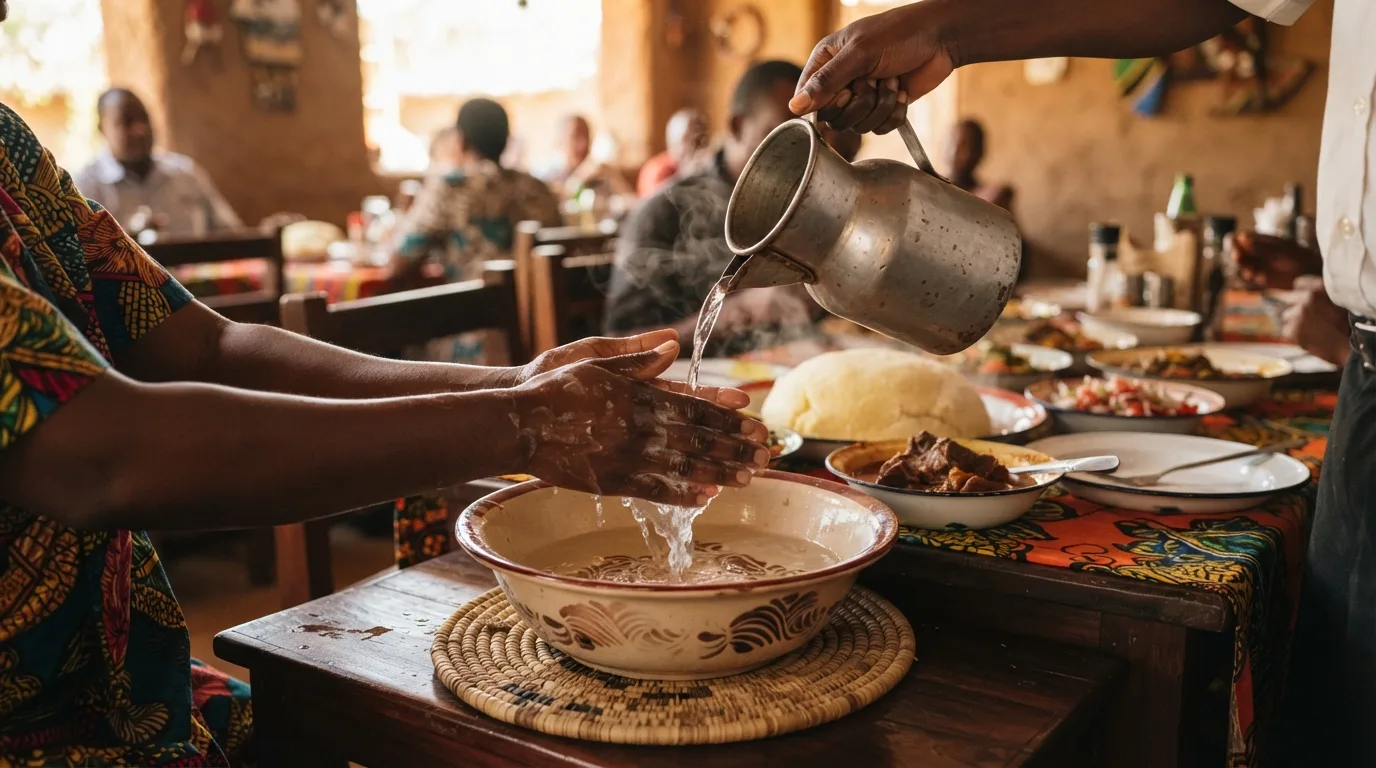
Watch for the hand-washing basin, too. In local places a jug of warm water and a bowl often come round before the food. That's a small detail, but tourist restaurants rarely bother with it.
Real local kitchen or tourist menu: a side-by-side check
| What to check | Tourist menu | Real local kitchen |
|---|---|---|
| Dish names | Generic labels like 'African stew' | Swahili names such as mchicha, pilau or mtori |
| Menu length | Long, mixed international list | Short, focused on what's fresh |
| Ugali | Small decorative scoop | Warm, firm mound meant for eating |
| Nyama choma | Arrives in minutes | Cooked to order, takes time |
| Chilli | Cooked in or missing | Served on the side as pilipili |
| Who's eating | Almost only tour groups | Local families, drivers and guides too |
| Ingredients | Vague or imported | Named local sources, seasonal changes |
Who else is eating there?
It's the oldest rule in travel and it still works. If Tanzanian families, drivers and guides are eating at a place, the food is probably right. Safari guides in particular know where to eat on every route, so ask yours where they'd go for lunch if they weren't with you. You'll usually get an honest answer and a big smile.
A restaurant can have a mix of travellers and locals and still be excellent. What you're checking for is whether the food would survive without tourists. If the only reason it exists is the tour bus car park, the cooking tends to show it.
Ask a few simple questions
You don't need to be an expert. A couple of questions will tell you plenty:
- Where do your vegetables come from? A good kitchen will usually name a farm, a market or a region.
- What's the dish of the day? Local kitchens often have one, and it's usually the best thing on offer.
- Is there anything from this area specifically? In the north that might be mtori, a Chagga banana and beef soup, or ndizi nyama.
If the staff light up and start explaining, you're in the right place. If they point you to the burger, you're not.
Red flags worth walking away from
A few things tell me straight away that a place is cooking for the tour bus and not for anyone local:
- A laminated menu with photos of every dish. Pizza, pad thai and “Maasai curry” on the same page is a bad sign. “Maasai curry” is not a Maasai dish. A kitchen that invents dishes to sound exotic probably is not cooking the real ones well either.
- A buffet with one tray labelled simply “African”. Tanzania has well over a hundred ethnic groups, and the food in Zanzibar is nothing like the food on the slopes of Kilimanjaro. A single tray cannot represent that.
- Price without explanation. Local food is generally good value. If a plate of ugali and stew costs the same as a steak in a European capital, you are paying for the location, not the cooking. Ask yourself whether you would eat there if it were not on your route.
Modern doesn't mean inauthentic
One caution. Authentic doesn't have to mean plastic chairs and a tin roof. Plenty of chefs in Tanzania cook traditional recipes with better ingredients and a more modern presentation, and the food is no less Tanzanian for it. What matters is whether the recipes, flavours and ingredients are local, not whether the room is basic.
That's the approach at Ol Mesera Restaurant at Safariland near Karatu. The menu is built on traditional Tanzanian dishes like choma choma (grilled dishes), mchicha bowls and bitings (local snacks), made with fresh organic ingredients and served with a modern touch. It's the same way of thinking we apply to the gallery next door, where we care a great deal about telling genuine handmade crafts from imports.
If you want someone to guide you through local food rather than finding it alone, our article on Tanzanian food tours explains what a good one should include.
Frequently asked questions
What is authentic African cuisine in Tanzania?
It's everyday Tanzanian cooking: ugali with stews or greens, pilau, beans in coconut, nyama choma and regional dishes like mtori. The flavours come from Swahili coast spices and local produce rather than from a single 'African' recipe.
Are lodge buffets on safari authentic?
Some lodges cook good local dishes, but most buffets lean international with one or two local items. If you want authentic food, plan at least one meal at a restaurant that specialises in Tanzanian cooking.
Is it rude to ask for cutlery in a local restaurant?
Not at all. Tanzanians often eat ugali with their hands, but restaurants will happily give you a fork. Trying it the local way once is part of the fun, though.
Where can I eat authentic African cuisine near Ngorongoro?
Karatu is the natural stop. Ol Mesera Restaurant at Safariland, between Lake Manyara and Ngorongoro Crater, serves traditional Tanzanian dishes made with fresh organic ingredients.
Find Authentic African Cuisine on Your Safari Route
Skip the generic buffet. Eat authentic African cuisine at Ol Mesera Restaurant at Safariland, near Karatu on the road between Lake Manyara and Ngorongoro Crater. Tell us your dates and we can plan lunch, a cooking demonstration or a longer stop around the gallery.
Get in Touch with the Safariland TeamCall +255 743 722 666 or email info@mysafariland.com