
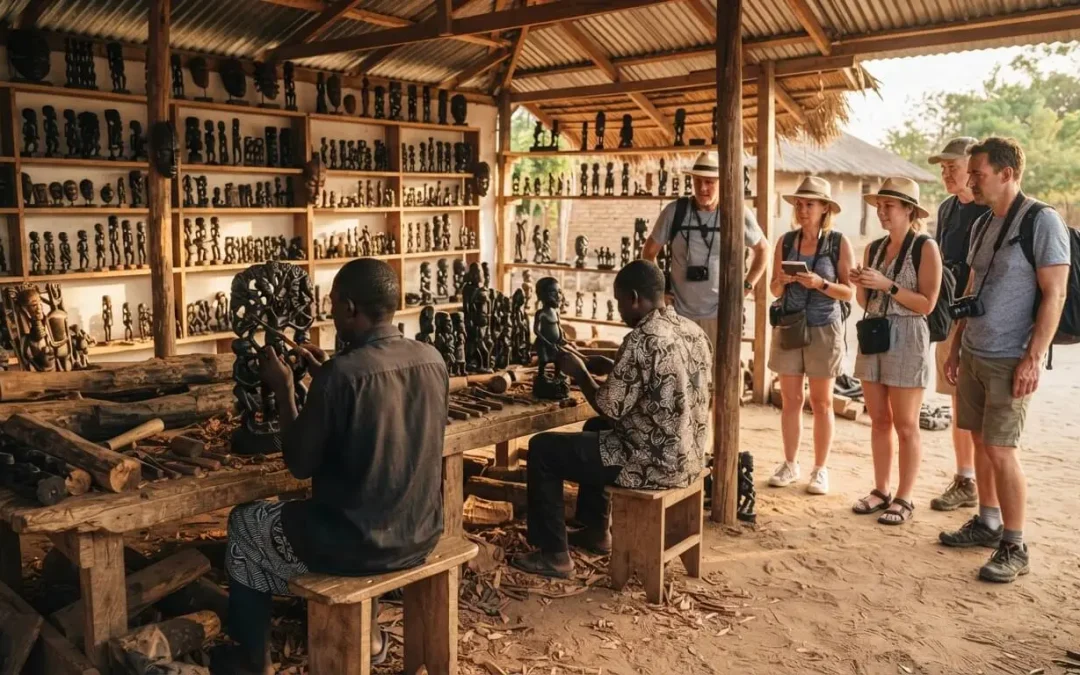
A carving tour at Safariland takes you from booking to the workshop floor to the gallery. You watch Makonde carvers at every stage, then browse finished pieces. It fits into part of a day between Lake Manyara and Ngorongoro Crater, about two hours’ drive from Arusha.
Key takeaways
- Book the Ebony Carvings Tour on the Safariland website, and tell your guide early.
- The visit runs: short introduction, workshop, gallery walk, then lunch.
- There is no pressure to buy. If you do, ask about shipping larger pieces.
- Wear closed shoes, ask before photographing carvers close up, and bring questions.
Most guests who book one of the carving tours in Tanzania have a rough idea that they'll watch someone carve wood. That's true, but it undersells it a bit. A good tour takes you from the raw block to the finished piece on the gallery shelf, with real people and real stories in between. Here's what to expect with ours at Safariland, from the moment you enquire to the moment you drive off.
Before you arrive: booking and timing
The Ebony Carvings Tour can be booked through our website. Pick the activity, give us your preferred dates and group size, and the team will confirm. If you're travelling with a safari operator, it's worth telling your guide early so they can build the stop into your route rather than squeezing it in.
Safariland is around two hours' drive from Arusha, between Lake Manyara and Ngorongoro Crater near Karatu. For most itineraries that means it sits naturally on the day you drive towards the crater or the day you come back from the Serengeti.
Arrival and a short introduction
When you arrive, someone from the team meets you and gives a quick background on the Makonde carving tradition and on African Galleria, which grew into Safariland. It's short. Nobody wants a lecture after a long drive, and the carvers explain their own work far better than we can.
Into the workshop
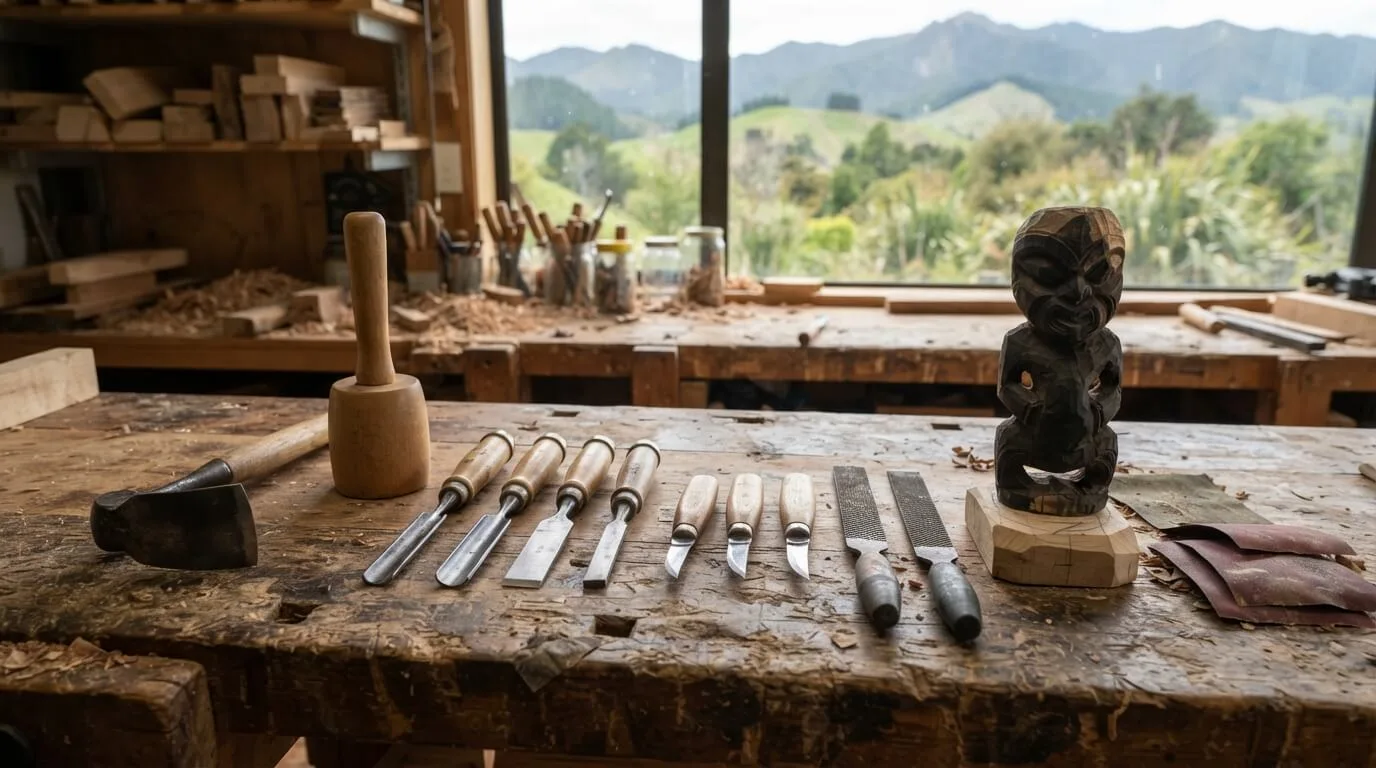
This is the main part of the tour. Makonde master carvers work on-site, and you'll see them at different stages on different pieces. One might be knocking a raw block of African blackwood into shape with an adze. Another might be deep in detail work with a chisel. Someone else might be sanding and polishing a finished figure.
Seeing every stage in one room is the useful bit. You start to understand why one piece takes days and another takes over a week, and why the finishing matters so much. The carvers reveal techniques that have been handed down for generations, and you're encouraged to ask questions throughout.
The gallery walk-through
After the workshop, you'll usually move through the carving section of the gallery, where finished work is displayed. You'll recognise the tool marks, the styles and sometimes the hand of a carver you just met. This is when the Ujamaa tree-of-life sculptures and Shetani spirit figures stop being curios and start making sense.
Carving tour or roadside carving stall?
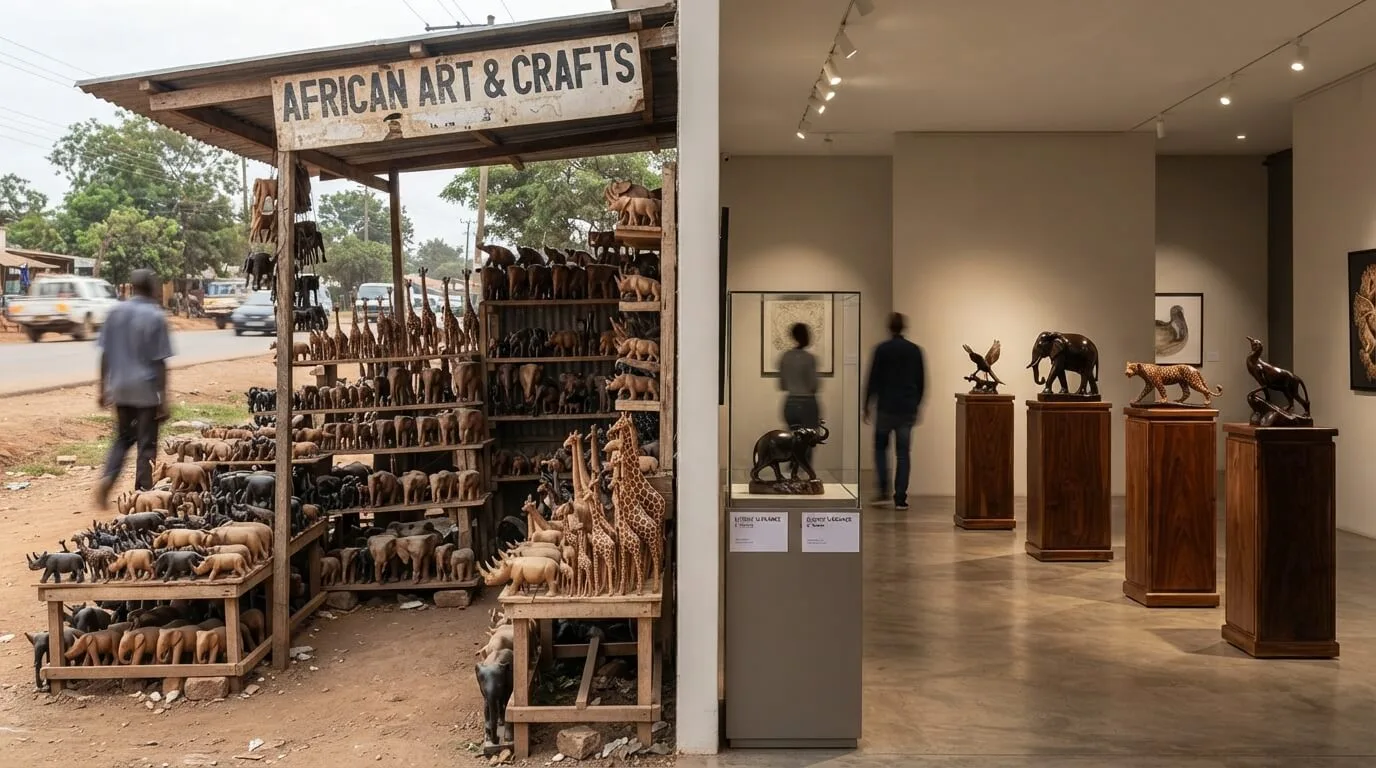
You'll pass plenty of carving stalls on the safari roads. Some sell honest work. Many don't. Here's how the two compare.
| What you get | Roadside carving stall | Carving tour at Safariland |
|---|---|---|
| Seeing the work made | Rarely, finished pieces only | Master carvers working in front of you |
| Knowing the wood | Hard to check, fakes are common | African blackwood you can see being carved |
| Who made it | Often unclear | Carvers you can meet and talk to |
| Price | Heavily negotiable, often inflated | Fixed pricing linked to time and skill |
| After you buy | No follow-up | Help with care advice and shipping |
What the carvers will tell you
The conversations are the part people remember. Carvers will often explain how they learned, usually from a father, uncle or older neighbour, and how long it took before they were trusted with a good piece of wood. Many will talk about the difference between the dark heartwood and the pale sapwood and how they plan a design around it.
They'll also tell you what's hard. For some it's faces. For others it's the finishing, when hours of sanding can be undone by one careless slip. Ask which piece they're proudest of. The answer is rarely the biggest one.
One more practical point: the carvers work to their own rhythm, so the pieces you see on any given day will be at different stages. That's part of the appeal. Two visits a week apart can feel completely different, and returning guests often ask to see how a piece they watched last time turned out.
A realistic shape for the day
A typical visit runs like this:
- You arrive late morning after the drive from Lake Manyara or Arusha.
- A short introduction takes a few minutes.
- The workshop visit lasts as long as your curiosity does.
- A slow walk through the carving section of the gallery follows.
- Lunch comes next. Most guests are back on the road by mid-afternoon, with plenty of time to reach a lodge near Karatu or the crater rim before dark.
If you are travelling with a guide, let them know roughly how long you would like. Guides are good at protecting your schedule, but they can only do that if they know what you want to fit in.
Buying a piece (only if you want to)
There's no pressure to buy on the tour. That said, most people find it hard to leave without something, because by then they know who made it and how. If you're thinking about buying, ask the team about the carver, the wood and the care the piece will need. Our guide to how to tell real ebony carvings from fake is useful reading beforehand.
Heavier or larger carvings can be a pain in safari luggage. Ask about shipping and the team will help you work out the practical side before you commit.
Rounding off the visit
The tour itself doesn't take a full day, which leaves room for the rest of Safariland. Lunch at Ol Mesera Restaurant is the obvious next step, with traditional Tanzanian dishes like choma choma and mchicha bowls. Some guests add a painting workshop or the Tanzanite Tour at African Gems & Jewelers before getting back on the road.
If you're still deciding between activities, our comparison of Safariland and standalone city tours and our piece on African art workshops near Karatu should help.
A few practical tips
- Wear closed shoes. Workshops have wood chips and shavings on the floor.
- Ask before photographing a carver close up. Most are happy to be photographed, but it's polite to check.
- Don't rush it. The guests who get the most out of carving tours in Tanzania are the ones who stop and watch one piece for a while.
- Bring questions. The carvers enjoy talking about their work more than people expect.
Frequently asked questions
How long do carving tours in Tanzania last?
It varies, but the Ebony Carvings Tour at Safariland fits comfortably into part of a day, leaving time for lunch and other activities. The team will confirm timings when you book.
Do I have to buy something on a carving tour?
No. The tour is about seeing the craft and meeting the carvers. Buying is entirely optional.
Where is the Safariland carving tour?
Safariland is near Karatu, between Lake Manyara and Ngorongoro Crater, around two hours' drive from Arusha.
Can larger carvings be shipped home?
Yes. Ask the Safariland team about shipping options before you buy so you know the practical details in advance.
Join One of the Best Carving Tours in Tanzania
Book the Ebony Carvings Tour at Safariland near Karatu and follow a Makonde carving from raw blackwood to finished piece. It fits neatly into your drive to or from Ngorongoro Crater. Tell us your dates, group size and route, and we will confirm timings.
Book Your Carving TourCall +255 743 722 666 or email info@mysafariland.com