
Search for local Tanzanian tours while you're planning a Northern Circuit trip and you'll mostly get one shape of result: a half-day city tour, usually built around Arusha, that swings past a market, a clock tower and a heritage centre before dropping you back at your hotel. There's nothing wrong with that format. It just isn't the only way to get a proper local experience, and if you're already driving toward Ngorongoro Crater, it isn't necessarily the most convenient one either. Safariland, on that same route near Karatu, offers a different version of what a local tour can be.
What counts as a local tour at Safariland
Rather than one guided walk covering several stops, Safariland's activities are built around specific crafts and trades: painting workshops, an ebony carvings tour, a tanzanite tour, cooking demonstrations, and a local school visit. Each one is led by someone who actually does the work, a Makonde carver, a local painter, a cook preparing Ol Mesera's kitchen recipes, rather than a guide narrating from the outside. That's the main difference from a standard city tour built around viewing exhibits from behind a rope.
How a Safariland tour actually runs
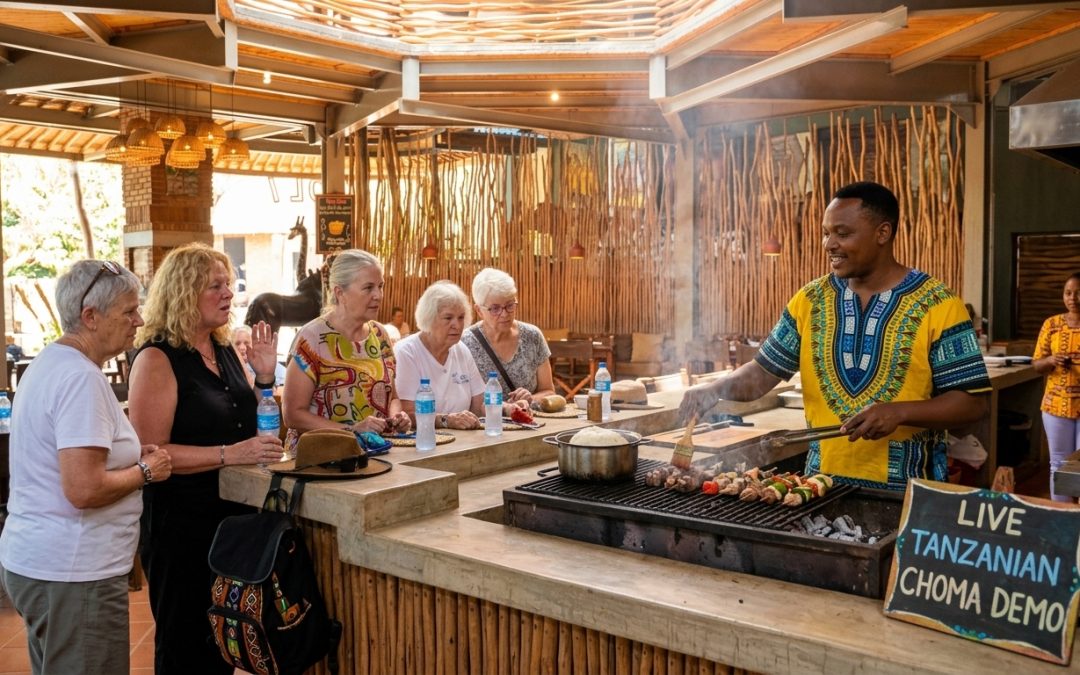
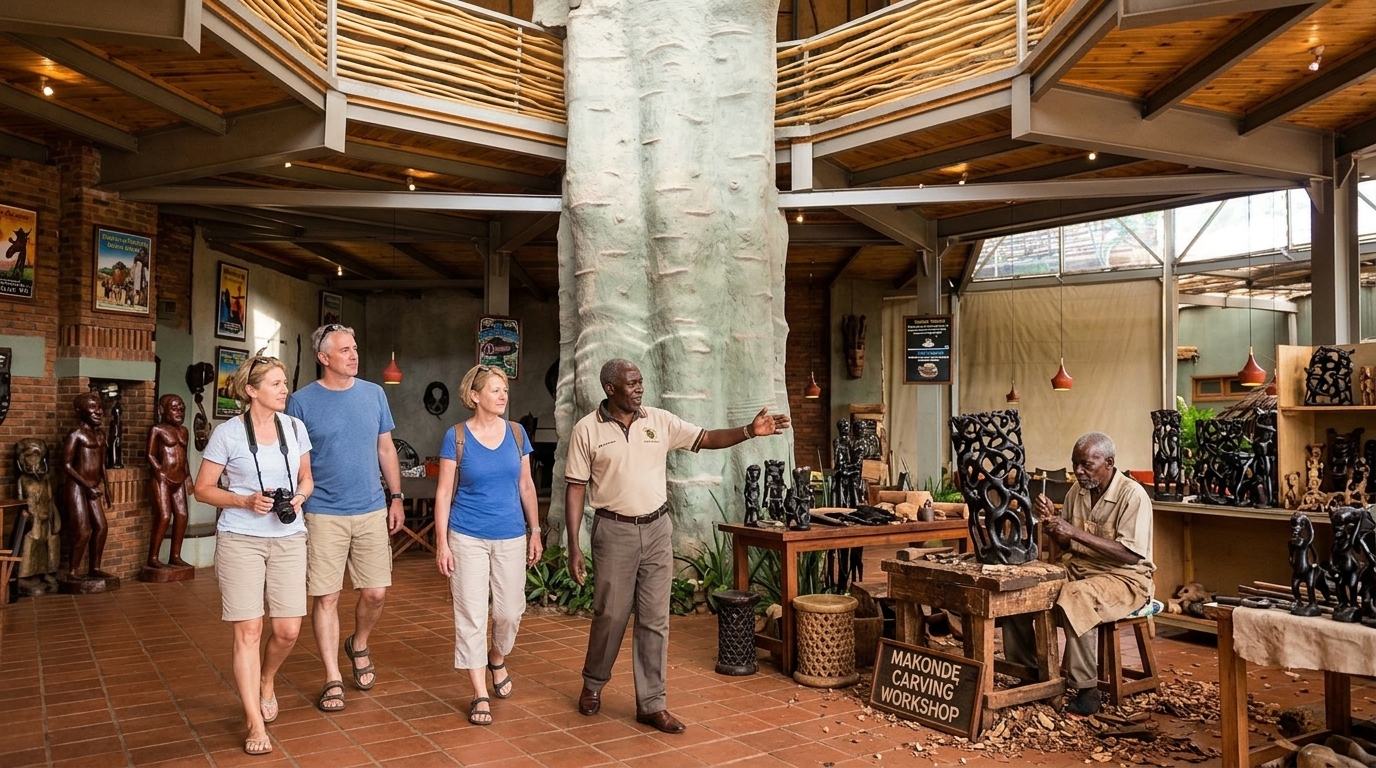
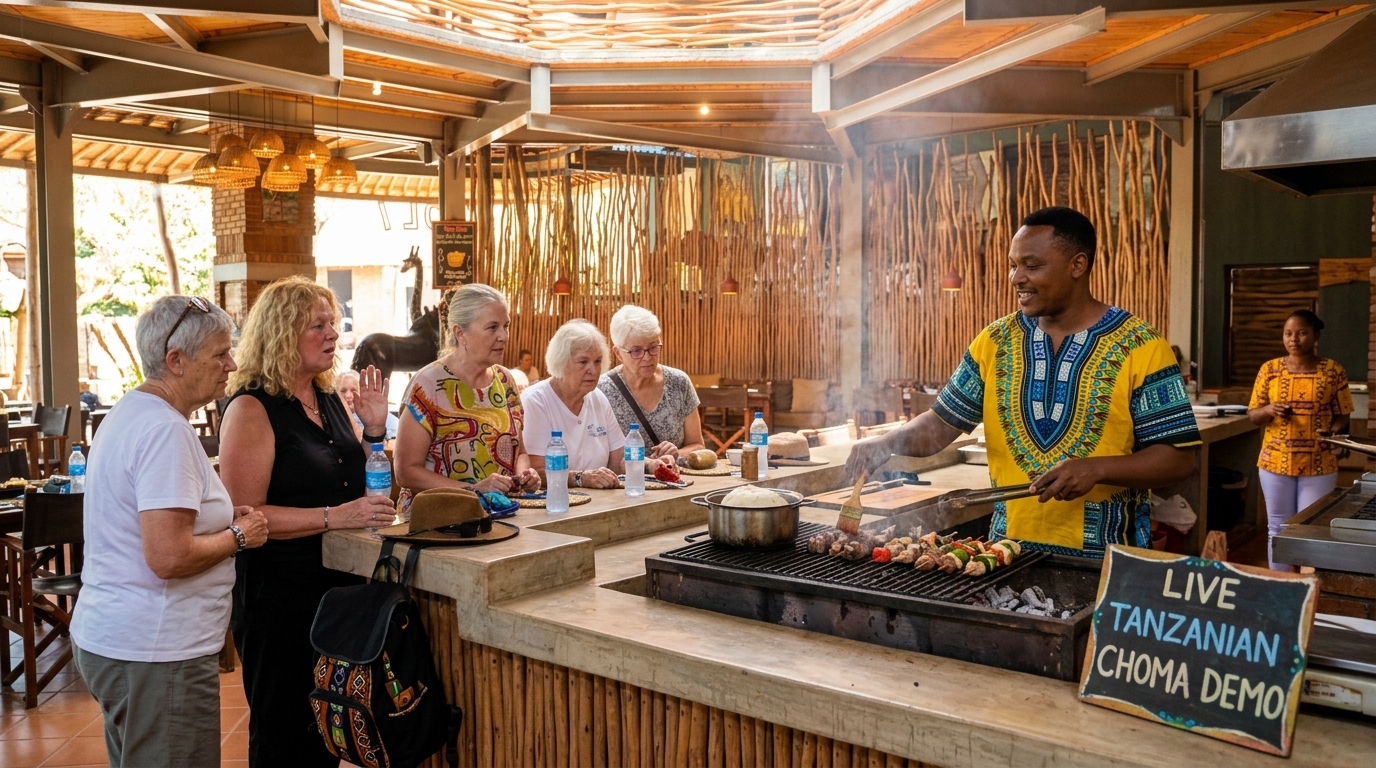
The ebony carving tour puts you next to Makonde carvers as they shape a piece by hand, rather than only showing you the finished result on a shelf. The painting workshop works the same way, a local artist guides you through creating your own piece instead of just talking you through theirs. The tanzanite tour connects the gemstone to the wider Africa Gems & Jewelers workshop, so you leave understanding what you're buying rather than just trusting a price tag. Cooking demonstrations run out of Ol Mesera's kitchen, covering dishes like choma choma and the mchicha bowl. None of these need a guide reciting facts at you from a script, they're built around doing something, not just watching.
Local Tanzanian tours: two different formats compared
Both formats have a place, depending on what you actually want out of the stop. Here's roughly how they differ:
| What you're comparing | Typical city cultural tour | Safariland activity tour |
|---|---|---|
| Format | Guided walk between several stops in one city | A single focused tour or workshop at one site |
| Level of involvement | Mostly watching and listening | Hands-on, carving, painting, cooking alongside the artisan |
| Route fit for Northern Circuit travellers | Usually requires a detour back into town | Sits directly on the Arusha–Ngorongoro–Manyara road |
| Who's leading it | A tour guide | The carver, painter or cook doing the actual work |
| Booking | Often via a third-party tour operator | Direct through Safariland for your chosen dates |
Why the route matters more than people expect
A lot of local tours are genuinely worth doing, but they cost you something beyond the ticket price: a detour, extra time in traffic, a rearranged morning. Safariland sits on the stretch of road most Northern Circuit itineraries already use between Arusha, Ngorongoro Crater and Lake Manyara. That means booking a tour here rarely means adding a special trip. It means using a stop you were more or less going to pass anyway, and turning it into something more than a photo through a car window.
Picking activities that suit your group
A family with younger children might lean toward the painting workshop and a cooking demonstration, both of which are built for participation rather than passive viewing. Anyone weighing up a tanzanite or jewellery purchase gets more out of the tanzanite tour paired with time at Africa Gems & Jewelers. If you're curious about craftsmanship specifically, the ebony carving tour is the one that shows you a piece taking shape from raw material to finished object. And the local school visit, tied to the Moyo Mmoja Foundation's Mtoto Initiative, suits travellers who want their visit to connect to something beyond a transaction.
Booking practicalities
Activities at Safariland are arranged directly with the team rather than through a third-party operator, which means the dates and group size can be worked around your actual itinerary. It's worth reaching out with your travel dates ahead of arrival, particularly if you want a specific workshop slot during a busy travel season, so the right artisan or guide is available when you pass through.
Combining tours with the rest of the site
Because African Galleria, Africa Gems & Jewelers and Ol Mesera Restaurant sit on the same site, a booked tour rarely stands alone. Guests often pair a carving tour with lunch afterwards, or browse the handmade crafts collection before heading back on the road toward the crater. It keeps a single stop from feeling like a single, narrow activity, and it's a fair chunk of what makes a stop here feel like a genuinely unique Tanzanian experience rather than a box-ticking exercise.
What to check before booking any local Tanzanian tour
Not every tour advertised as "cultural" or "local" delivers the same thing, and it's worth knowing what to ask before handing over a booking fee. A few questions worth putting to any operator, Safariland included:
- Who is actually leading the tour, a guide reciting information, or the person who does the craft for a living?
- Does the price include a fixed group tour only, or can it be arranged around your own schedule and dates?
- Is the stop a genuine destination, or a brief add-on squeezed into a longer multi-stop city itinerary?
- Can you see the actual process, carving, painting, cooking, happening in front of you, or only the finished result?
- Does any part of what you spend support the community around the site, rather than only the operator?
Safariland's tours answer most of these directly: the carvers and painters running the workshops are the same people whose work fills the gallery, bookings are arranged around your travel dates rather than a fixed departure time, and the site sits on the road itself rather than requiring a special trip. That's not true of every option marketed as a local tour, which is worth bearing in mind while you compare choices during the planning stage.
A note on timing and seasons
Most travellers pass through this stretch of road during the main safari season, broadly June through October, when Northern Circuit parks see the heaviest traffic. Booking a tour slightly ahead of your arrival date matters more during these months, since workshops and specific artisans may already have other groups scheduled. Outside peak season, there's usually more flexibility to arrange a tour with less notice, though it's still worth confirming availability before building it firmly into your itinerary.
Frequently asked questions
What local Tanzanian tours does Safariland offer?
Painting workshops, an ebony carvings tour, a tanzanite tour, cooking demonstrations, and a local school visit, all bookable directly through Safariland near Karatu.
How are these different from a standard city cultural tour?
Safariland's tours are hands-on and led by the artisans doing the actual work, carvers, painters and cooks, rather than a guide narrating a walk between exhibits.
Do I need to detour off my safari route to visit?
No. Safariland sits directly on the road between Arusha, Ngorongoro Crater and Lake Manyara, so most Northern Circuit itineraries already pass close by.
Can children take part in the tours?
Yes, the painting workshop and cooking demonstrations in particular are built around participation, which tends to suit families with children well.
How far in advance should I book a tour?
Reaching out with your travel dates ahead of arrival is a good idea, especially in busier travel months, so your preferred activity and time slot can be arranged.
Can I combine a tour with lunch or a jewellery browse on the same visit?
Yes. African Galleria, Africa Gems & Jewelers and Ol Mesera Restaurant are all part of the same site, so a tour can easily extend into a longer stop.
Is it better to book directly with Safariland or through a third-party tour operator?
Booking directly tends to give more flexibility around dates and which specific workshop or tour you want, since it's arranged around your travel plans rather than a fixed group departure.
A city tour has its place, and if a heritage centre and a market walk are what you're after, that format does the job well enough. But if what you actually want from local Tanzanian tours is time next to someone who carves, paints or cooks for a living, not just past them, Safariland near Karatu is built for that instead, on a road you were already going to drive. Weigh up what matters most for your trip, hands-on involvement, convenience, or a broader city overview, and pick the format that actually matches it rather than the one that happens to be easiest to find online.
Book a Local Tanzanian Tour Worth the Detour
If you want local Tanzanian tours that put you next to the actual artisans rather than behind a rope, book a carving tour, painting workshop or tanzanite tour with Safariland near Karatu.
Book Your Tour at Safariland