
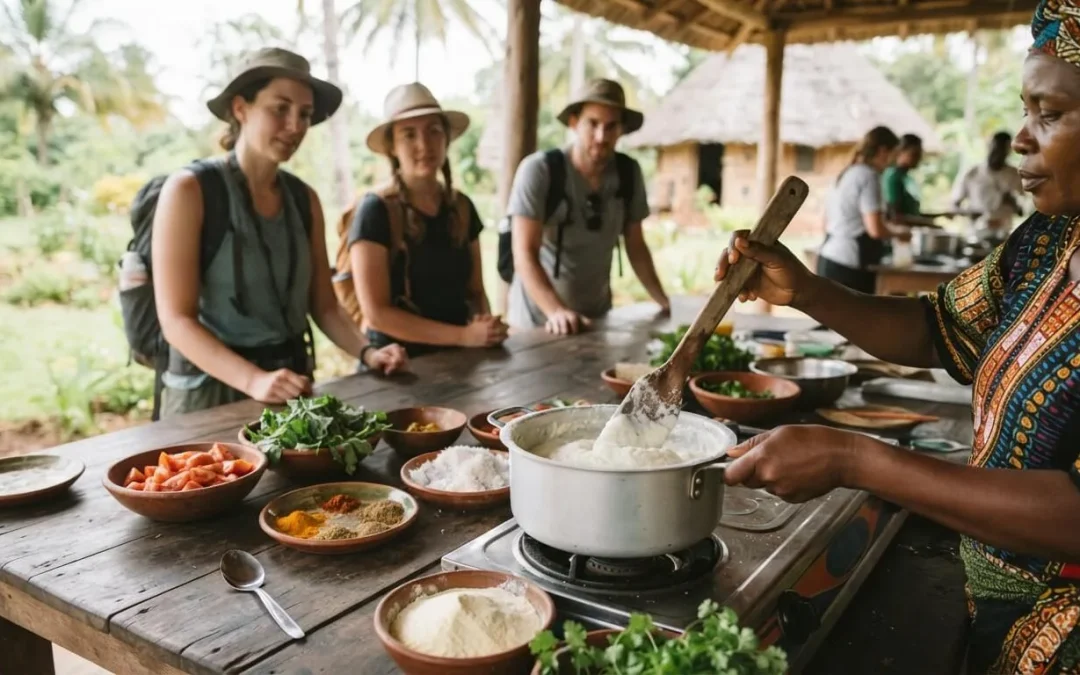
A cooking demonstration at Safariland is led by a local cook, who shows traditional Tanzanian techniques, lets you try a few steps such as stirring ugali or rolling chapati, and ends with tasting. It is not a full cooking class, so it fits into a safari day.
Key takeaways
- You watch, ask questions, try a few steps and taste. No cooking experience is needed.
- The menu depends on the day and what is fresh.
- You leave with techniques you can use at home, such as toasting whole spices and cooking onion and tomato down properly.
- It pairs well with lunch at Ol Mesera Restaurant.
Most people eat a dish and move on. A cooking demonstration makes you stop and see why it tastes the way it does. If you want to learn to cook authentic Tanzanian dishes, or just understand them better, watching a local cook work through a recipe in front of you is the quickest way I know.
Guests often ask what actually happens in one of our cooking demos at Safariland, so here's an honest walk-through of how a session usually goes and what you'll leave with.
What a cooking demonstration is (and isn't)
A demonstration is led by the cook. You watch, ask questions, smell things, taste as you go and often get your hands in for the parts that are fun to try. It's different from a full cooking class, where you'd make a whole meal yourself from start to finish.
For most travellers on a safari schedule, that's a good thing. You get the techniques, the stories and the food without needing half a day and a clean apron. Our aim is to show traditional techniques and recipes that carry a taste of local heritage.
How a session usually runs
Meeting the ingredients
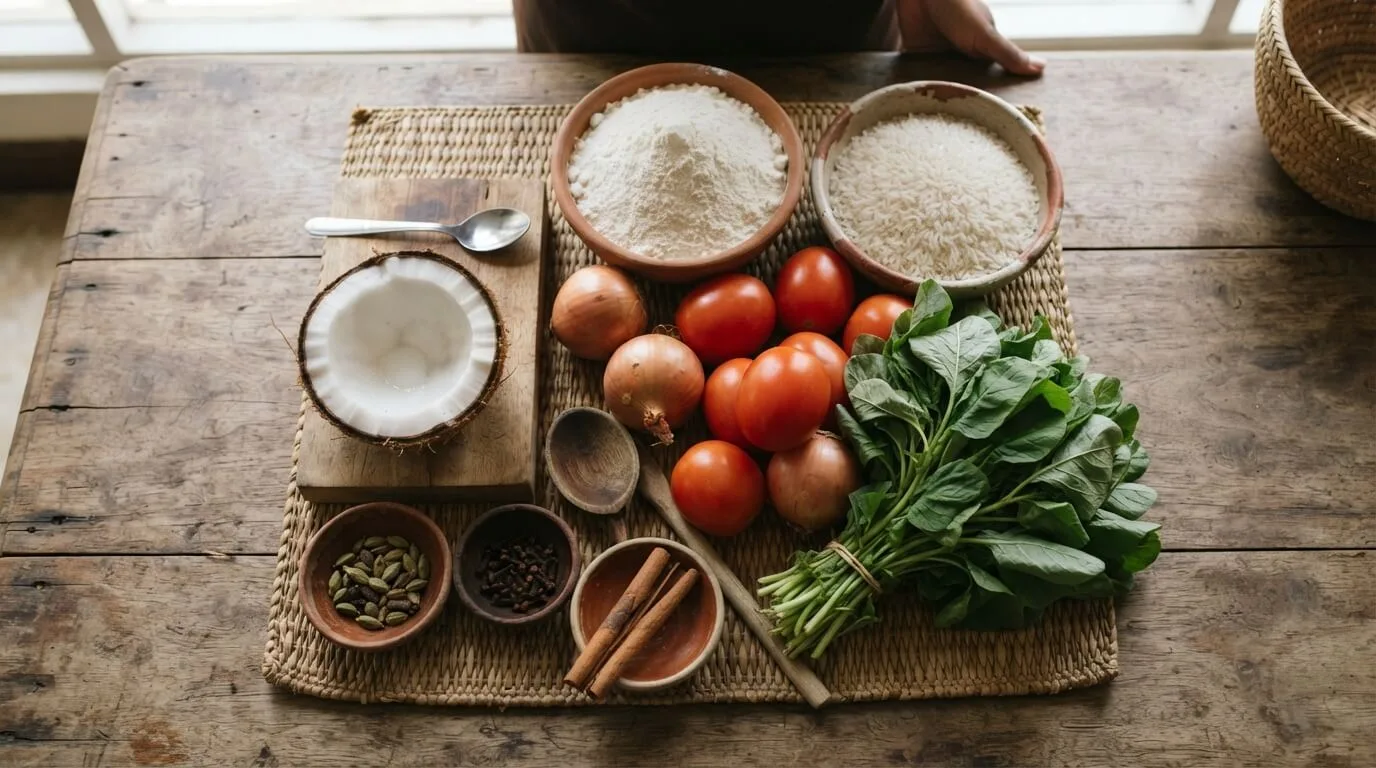
Things start with the raw materials laid out: maize flour, rice, onions, tomatoes, fresh greens, coconut and a small spread of whole spices such as cardamom, cloves, cinnamon and cumin. The cook will usually explain where the produce comes from and which dishes each ingredient belongs to. This is a good moment for questions, because the answers tend to explain the whole cuisine.
Watching the techniques
Then the cooking starts. What is on the menu depends on the day and what is fresh, but the techniques are the heart of it. You might see:
- Ugali stirred with a flat wooden paddle until it pulls away from the pot, which is harder on the arms than it looks
- Whole spices toasted and ground for pilau
- Onions and tomatoes cooked down as the base for mchicha
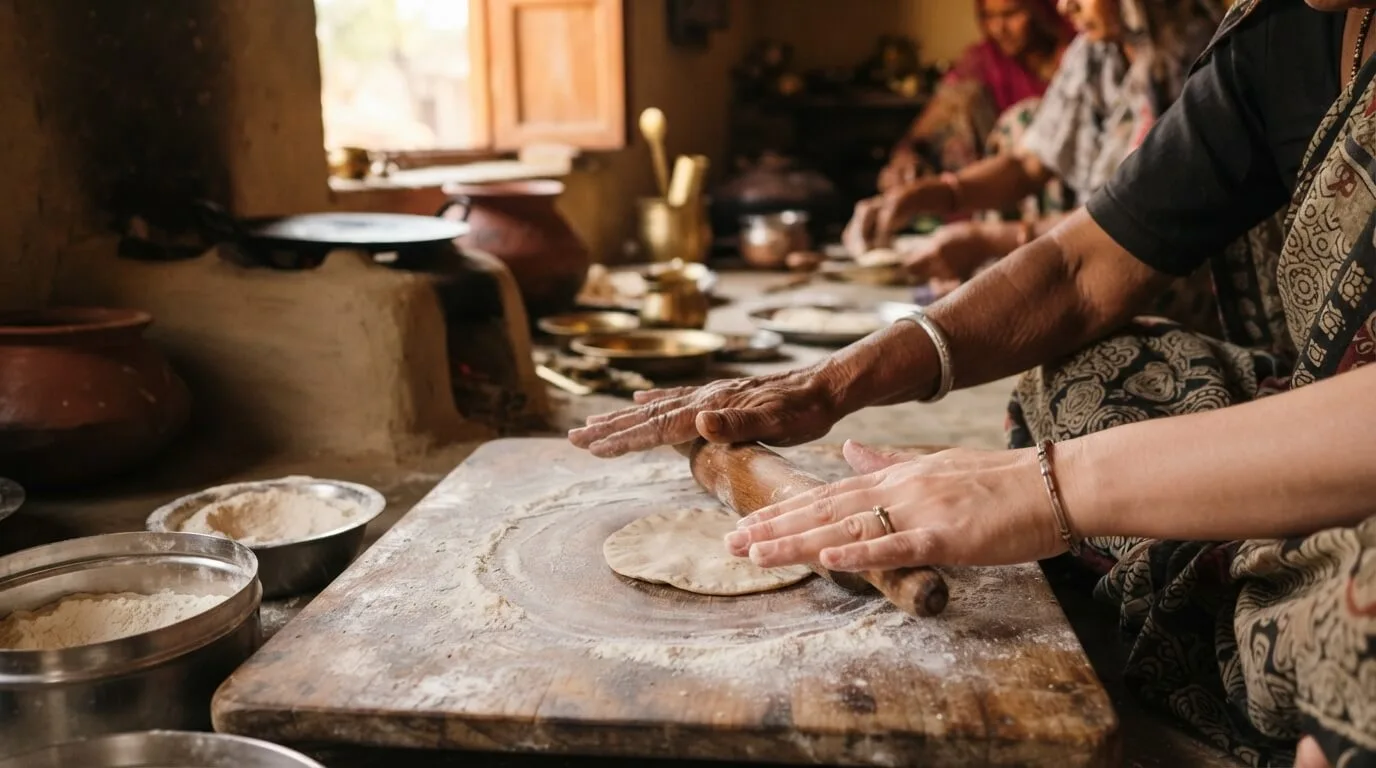
- Chapati dough rolled, coiled and rolled again so it comes out soft and layered
Trying it yourself
Where it makes sense, the cook will hand things over. Stirring the ugali, rolling a chapati or grating coconut are all popular. You don't need any cooking experience, and nobody is judging your chapati shape. Mine were terrible for months.
Tasting
The best part. You taste the dishes as they're finished, usually with the cook explaining how a family would serve them and what they'd eat alongside.
Cooking demonstration, cooking class or restaurant meal?
| Option | What you do | Time needed | Best for |
|---|---|---|---|
| Cooking demonstration | Watch a local cook, ask questions, try a few steps, taste | Fits into a safari day | Travellers who want the techniques and stories |
| Full cooking class | Cook a complete meal yourself | Usually a longer session | Keen home cooks with spare time |
| Restaurant meal | Order and eat | A normal lunch | Anyone short on time |
| Demo plus lunch at Safariland | Watch the dishes made, then eat at Ol Mesera | A relaxed stop on the crater road | Getting the most from one visit |
A little background on what you're cooking
Tanzanian food makes more sense once you know where it came from. The everyday base, ugali, beans and greens, is shared with much of East and Southern Africa. The spice comes from the Swahili coast. Centuries of trade with Arabia, Persia and India brought cardamom, cloves, cinnamon and cumin, along with dishes like pilau and chapati. Inland, regional cooking adds its own layer, such as the banana dishes of the Kilimanjaro slopes.
A good cook will weave that history into the demonstration without turning it into a lecture. You'll hear why pilau is served at weddings, why chapati is folded the way it is, and why a Tanzanian grandmother would never add coconut milk too early. Those stories are half the reason people remember the session.
What to wear and bring
Nothing special. Comfortable clothes you don't mind getting a little flour on are fine, and closed shoes are sensible in any kitchen. Bring a phone or notebook if you want to jot down recipes, and an appetite, because you'll be tasting throughout. If anyone in your group has allergies or dietary needs, tell the team when you book so the cook can plan around them.
Techniques you'll actually use at home
The recipes are useful, but the small habits are what people tell me they still use years later:
- Toast whole spices before grinding them. It's the reason good pilau smells the way it does.
- Cook onion and tomato down properly before adding greens or beans. Patience here is most of the flavour.
- Use coconut milk at the end, not the start, so it stays creamy rather than splitting.
- Keep chilli separate so everyone at the table can season their own plate.
None of that needs special equipment. A heavy pot, a wooden spoon and a decent spice supply will get you most of the way to cooking authentic Tanzanian dishes in your own kitchen.
Who it suits
Cooking demos work well for couples, families with children old enough to stir a pot, and groups who want something social between game drives. They're a good fit for anyone who's been curious about what they ate on safari and wants to take a bit of it home.
If you prefer making something with your hands in a different way, the painting workshops and carving tours at Safariland are worth a look too. Our guide to booking an African art workshop near Karatu covers both.
Pairing the demo with a meal
Because the demonstration happens at Safariland, it's easy to follow it with lunch at Ol Mesera Restaurant, where traditional Tanzanian dishes like choma choma and mchicha bowls come to the table made with fresh organic ingredients. Seeing the techniques first changes how the food tastes, honestly.
If you'd like to see how food fits into a wider visit, read about a Tanzania experience you can fit into one stop, or compare it with other options in our piece on local Tanzanian tours.
Frequently asked questions
Do I need cooking experience for a demonstration?
No. The cook leads the session, and any hands-on parts, such as stirring ugali or rolling chapati, are simple and suitable for beginners.
Which authentic Tanzanian dishes are shown?
It depends on the day and what's fresh. Sessions focus on traditional techniques and recipes, which may include dishes like ugali, pilau, mchicha or chapati. Ask the team when booking.
Can children join a cooking demonstration?
Yes, it's a family-friendly activity. Children usually enjoy the hands-on steps, with an adult keeping an eye on anything hot.
How do I book a cooking demonstration at Safariland?
Contact the Safariland team through the website with your preferred dates and group size, and they'll confirm timings and arrange it around your safari schedule.
Learn to Cook Authentic Tanzanian Dishes at Safariland
Book a cooking demonstration at Safariland near Karatu and see authentic Tanzanian dishes come together in front of you, then sit down to lunch at Ol Mesera Restaurant. Tell us your dates and group size, and any allergies, and we will fit it around your safari.
Book a Cooking DemonstrationCall +255 743 722 666 or email info@mysafariland.com