
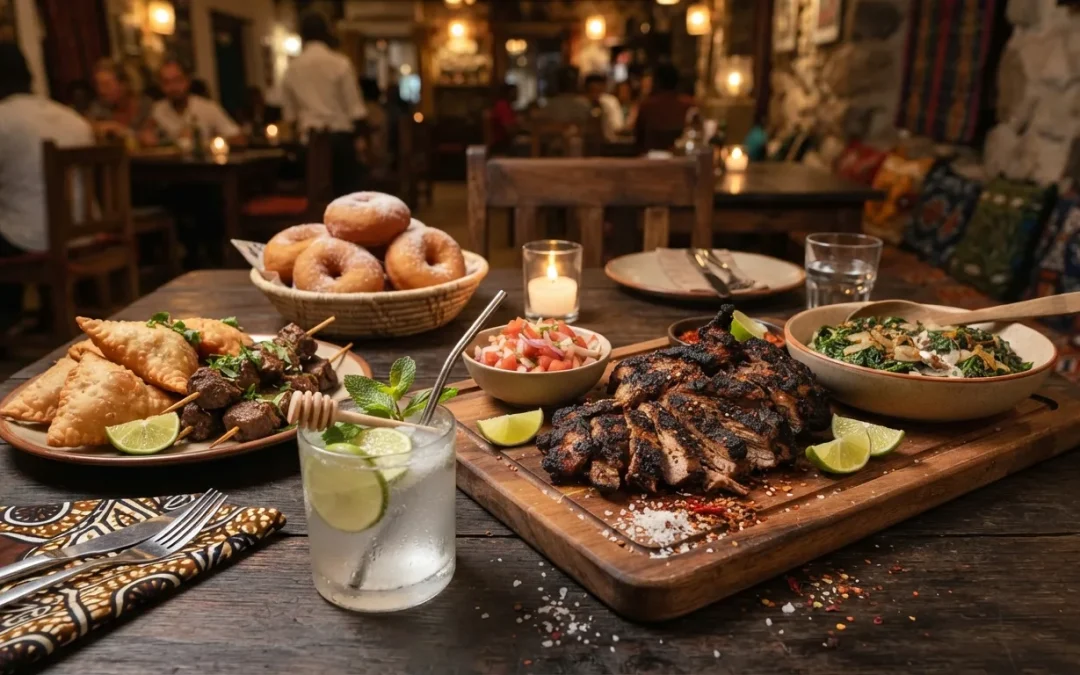
Tanzanian comfort food comes down to three words. Choma choma is anything off the charcoal grill, mchicha is amaranth greens cooked with tomato and onion, and bitings are snacks. Order them together with ugali and you have a first-time Tanzanian meal.
Key takeaways
- Choma choma is ordered by weight and shared. Expect to wait for it.
- Mchicha is a vegetarian staple, eaten with ugali.
- Bitings (sambusa, mishkaki, mandazi, roasted maize) are the snacks you will keep reaching for.
- Chilli is served separately as pilipili, so go easy at first.
Ask a Tanzanian what they miss most when they're away from home and it's rarely a fancy dish. It's the grill on a Saturday afternoon, a bowl of greens with ugali, a paper bag of something fried and salty from the corner stall. That's Tanzanian comfort food, and it's what I'd point any first-time visitor towards before anything else.
Three words will get you a long way: choma choma, mchicha and bitings. Here's what each one means and how to order it without looking lost.
Choma choma: anything off the grill
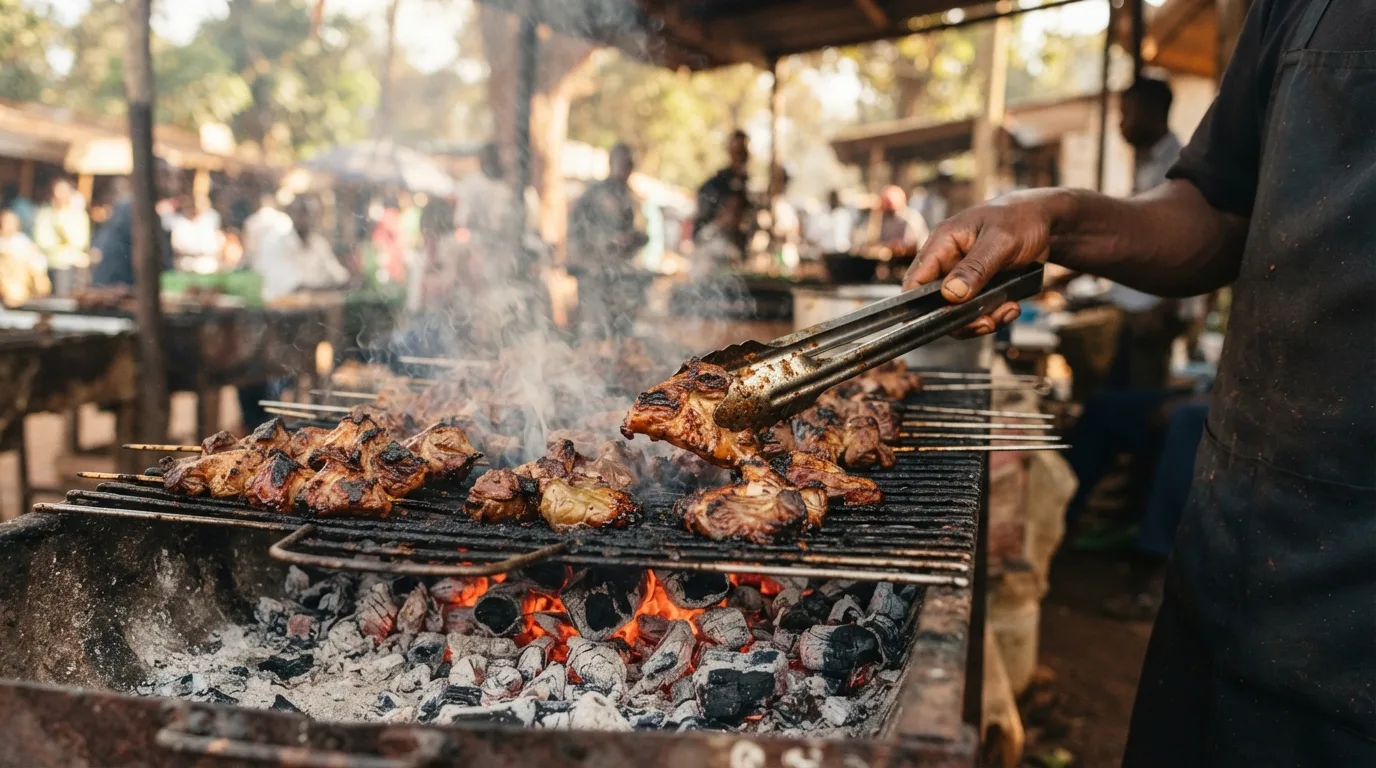
Choma is the Swahili word for roasting or grilling, and nyama choma, grilled meat, is close to a national pastime. Saying it twice, choma choma, is a playful way of talking about grilled food in general, and it's the name Ol Mesera Restaurant at Safariland uses for its grilled dishes.
Traditionally, goat is king, with beef and chicken close behind. The meat goes over charcoal slowly, with little more than salt, and it's done when it's done. That's why a proper choma order takes a while. People don't mind. The wait is when the drinks come out and the conversation starts.
It usually arrives chopped on a wooden board, with a small pile of salt, fresh chilli and kachumbari, a salad of tomato, onion and coriander. Eat with your fingers. Add ugali or grilled green bananas if you're hungry, which you will be.
Mchicha: the greens that hold everything together
Mchicha is amaranth, a leafy green that grows almost anywhere in Tanzania. It's often described as wild spinach. Cooks fry onion and tomato, add the chopped leaves and let them wilt down, sometimes finishing with coconut milk or ground peanuts to make it creamy.
On a home table it sits beside ugali and a stew, and it's the part that makes the meal feel balanced. It's also a vegetarian staple, so if you don't eat meat you'll still eat very well here. Ol Mesera serves it as a mchicha bowl, which is a nice way to taste it properly rather than as a side you barely notice.
Bitings: the snacks you'll keep reaching for
Bitings is Tanzanian English for snacks, the small things you pick at with a drink or between meals. The word makes visitors laugh the first time they hear it, and then they start using it themselves.
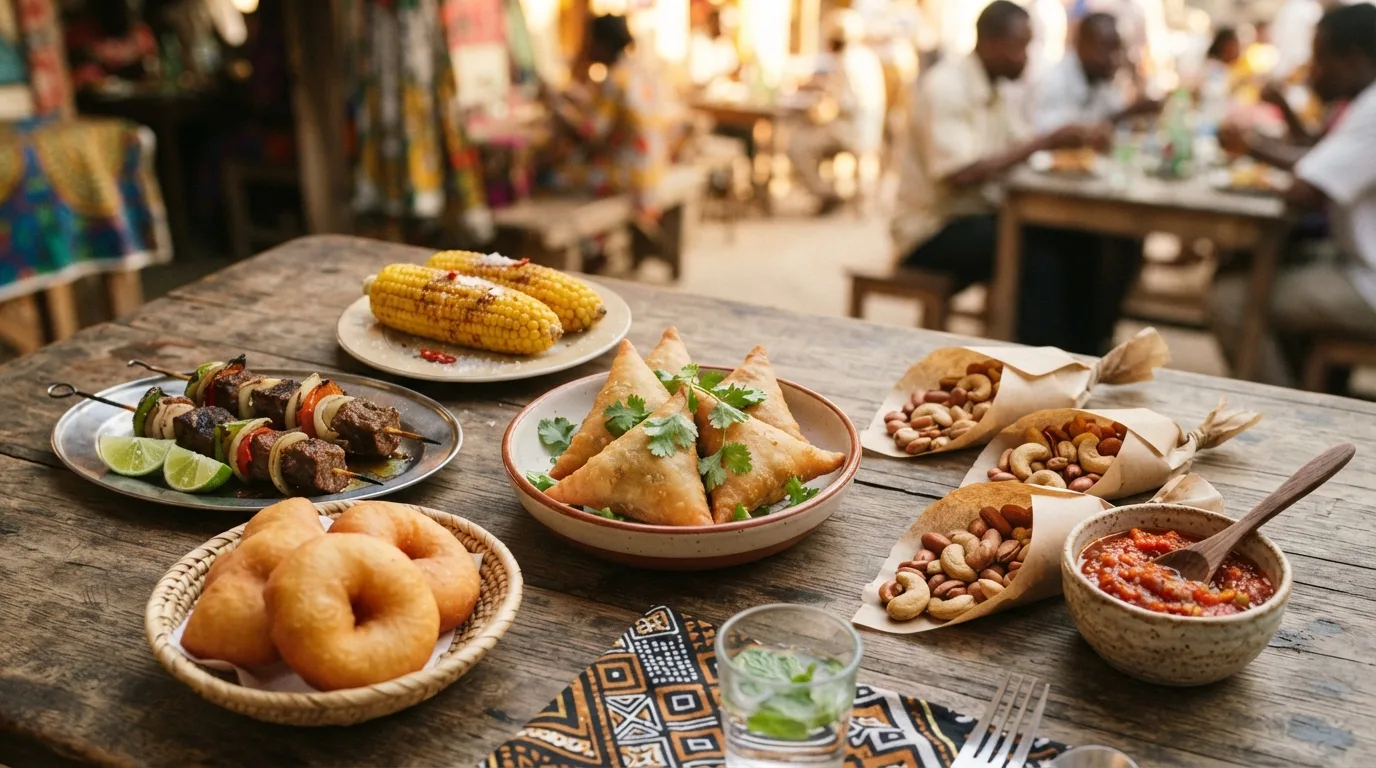
What counts as bitings depends on who's making them, but the usual suspects include:
- Sambusa, crisp triangular pastries filled with spiced meat or lentils.
- Mishkaki, small marinated meat skewers grilled over coals.
- Roasted maize or cassava, sold on the roadside with chilli and lime.
- Mandazi, lightly sweet fried dough, often with a hint of cardamom.
- Karanga, roasted peanuts, sometimes sold warm in a twist of paper.
Tanzanian Comfort Food: Your First-Timer's Ordering Guide
| Word you'll hear | What it means | What to order | Good for |
|---|---|---|---|
| Choma choma | Grilled food, mostly meat | Goat or beef choma with kachumbari | Hungry groups, long lunches |
| Nyama | Meat | Nyama choma by the half kilo or kilo | Sharing at the table |
| Mchicha | Amaranth greens | Mchicha bowl or mchicha with ugali | Vegetarians, lighter meals |
| Bitings | Snacks | Sambusa, mishkaki, mandazi | Drinks, afternoon breaks |
| Pilipili | Chilli sauce | Ask for it on the side | Anyone who likes heat |
| Dawa | Medicine, and a lime and honey cocktail | Ol Mesera's signature Dawa | End of a long game drive |
How to eat it like a local
Wash your hands first. Many places bring a jug and basin to the table because so much of this food is eaten by hand, ugali and choma especially.
Use your right hand. Pinch a piece of ugali, press a small hollow into it with your thumb and use it to scoop up mchicha or sauce.
Share. Choma is ordered for the table, not per person. Order a kilo for three or four people and add more if needed.
Go easy on the chilli at first. Tanzanian food is flavourful rather than hot, and the heat sits on the side in pilipili sauce. Taste before you pour.
How comfort food fits into a Tanzanian day
It helps to know when people actually eat these things. Mornings start with chai and something fried, often mandazi or a chapati. Lunch is the main meal for many families: ugali or rice with beans, mchicha and perhaps a little meat or fish. Choma is more of a weekend and evening thing, when friends meet up and there's time to wait for the grill.
Bitings fill the gaps. You'll see people buying roasted maize on the walk home, or sharing a plate of sambusa with a drink after work. Nobody thinks of any of it as special. That's exactly what makes it comfort food.
If you're on safari, the easiest way to taste all of it is to swap one lodge lunch for a proper Tanzanian one. Your stomach will thank you, and so will your guide.
What to drink with it
Tanzanians usually drink a cold local beer or a soda with choma. At Ol Mesera, the drink people ask about is the signature Dawa cocktail. Dawa means medicine in Swahili, and the classic version is built on lime and honey, crushed with ice. After a dusty morning on the crater road, it does feel a bit like medicine.
If you'd rather stay alcohol-free, try chai with ginger or a fresh juice. Passion fruit and mango are both excellent when in season.
Where to try all three in one place
You'll find choma, mchicha and bitings all over Tanzania, but a first-timer can easily end up at a tourist grill that misses the point. If you're driving between Lake Manyara and Ngorongoro Crater, Safariland near Karatu is an easy stop, and Ol Mesera's menu covers all three with fresh organic ingredients.
If you want to understand what you're eating before you eat it, ask about a cooking demonstration. And if this has you curious about the wider food scene, read our guide to Tanzanian food tours or see how lunch fits with the gallery and jewellers in a Tanzania experience you can fit into one stop.
Frequently asked questions
What does choma choma mean in Tanzania?
Choma means to roast or grill in Swahili. Choma choma is a playful way of saying grilled food, and at Ol Mesera Restaurant it refers to the menu's grilled dishes.
What is mchicha made from?
Mchicha is amaranth leaves, cooked with onion and tomato and sometimes finished with coconut milk or peanuts. It's usually eaten with ugali and is a common vegetarian dish.
What are bitings in Tanzania?
Bitings is the local word for snacks, such as sambusa, mishkaki, roasted maize, mandazi and peanuts, usually eaten with drinks or between meals.
Is Tanzanian comfort food spicy?
Not usually. It's seasoned with salt, onion, tomato and spices rather than heat. Chilli is served separately as pilipili so everyone can adjust their own plate.
Try Tanzanian Comfort Food at Ol Mesera
Order choma choma, a mchicha bowl and a plate of bitings at Ol Mesera Restaurant at Safariland near Karatu, between Lake Manyara and Ngorongoro Crater. Tell us your dates and group size, and we will have a table ready, with a Dawa waiting at the end.
Plan Your Visit to SafarilandCall +255 743 722 666 or email info@mysafariland.com