
"Why is this one so much more than that one?" I hear that question in the gallery most days, usually from someone holding two ebony carving pieces that look similar at a glance. The honest answer is almost always time. How long the wood took to grow, how long the carver spent on it, and how many years it took them to get good enough to do it at all.
Here's a straightforward breakdown of how long a carving takes and why the price follows.
It starts long before the carver picks it up
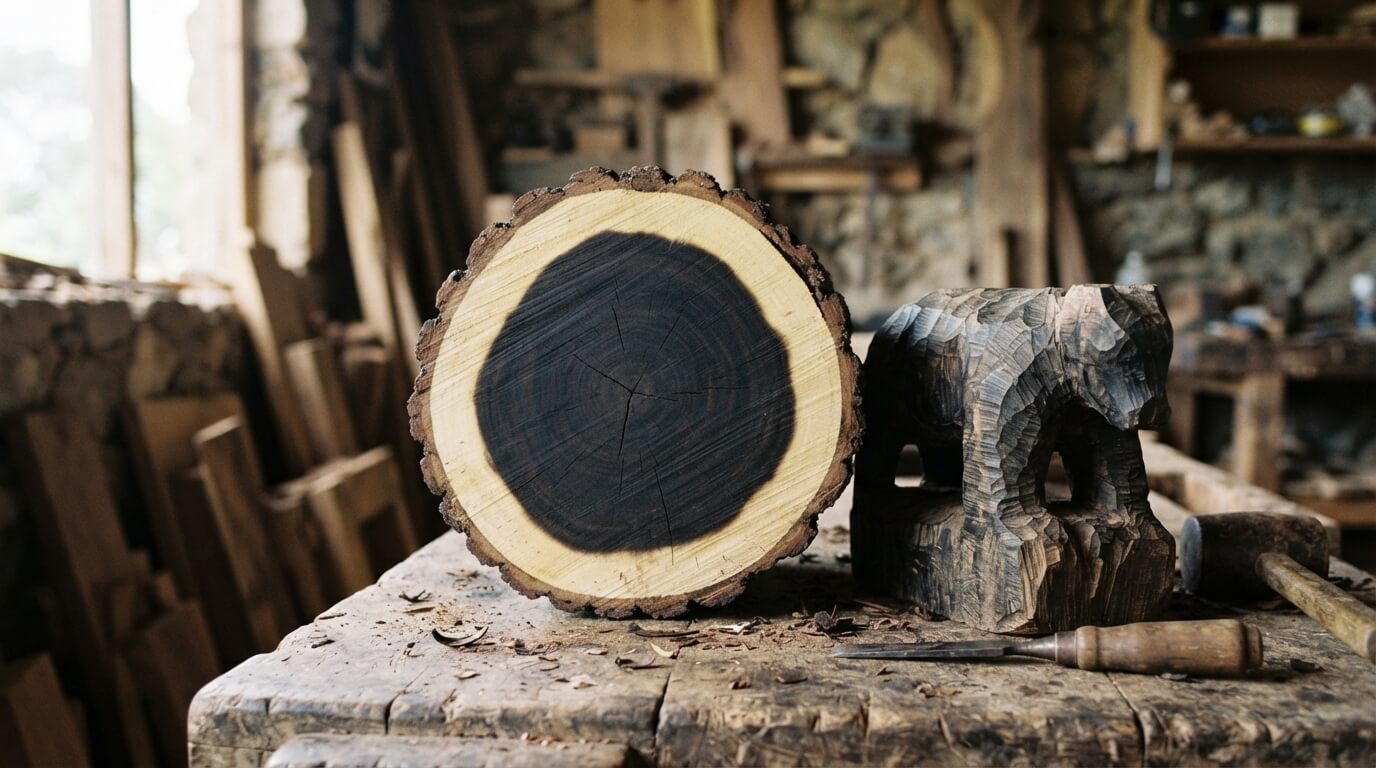
Makonde carvings are made from African blackwood, known in Swahili as mpingo and usually sold as ebony. It's one of the slowest-growing trees in Africa, taking many decades to reach a usable size, and only the dark heartwood in the centre is prized. A thick trunk can give surprisingly little carvable wood once the pale sapwood and cracked sections are taken out.
It's also brutally dense. It blunts tools quickly and can split if it dries too fast, so a carver will sometimes lose a piece partway through. That risk is quietly built into the cost of everything that survives.
How long a carving actually takes
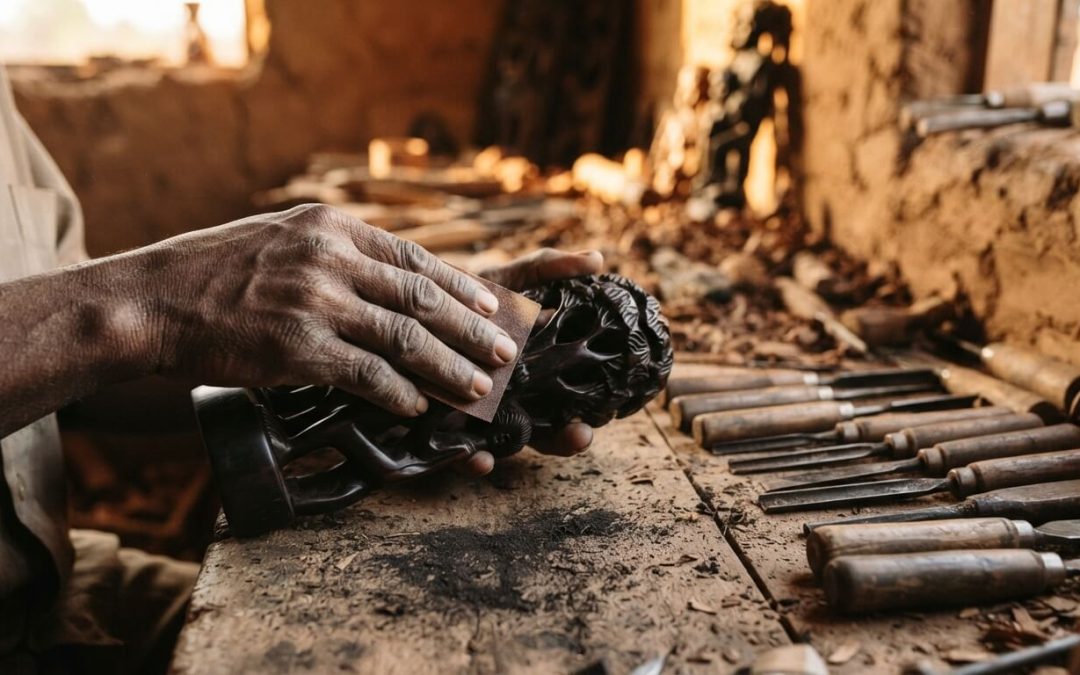
A carver might spend a full week on a single ebony figure, sanding it down by hand until the grain comes through properly. Smaller, simpler pieces take less. Large, intricate sculptures take a great deal more. It depends on size, detail and how the wood behaves.
Here's a rough guide to what we see in the workshop. Treat these as ballpark figures, because every block of blackwood is different.
| Type of piece | Typical time to make | What drives the time | What you're paying for |
|---|---|---|---|
| Small animal or simple figure | A few days | Basic shaping, light detail, finishing | Genuine wood and careful hand finishing |
| Detailed single figure or head | Around a week | Faces, hands, sanding by hand | Skill in fine detail and a clean finish |
| Shetani spirit figure | A week or more | Complex curves and open spaces | Design skill and risk of breakage |
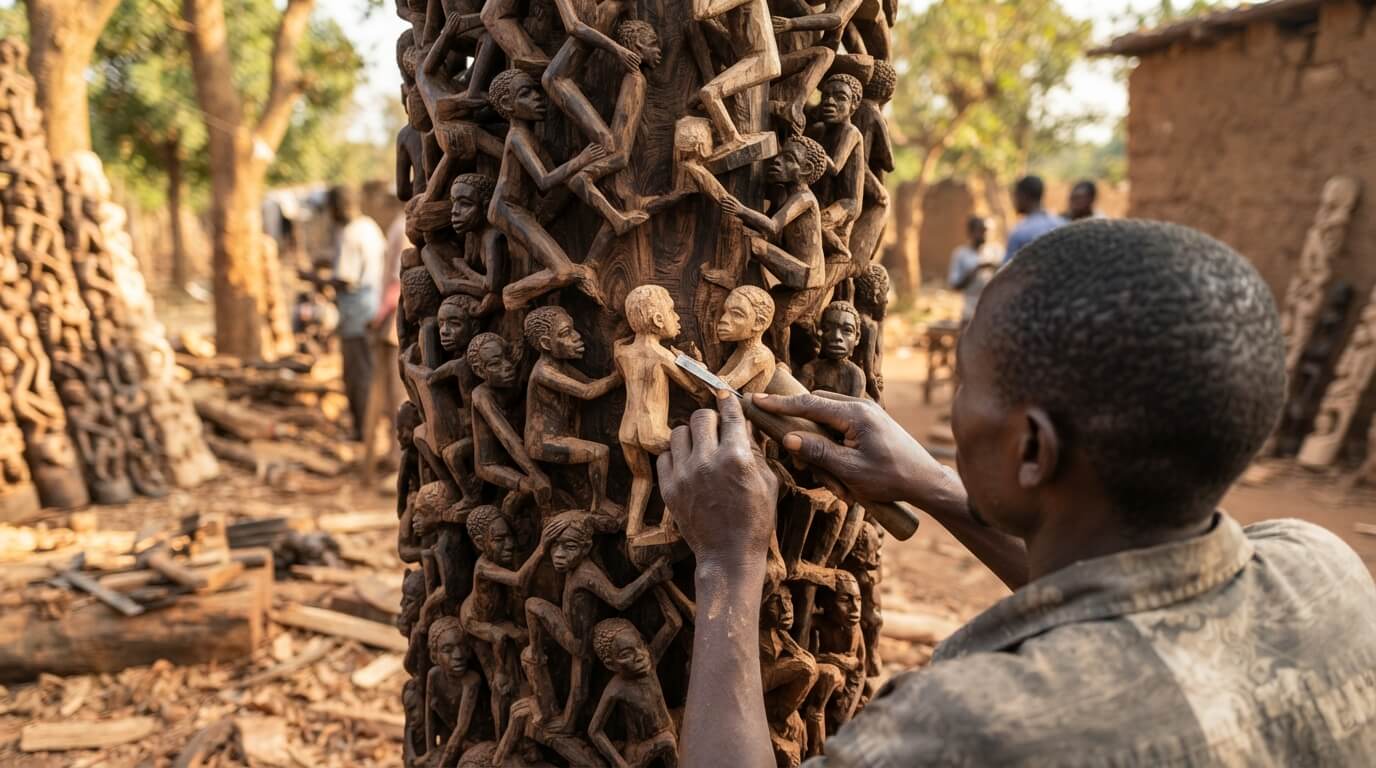
| Large Ujamaa tree of life | Several weeks or longer | Many interlocking figures, deep undercutting | Very high skill, time and wood quality |
Where the hours go
People are often surprised that the carving itself isn't the slowest part. Rough shaping with an adze can move quite quickly for an experienced hand. The detail work is slower: faces, fingers, the space between two figures, the texture of skin or cloth. On a tree-of-life piece, carving through the gaps between interlocking figures without breaking anything is painstaking.
Then comes finishing. Every tool mark is filed and sanded out by hand, working through finer and finer grades until the surface is smooth enough to polish. Rush that part and the piece looks cheap no matter how good the carving was. It's the stage many carvers say they worry about most.
Why the price reflects all of this
When you pay for a genuine Makonde piece, you're paying for four things:
- The wood itself, which is slow-growing, dense and often lost to cracks along the way.
- The hours, from rough shaping through days of detail and finishing.
- The skill, which usually takes years to build, often learned within a family.
- The detail, since deep undercuts and fine features multiply both time and risk.
A mass-produced souvenir cuts corners on every one of those. Softer wood, quick machine roughing, very little detail, and a coat of black polish or dye to fake the look. It's cheaper because far less went into it. Our guide on how to tell real ebony carvings from fake shows the tell-tale signs.
How to judge whether a price is fair
You don't have to be an expert. A few simple checks help:
Feel the weight. Genuine blackwood is heavy for its size. A large piece that feels light is a warning sign.
Look into the gaps. Fine carving between figures, under arms and around faces takes serious time. Shallow, blocky detail usually means a quick job.
Check the finish. Good finishing has a natural sheen that shows the grain. A flat, painted black surface hides it.
Ask who made it. At African Galleria, you can often see the carvers working on-site, which is one of the more reliable ways to know what you're getting. It's the same reasoning we use for crafts in general, covered in how to know African crafts are genuinely handmade.
Caring for a carving once it's home
Genuine blackwood is tough, but it isn't indestructible. It can crack if it moves suddenly between very different climates, so keep a new carving away from radiators, air vents and direct sunlight for the first few months while it settles into your home.
Dust it with a soft, dry cloth. If the surface starts to look dull after a year or two, a small amount of wood oil or a neutral furniture wax, rubbed in and buffed off, brings the sheen back. Avoid water, sprays and anything with silicone.
Handle larger sculptures by the base rather than by thin parts like arms or spears, which are where breaks usually happen. And if you're shipping a piece home, ask for it to be packed properly. The team at Safariland does this regularly and knows how to protect the fragile bits.
Looked after like this, a well-made ebony carving will last for generations. That's another part of what the price is buying.
Keep any paperwork or notes the gallery gives you about the carver and the piece. Years from now, knowing who made it and roughly how long it took will make the carving mean far more than a nameless ornament ever could.
See the time for yourself
Numbers only go so far. Watching a Makonde carver spend twenty minutes on one hand of a figure explains the price better than anything I can write. That's the idea behind the Ebony Carvings Tour at Safariland, and it's why so many guests leave understanding exactly what they're paying for. If you want to compare it with our other hands-on options, see African art workshops in Tanzania.
Frequently asked questions
How long does it take to carve an ebony figure?
It depends on size and detail. A small, simple piece can take a few days, a detailed figure around a week, and a large Ujamaa sculpture several weeks or more.
Why are real ebony carvings expensive?
African blackwood grows very slowly, is hard to carve and often cracks. On top of the wood, you're paying for days or weeks of skilled hand carving and finishing.
How can I tell if an ebony carving is real?
Real blackwood is heavy, shows a fine grain under a natural polish and often has pale sapwood contrast. Lightweight pieces with a flat, painted black surface are usually fake.
Can I watch an ebony carving being made in Tanzania?
Yes. At Safariland near Karatu, Makonde carvers work on-site, and the Ebony Carvings Tour lets you watch them at work.
See an Ebony Carving Take Shape at Safariland
Watch Makonde carvers turn African blackwood into a finished ebony carving on the Ebony Carvings Tour at Safariland near Karatu, then choose a piece from African Galleria knowing exactly how it was made.
Book the Ebony Carvings Tour