
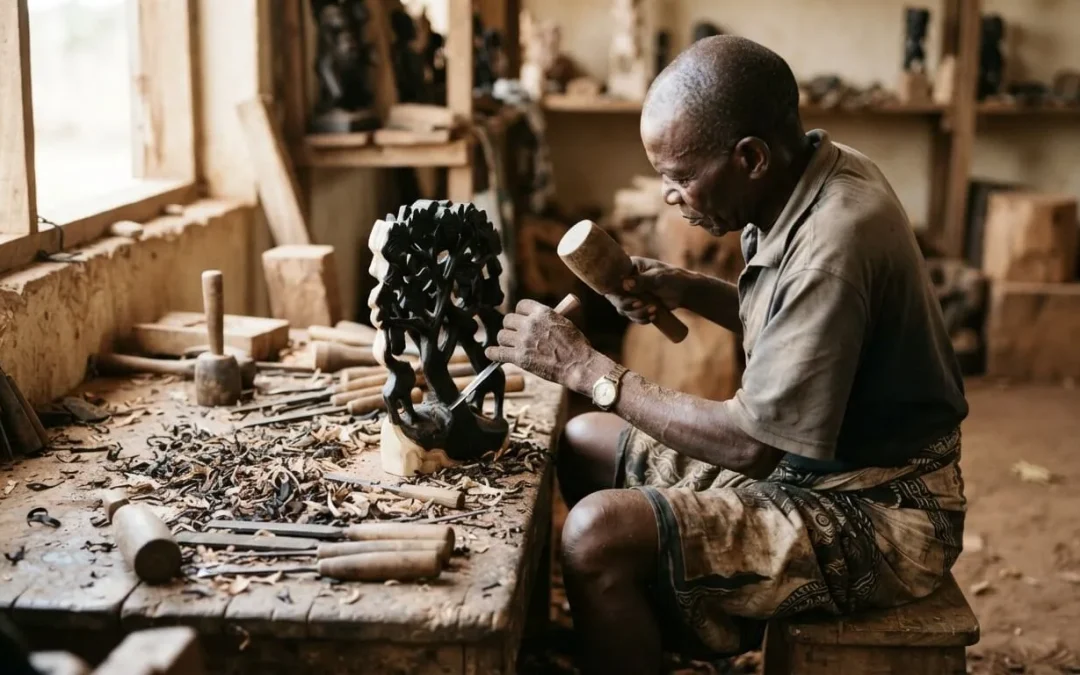
An ebony carving experience at Safariland means watching a Makonde master carver shape African blackwood by hand, from the first adze cuts to the final polish. Most guests plan to stay five minutes and stay forty.
Key takeaways
- Makonde carvers work on-site at African Galleria, so you see real work in progress.
- What is sold as “ebony” is usually African blackwood (mpingo), one of the densest woods in the world.
- Look for two Makonde styles: Ujamaa (tree of life) and Shetani (spirit figures).
- Ask before photographing a carver close up, and give them room when they use the adze.
The first thing you notice isn't what you see. It's the sound. A steady tap of mallet on chisel, then the scrape of a file, then quiet while the carver turns the piece in his hands and looks at it for a long moment. Anyone who's had an ebony carving experience with a Makonde master will tell you the same thing: it's slower, calmer and far more absorbing than you expect.
At Safariland, Makonde carvers work on-site as part of African Galleria. Here's what it's actually like to stand beside one of them for a while.
Who the Makonde carvers are
The Makonde come from the plateau country of southern Tanzania and northern Mozambique, and carving is one of the oldest parts of their culture. Skills pass down within families, often from father to son. Many of the carvers you will meet learned by sitting beside a relative as children, sweeping up shavings long before they were allowed near a chisel.
Most of what's sold as ebony in East Africa is actually African blackwood, known locally as mpingo. It's one of the densest woods in the world, so dense it sinks in water. That density is what makes it so good for fine detail, and so hard to work.
The first ten minutes: rough shape
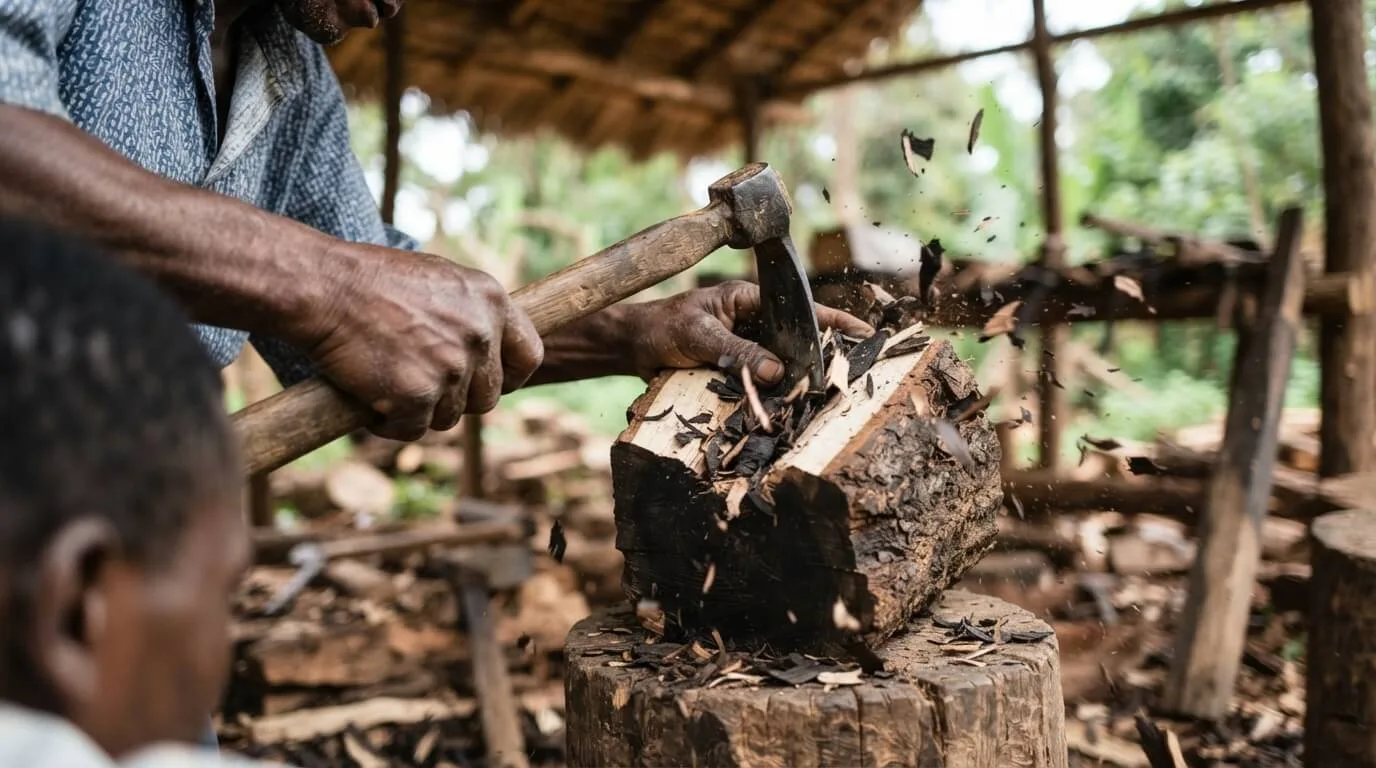
If you arrive while a piece is in its early stages, you'll see the carver using an adze, a short axe-like tool, to knock the block into a rough form. It looks almost careless. It isn't. He's reading the grain and deciding where the dark heartwood and the pale outer sapwood will end up, because that contrast often becomes part of the design.
Ask him what it's going to be. Sometimes he knows exactly. Sometimes he'll say the wood hasn't decided yet, and he means it.
Detail work: where time disappears
Once the shape is there, the work moves to chisels and small knives. This is where watching gets properly hypnotic. A face appears. Then fingers. Then the tiny folds of a cloth or the texture of an animal's skin. Progress is measured in millimetres.
Guests who planned to stay five minutes regularly stay forty. There's something about watching someone do one thing very well, without rushing, that's hard to walk away from.
What you'll see at each stage
| Stage | What the carver is doing | Tools you'll see | What to watch for |
|---|---|---|---|
| Choosing the wood | Reading grain, dark heartwood and pale sapwood | Eyes and hands | How the colour contrast is planned into the design |
| Rough shaping | Knocking the block into a basic form | Adze, mallet | Speed and confidence of each cut |
| Detail carving | Faces, hands, texture | Chisels, small knives | Undercuts and fine lines appearing slowly |
| Smoothing | Removing tool marks | Files, rasps, sandpaper | The grain starting to show through |
| Finishing | Polishing to a deep sheen | Cloth, wax or oil | A natural lustre rather than a painted shine |
The styles to look out for
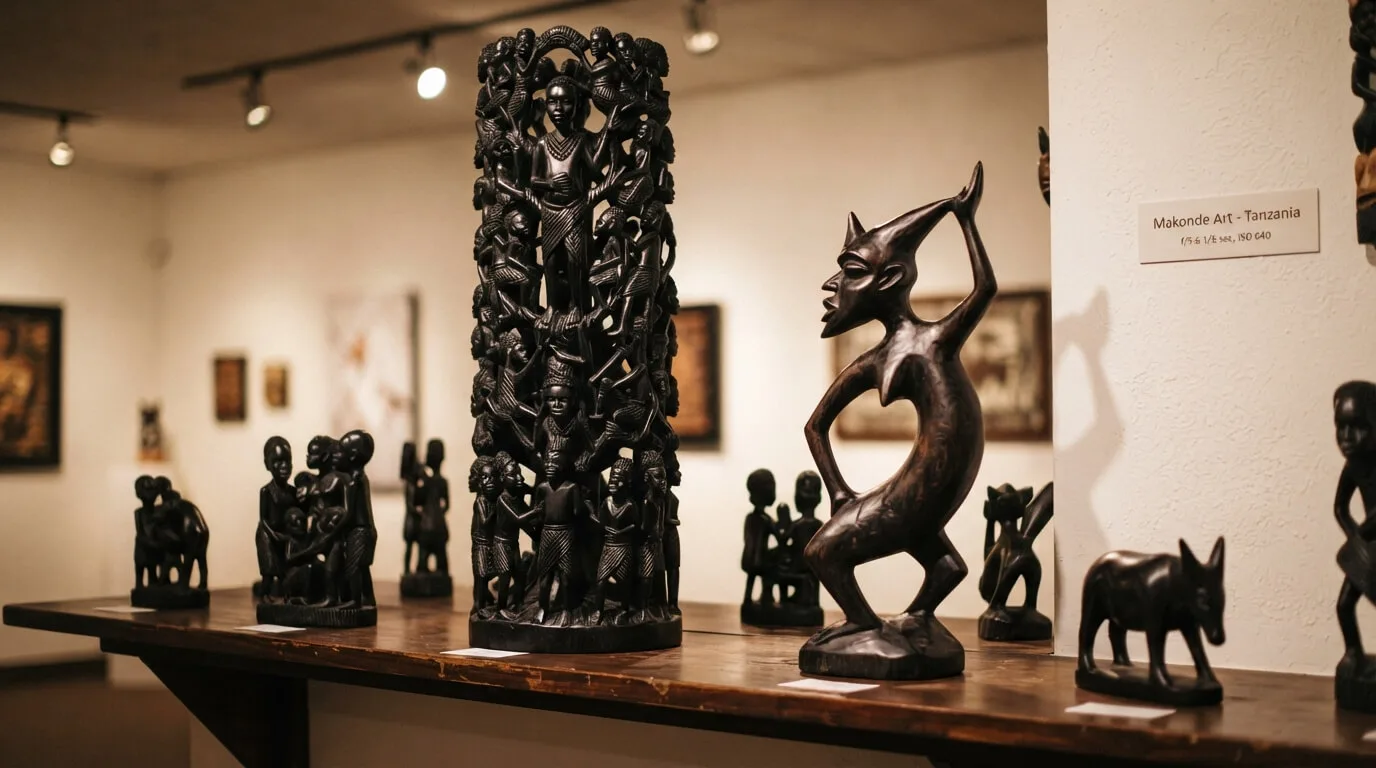
Two Makonde styles come up again and again, and knowing them makes the experience richer:
- Ujamaa, sometimes called the tree of life: a tall column of interlocking human figures, each supporting the next. It's about family and community, and the best ones can take a very long time.
- Shetani: abstract, often twisted figures representing spirits from Makonde belief. They can look strange at first. Ask the carver to explain one and they tend to make a lot more sense.
You'll also see animals, heads, bowls and walking sticks. Every carver has their own hand, and after a while you start recognising who made what.
Questions worth asking
Carvers are generally happy to talk, sometimes through a member of our team who can translate. Good questions include how they learned, how long the piece in front of them will take, and which part is hardest. The answers are rarely what people expect. For many carvers, the finishing and polishing is the part they worry about most, because one slip at the end can spoil weeks of work.
A little workshop etiquette
The carvers are working, not performing, so a few small courtesies go a long way. Ask before taking close-up photos of anyone's face. Give them room when they're using the adze, because chips fly further than you'd think. Don't pick up tools or unfinished pieces unless you're invited to.
Most importantly, be curious. Carvers notice who's genuinely interested, and those guests often get shown things others don't: an old tool handed down from a grandfather, a piece that went wrong and why, or a sketch for something they haven't started yet. Some of the best conversations I've seen in the workshop started with a simple question about a single chisel.
If you're short on time, aim to arrive when a piece is in the detail stage. That's when the carving changes most visibly in a short visit, and when the carvers are usually happiest to explain what they're doing and why.
What guests usually take away
The most common thing people tell me afterwards isn't about a particular sculpture. It's about patience. After watching someone spend a whole morning on the folds of a cloth, the idea of rushing anything feels a bit silly. It's a strange souvenir from a safari, but a good one.
Why watching changes how you buy
Once you've seen how long a single figure takes, you look at carvings differently. You notice when a piece has real undercutting and fine detail, and when it's been rushed. You also get a much better sense of the fakes that turn up on the tourist route, where soft wood is dyed or polished black to pass as ebony. Our guide on how to tell real ebony carvings from fake goes into that properly.
Seeing the workshop attached to the gallery floor is one of the more reliable ways to know what you are buying. The same logic is in our piece on spotting genuinely handmade African crafts.
If you want to go further than watching, have a look at our painting and carving sessions near Karatu.
Frequently asked questions
What happens during an ebony carving experience?
You watch a Makonde carver at work, see the tools and stages of a carving, and can ask questions about the wood, the styles and how they learned. Depending on the stage of the piece, you might see rough shaping, detail work or finishing.
Is Makonde ebony really ebony?
Most Makonde carvings are made from African blackwood, called mpingo, which is often sold as ebony. It's extremely dense and dark, which is why it holds fine detail so well.
Can I buy the carving I watched being made?
Pieces are often still in progress, but carvings from the same workshop are available in African Galleria. Ask the team if you're interested in a particular carver's work.
How long should I allow for the carving experience?
Many guests spend around half an hour to an hour, often longer than they planned. The Safariland team can suggest timing when you book.
Book Your Ebony Carving Experience at Safariland
Watch Makonde master carvers at work on the Ebony Carvings Tour at Safariland near Karatu, then browse finished pieces in African Galleria. It fits easily into a day between Lake Manyara and Ngorongoro Crater. Tell us your dates and we will confirm timings.
Book the Ebony Carvings TourCall +255 743 722 666 or email info@mysafariland.com