
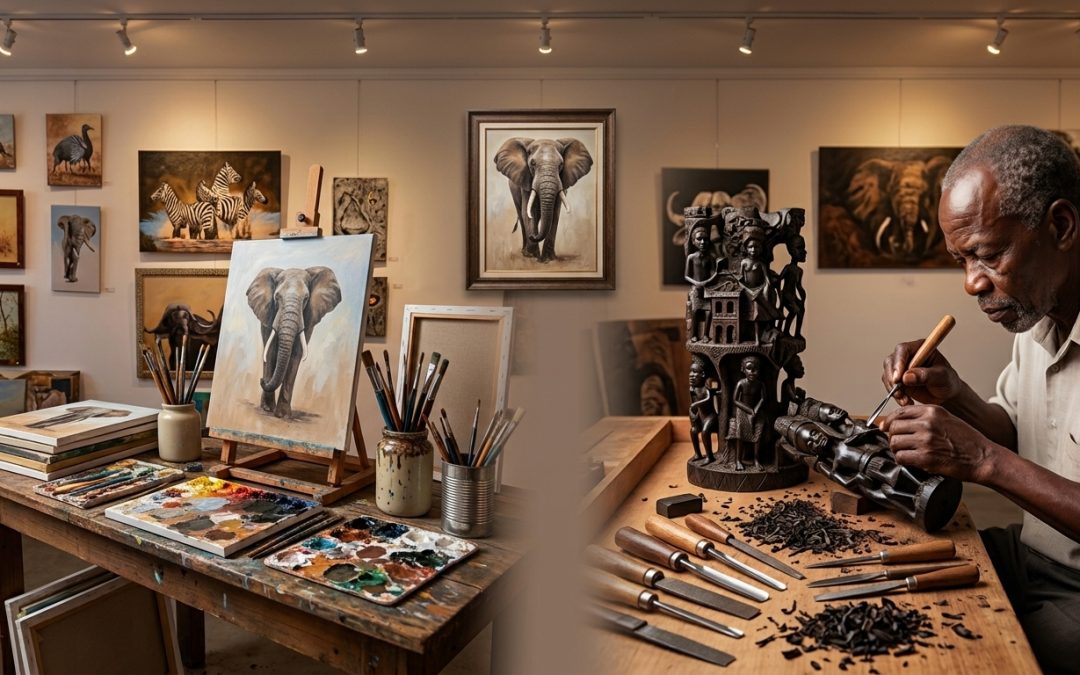
Ask most travellers to picture African art workshops and they'll imagine watching someone else work, a carver in the corner, a painter at an easel, admired from a polite distance. At Safariland near Karatu, the workshops are built the other way round: you're the one holding the brush or the chisel, guided by someone who does this for a living. The real question isn't whether to try one, it's which one, painting or carving, actually suits you.
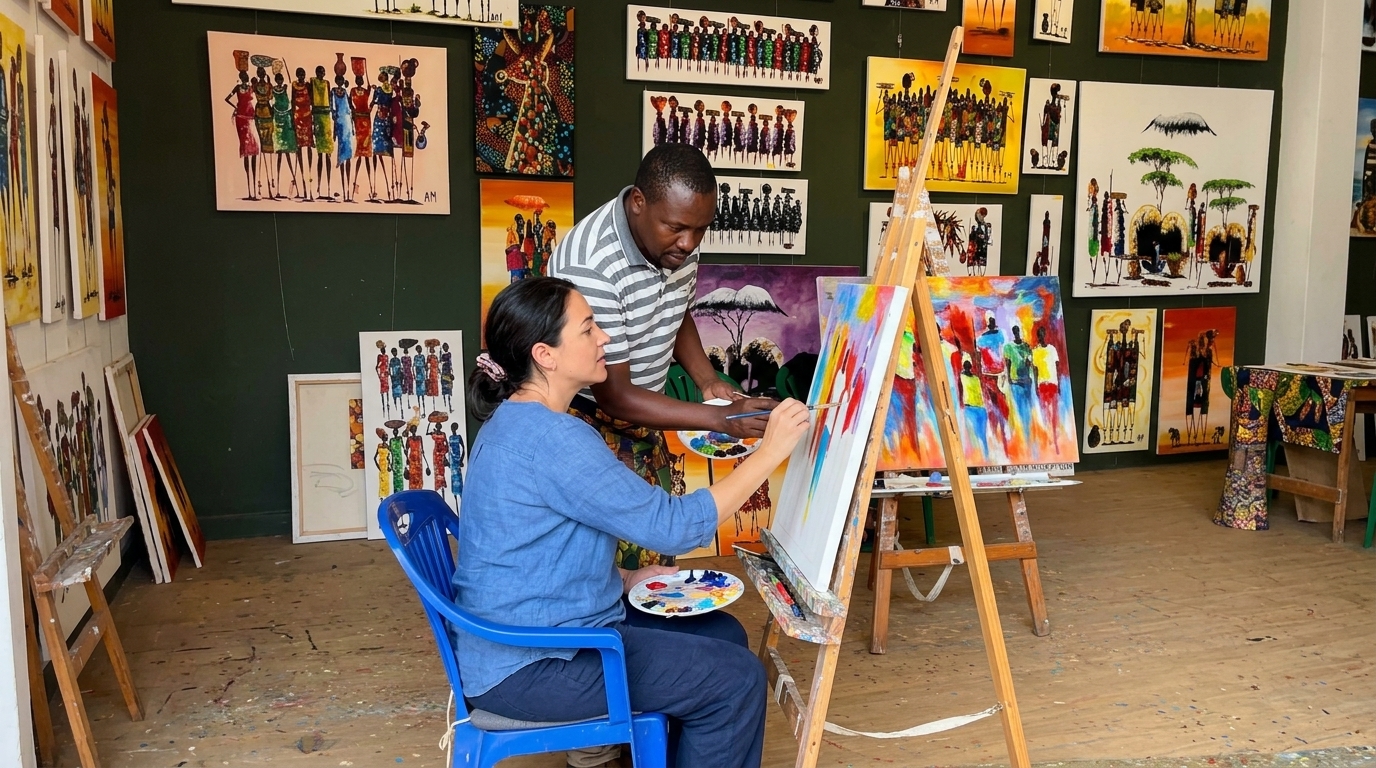
The painting workshop, in practice
This one happens inside African Galleria itself, live, with a local artist guiding you through creating your own piece rather than simply talking you through theirs. It's built around the gallery's wider African paintings collection, vivid landscapes, wildlife scenes and abstract work exploring cultural identity, so the workshop connects directly to what's already on the walls around you rather than feeling like a separate, bolted-on activity. You leave with a canvas you made yourself, guided rather than left to figure it out alone.
The ebony carving tour, in practice
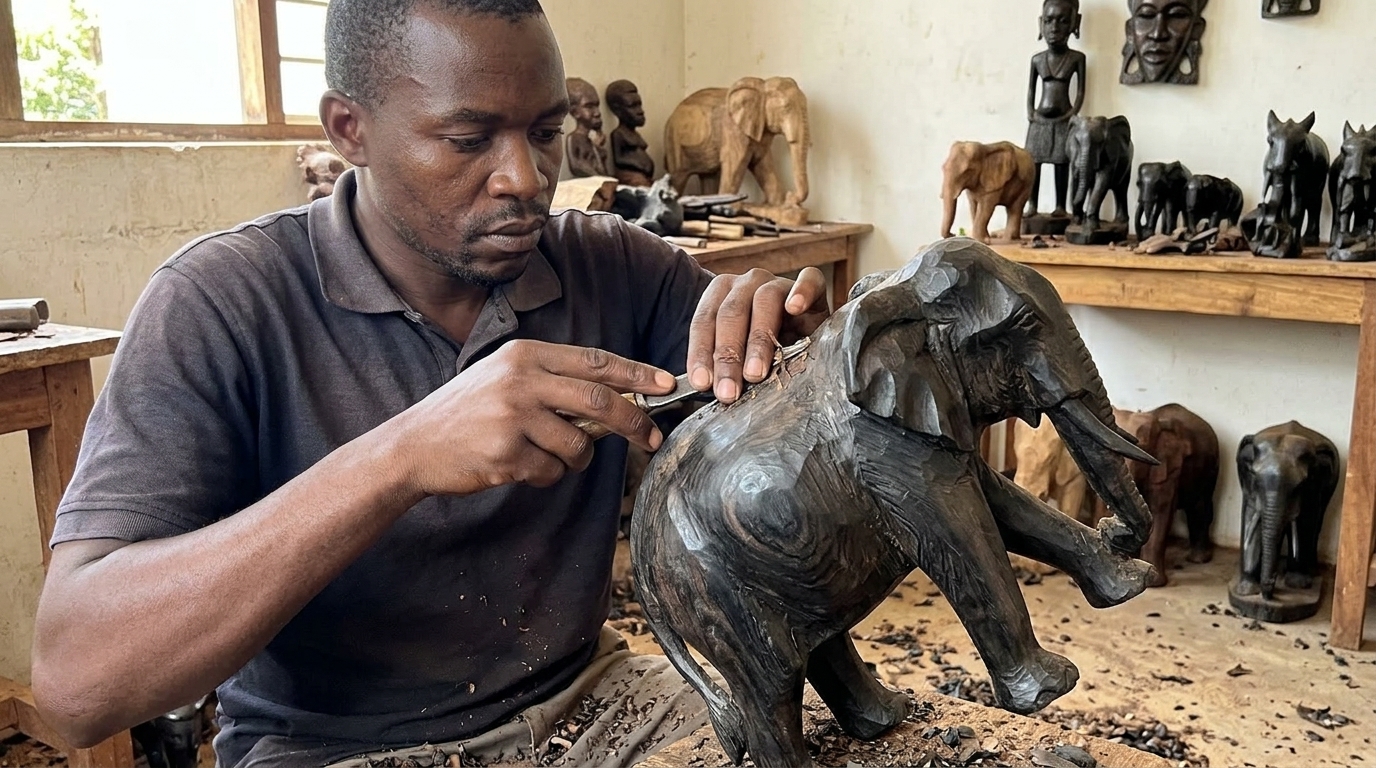
The carving side runs differently. Makonde carvers work on-site as part of the wider gallery, and the tour lets you watch a piece take shape by hand, from raw ebony to a finished figure, rather than only seeing the end result on a shelf. It's less about producing your own finished carving in an afternoon, carving genuinely takes years to master, and more about understanding the skill and time that goes into a piece you might otherwise glance past among the gallery's other African handmade crafts. For buyers, it also solves a real problem: a fair amount of what's sold as ebony along the tourist route isn't genuine, and watching carvers work with the real material is one of the more reliable ways to know what you're buying.
Painting or carving: which one fits your visit?
| What you want from it | Painting workshop | Ebony carving tour |
|---|---|---|
| You want to make something yourself | Best fit, you create your own piece | More about watching the process closely |
| You're travelling with children | Generally easier and safer for younger guests | More suited to older children and adults |
| You're considering a carving purchase | Not directly relevant | Directly useful, builds confidence in what you're buying |
| Time needed | A single guided session | Can run shorter or longer depending on depth of interest |
| What you take home | A canvas you painted yourself | A clearer understanding of genuine ebony craftsmanship |
Why hands-on beats hands-off for most visitors
A gallery visit alone tells you what African art looks like. A workshop tells you how it's actually made, and that distinction tends to be what people remember afterwards. Watching a piece take shape by hand, or making one yourself, creates a different kind of connection to it than reading a description card ever will. It also changes how a finished piece feels once you own it, a carving or painting bought after seeing the work behind it carries more weight than one picked off a shelf with no context attached.
What past guests have said about the wider experience
Guest feedback about Safariland tends to circle back to the same few points, the eclectic mix of art, craft and tours in one place, and a setting described as stylish, airy and bright rather than the cramped, dimly lit curio shop some travellers expect. That atmosphere matters for a workshop specifically. Painting or carving alongside a working artist works best in a space that doesn't feel rushed, and a gallery built to be genuinely browsed rather than power-walked through in ten minutes tends to make the hands-on side of a visit feel less like a scripted activity and more like an actual afternoon spent doing something.
Combining both workshops in one visit
You don't have to choose only one. Guests with a bit more time often do the carving tour first, watching Makonde carvers at work, then move into the painting workshop afterwards for the more participatory half of the visit. Doing both gives a fuller picture of African art workshops generally, the patience and technical skill behind carving on one side, and the more immediate, personal creativity of painting your own piece on the other, all part of what makes a stop here a genuinely unique Tanzanian experience. It also breaks up a longer stop nicely if you're planning to stay for lunch at Ol Mesera Restaurant either side of the activities.
A note on the artists themselves
The founders behind African Galleria built the collection with an evident appreciation for the artists represented in it, and that shows up in how the workshops are run. It's not a rotating cast of hired demonstrators, the people leading a carving tour or a painting session are the same artisans whose finished work fills the gallery walls day to day. Knowing that changes the tone of a workshop slightly. You're not paying for a staged demonstration built for tourists, you're spending an hour with someone whose actual livelihood is the craft you're trying out, which tends to make the questions feel less like small talk and more like a genuine exchange.
Fitting a workshop into a Northern Circuit stop
Both workshops sit inside the same Safariland complex near Karatu, on the road between Arusha and Ngorongoro Crater, so neither requires a separate trip, and they slot easily alongside the site's other local Tanzanian tours. A quick gallery browse takes around thirty minutes; adding a workshop or carving tour is worth budgeting an hour or more for, particularly if you want to see a piece through from start to something recognisable. Pairing either workshop with lunch at Ol Mesera Restaurant afterwards is a common way guests extend the stop into a longer, more relaxed visit.
Booking a workshop slot
Workshops are arranged directly with the Safariland team around your travel dates rather than through a fixed group schedule, so it's worth reaching out ahead of arrival, particularly during the busier June–October travel season, to make sure the artist or carver you'd be working with is available when you pass through.
Frequently asked questions
What African art workshops are available at Safariland?
A painting workshop guided by a local artist, and an ebony carving tour where Makonde carvers work on-site, both part of the African Galleria complex near Karatu.
Do I get to make my own piece, or just watch?
The painting workshop is built around creating your own piece with guidance. The carving tour focuses more on watching carvers shape ebony by hand, since carving itself takes years to master.
Are the workshops suitable for children?
The painting workshop tends to suit younger guests well, while the carving tour is generally better suited to older children and adults.
Does the carving tour help with buying genuine ebony?
Yes, watching carvers work with real ebony on-site is a reliable way to understand what genuine material and craftsmanship look like, since not everything sold as ebony along tourist routes is authentic.
How much time should I budget for a workshop?
Around an hour or more, depending on how deeply you want to get into either the painting or carving process.
Do I need to book a workshop in advance?
It's best to reach out with your travel dates ahead of arrival, particularly in the busier June–October season, so the right artist or carver is available.
Can I do both the painting workshop and the carving tour on the same visit?
Yes, many guests combine both if time allows, watching the carving process first and then taking part in the painting workshop afterwards.
A gallery wall shows you the result. African art workshops at Safariland show you the work behind it, whether that means picking up a brush yourself or standing close enough to watch a block of ebony become something recognisable. Either way, it's a different kind of stop than most safari routes offer, built into a site most Northern Circuit travellers are already passing, and worth the extra hour it takes to actually get involved rather than just look on from a distance.
Try Your Hand at African Art Workshops
Whether it's painting your own canvas or watching Makonde carvers shape ebony by hand, African art workshops at Safariland near Karatu put you right in the process.
Book a Workshop at Safariland