
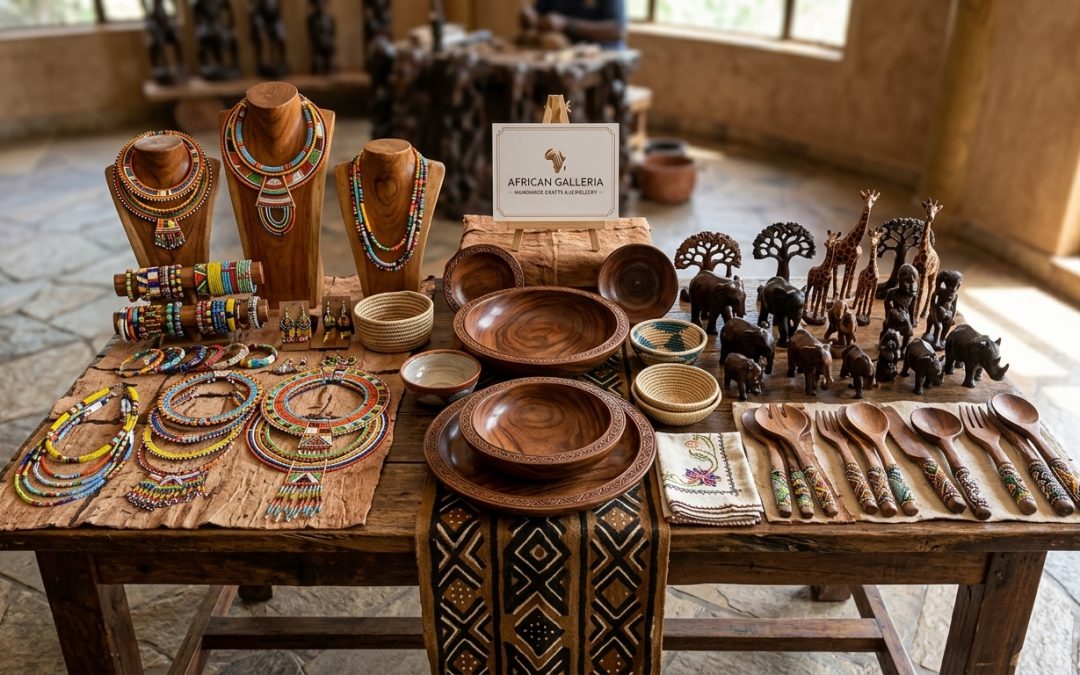
Not everything sold as African handmade crafts along a tourist route is actually made by hand, or made locally at all. A fair amount of what fills souvenir shelves near safari parks is imported and stamped with a "local" label because that's what sells. Telling the difference matters if you want a souvenir that's actually worth the shelf space it takes up at home, and African Galleria, part of the Safariland complex near Karatu, is built specifically around that distinction.
What's actually in the crafts collection
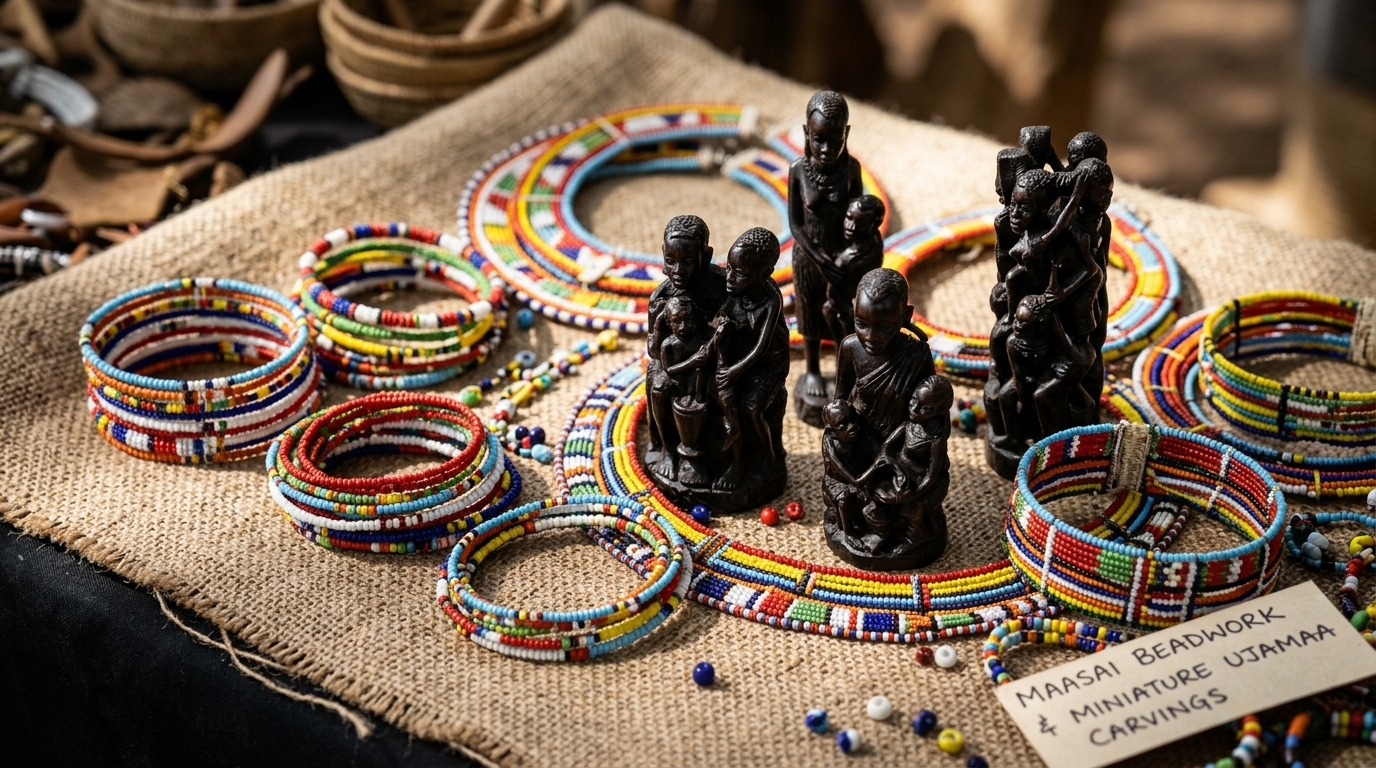
The range covers intricate beadwork, precise wood carvings, functional cutlery and bowls, and small stone and animal figures, alongside modern souvenirs and locally sourced coffee. It's a wide spread, running from decorative pieces to practical items you'd reach for once home. That mix reflects the wider Safariland approach: rather than a narrow set of tourist-friendly trinkets, the collection covers Tanzania's craft traditions broadly enough that most visitors find something that fits their actual taste, not just whatever was easiest to stock.
Why buying handmade actually matters here
Purchasing from this collection directly supports local artisans, helping preserve craftsmanship that doesn't automatically survive on its own once cheaper, imported alternatives flood a market. That's not an abstract claim, it's the stated purpose behind how the collection is sourced: each item comes from the person who actually made it, not a factory batch. For a lot of travellers, that distinction is the entire reason to buy a craft item on a trip rather than something ordered online once they're home.
Authentic craft or mass-produced import: what to look for
| What to check | Mass-produced souvenir | Authentic handmade craft |
|---|---|---|
| Consistency | Identical pieces, machine-finished | Small variations between pieces, made individually |
| Materials | Often unclear or synthetic substitutes | Named, genuine materials, wood, beads, natural fibres |
| Where it's made | Frequently imported, relabelled locally | Made by Tanzanian artisans, often on or near the site |
| Who benefits from the sale | Unclear, often a distant supplier | Local artisans and craftspeople directly |
| Price consistency | Often heavily negotiable, suggesting inflated asking price | Fixed pricing reflecting genuine material and labour cost |
Crafts that double as something you'll actually use
Part of what makes this collection different from a typical souvenir shelf is how much of it is functional rather than purely decorative. Wooden cutlery and bowls, beaded jewellery pieces, small carved figures that work as everyday decor, these aren't items destined for a drawer once the novelty wears off. Locally sourced coffee sits in the same collection, a consumable souvenir rather than an object at all. Choosing something practical over a purely decorative trinket tends to be the difference between a souvenir that gets used for years and one that gets packed away within a month of getting home.
How this fits alongside the carving and gemstone side of the site
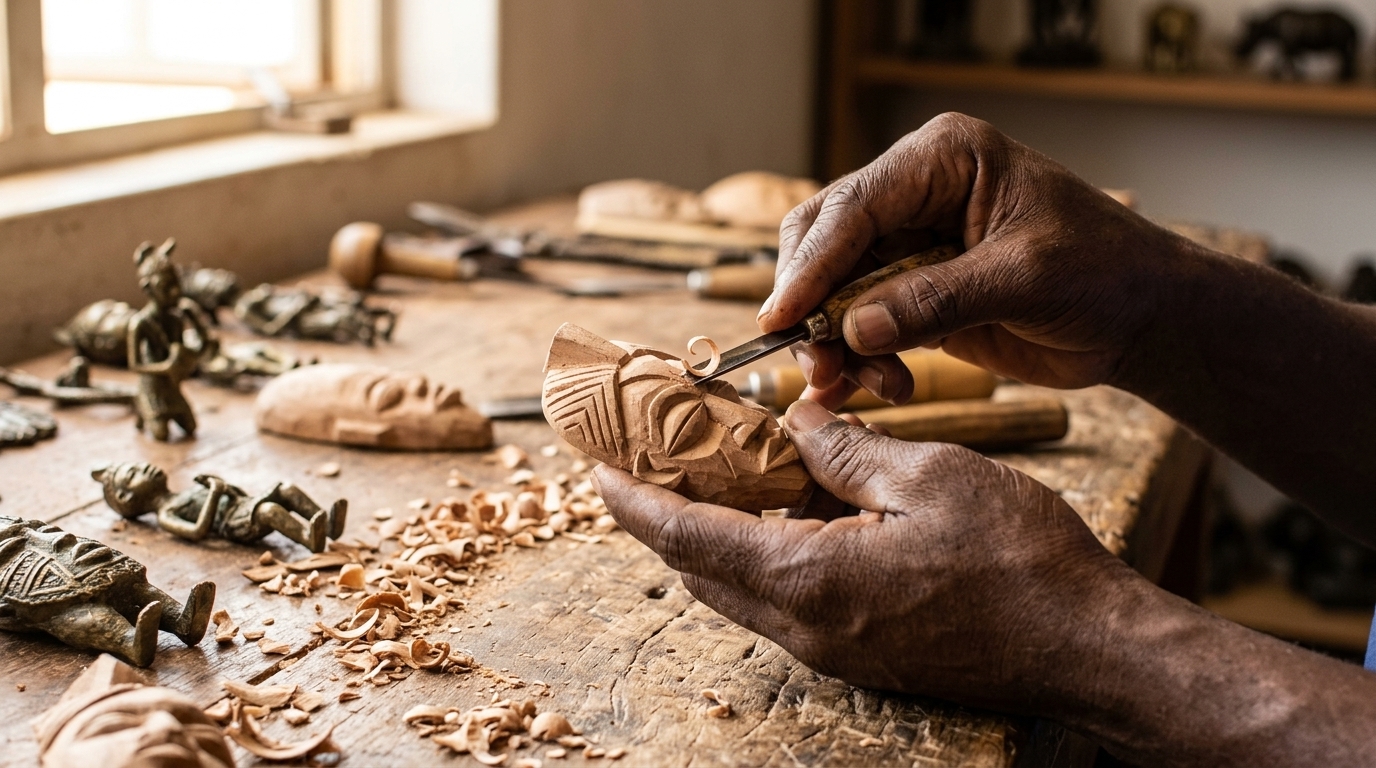
Crafts sit within the same gallery as the ebony carvings, tribal art and bronzes, and Makonde carvers work on-site as part of the wider gallery experience. That matters for crafts specifically, because a fair amount of what's sold as ebony along the tourist route isn't genuine, and buying from a gallery with carvers working in front of you is one of the more reliable ways to know what you're actually getting, a point covered in more depth in our guide to spotting genuine ebony carvings. The same logic extends to crafts more broadly: seeing the workshop attached to the shop floor is a reasonable proxy for authenticity even when you can't personally verify every material.
Beadwork, coffee and the crafts that carry Tanzania's everyday culture
Beadwork in particular carries weight beyond decoration in Tanzania, historically tied to Maasai identity and status, patterns and colours that mean something specific rather than being purely ornamental. Buying a beaded piece from a collection sourced properly is a different thing from buying a generic bead bracelet stamped out for a tourist market. The same applies to the locally sourced coffee included in the crafts collection, grown and processed in the same country you're visiting rather than shipped in from elsewhere and rebranded. Small details like these are easy to miss when you're shopping quickly between safari stops, but they're usually the difference between a souvenir with genuine cultural weight and one that's simply generically "African" in the loosest possible sense.
Shipping and taking crafts home
Smaller items, beadwork, carved figures, cutlery, travel easily in a suitcase without much thought. Larger pieces, bigger sculptures or bulkier carvings, are worth asking about in terms of packing or shipping options before you commit to a size, particularly if your remaining itinerary involves several more flights or transfers. If you'd rather make something yourself than just buy one, the gallery's African art workshops are worth booking alongside a browse of the crafts collection. It's a practical question worth raising at the point of purchase rather than after you've already paid, since options and costs vary depending on size and destination.
How crafts connect back to the rest of the site
It's worth remembering that crafts here don't exist in isolation from everything else on the Safariland site. The same complex holds African Galleria's wider African paintings and sculpture collection, Africa Gems & Jewelers next door for anyone weighing up a tanzanite piece alongside a smaller craft souvenir, and Ol Mesera Restaurant if the visit stretches into a longer stop. A lot of guests end up buying crafts almost as an afterthought after one of the site's local Tanzanian tours, rather than setting out specifically to shop. That's arguably the better order to do it in: seeing the wider collection first tends to sharpen your sense of what's genuinely well made versus what's simply cheap and convenient.
A quick checklist before you buy
- Ask what the item is made from, a genuine artisan or seller should answer specifically, not vaguely.
- Look for small imperfections or variation between similar pieces, a sign of handwork rather than a mould.
- Favour practical items, cutlery, bowls, jewellery, over purely decorative pieces if you want something you'll actually use.
- Buy from a site where you can see artisans working, rather than a stall with no visible production behind it.
Frequently asked questions
What kinds of African handmade crafts are available at African Galleria?
Beadwork, wood carvings, cutlery and bowls, small stone and animal figures, modern souvenirs, and locally sourced coffee.
How can I tell if a craft item is genuinely handmade?
Look for small variations between similar pieces, ask about the materials used, and favour sellers where you can see artisans actually working on-site.
Does buying crafts here support local artisans?
Yes, purchases directly support the craftspeople who made the items, which helps preserve traditional skills that can otherwise be squeezed out by cheaper imports.
Is it easy to tell real ebony carvings from imitations?
Not always. A fair amount sold along the tourist route isn't genuine, which is why buying from a gallery with carvers working on-site is a more reliable option.
Are the crafts here purely decorative?
No, many pieces are functional, cutlery, bowls, jewellery, alongside decorative items and locally sourced coffee.
Where is African Galleria located?
Near the town of Karatu, part of the Safariland complex, on the road between Arusha and Ngorongoro Crater.
Can I ship a larger craft item home instead of packing it?
It's worth asking at the point of purchase, since packing and shipping options vary depending on the size of the piece and where it's travelling to.
A souvenir shelf full of identical trinkets tells you nothing about where you've actually been. African handmade crafts bought from a collection built around supporting the people who made them, and where you can watch some of that work happen, tend to carry a story home with them. That's the difference African Galleria at Safariland is set up to offer, over a stall selling whatever was cheapest to import.
Take Home a Craft That Actually Means Something
If you want African handmade crafts that genuinely support local artisans, visit African Galleria at Safariland near Karatu and see the making process for yourself.
Explore Crafts at Safariland